

Digital truth can no longer be judged by human sight or sound alone Institutions must certify reality, not just detect fakes after harm occurs Education systems now play a central role in rebuilding trust in evidence In
Read More
Europe must thicken AT1 capital buffers even if it permanently lowers bank profits Digital bank runs make thin hybrid capital unreliable in real stress Clear, equity-like AT1 design is cheaper than repeated public rescues Th
Read More
The rules-based order is breaking into competing systems Asia is building regional frameworks to manage the shift Education and institutions must adapt to fragmented governance The international system we've relied on for
Read More
Democracy raises growth most where human capital is already strong Freedom and skills act as multipliers, not substitutes, in economic development Sustained prosperity requires joint investment in institutions and people
Read More
Japan is positioning governance as an alternative to China’s infrastructure power AI rules and institutions are emerging as tools of geopolitical influence Central Asia’s autonomy will hinge more on standards than on concrete The
Read More





Federal AI adoption depends on tools and training, not elite titles DOGE proved rapid automation can work but exposed skill gaps Lasting reform requires institutionalized AI, not rollback Getting AI into
Read More
Delayed investment is the hidden tax of policy uncertainty across all economies Unclear rules turn rational caution into long-term growth loss Predictable policy is not cosmetic reform; it is a core economic growth tool
Read More
U.S. import diversification masks continued supply chain concentration Much of the shift reflects rerouting, not real relocation True resilience requires tracking value chains, not labels U.S.
Read More
Payment rails, not digital tokens, now define real monetary sovereignty Stablecoins change the form of money, but control depends on who governs settlement and redemption Policy power survives only if tokenized money clears on domestically regulated infrastructure
Read More
Minimum wages insure routine workers inside firms Shocks tend to push adjustment onto high-skill jobs Policy must pair the firm-level minimum wage with portable support for talent The increase in South Kore
Read More
Inflation is a mix of shocks and trends, not a single number Inflation decomposition clarifies causes and improves policy decisions It should be central to both forecasting and economic education Inflation isn't simple.
Read More
The Donroe Doctrine replaces global leadership with blunt self-interest Tariffs now function as leverage, not policy tools Education and governance must adjust to a less predictable order The Donroe Doctrine isn’t a sweeping histori
Read More
Advanced economies push AI policy because productivity gains are visible and immediate Poorer countries lag as low returns and weak capacity dampen urgency Education policy can still slow the widening AI divide Since the em
Read More
Lower capital requirements failed to increase UK lending Banks chose shareholder payouts over new loans Capital policy without conditions does not drive growth In December 2025, the Financial Policy Com
Read More
AI investment looks inflated, but much of its value is already embedded in real productivity gains Profits and adoption show substance, even as debt and feedback loops create fragility The real policy challenge is managing systemic risk without mistaking transformation for a bubble
Read More

The TSMC–Japan partnership turns education into strategic infrastructure Japan converts geopolitical risk into durable industrial capacity Semiconductor policy is about institutions, not factories Semiconductor risk
Read More
AI is triggering a new global divergence, much like the industrial revolutions before it Countries that control AI systems and skills will gain lasting economic and institutional power Education and policy now decide who leads and who is left behind
Read More
Plurality voting systems amplify narrow anti-immigration platforms The resulting policies accelerate outsourcing and automation, weakening local jobs Institutional reform is key to breaking this self-reinforcing cycle In numerous
Read More
China’s global strategy is increasingly shaped by domestic economic pressures rather than imperial ambition Youth unemployment and slowing growth are pushing policy inward and favoring stability over expansion Education and skills systems now sit at the center of long-term power
Read More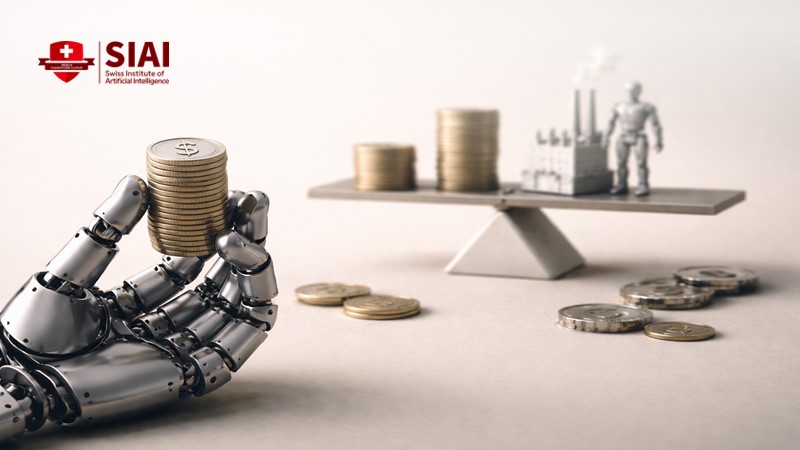
AI-driven automation is shrinking both labor and consumption tax bases A robot tax is becoming a practical fiscal tool, not a provocation Welfare systems may also need less funding as labor is partially emancipated In 2024, the average de
Read More