Professor of AI/Finance, Gordon School of Business, Swiss Institute of Artificial Intelligence
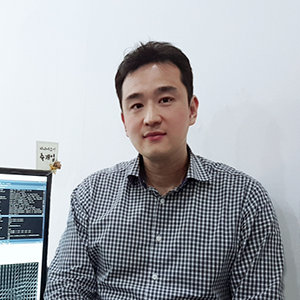
Keith Lee is a Professor of AI/Finance at the Gordon School of Business, part of the Swiss Institute of Artificial Intelligence (SIAI). His work focuses on AI-driven finance, quantitative modeling, and data-centric approaches to economic and financial systems. He leads research and teaching initiatives that bridge machine learning, financial mathematics, and institutional decision-making.
He also serves as a Senior Research Fellow with the GIAI Council, advising on long-term research direction and global strategy, including SIAI’s academic and institutional initiatives across Europe, Asia, and the Middle East.
The 10,000-hour rule fits early skill, not true peak
AI raises the floor; judgment and transfer win
Teach breadth first, verify always, specialize later
Elite performance is best viewed as a process of growth, not just a nu
Stories outlast statistics, and feeds reward that
Viral politics runs on heroes, villains, and anger
Teach narrative literacy, and push for cleaner platform data
A study found that the impact of a statistic on belief decreased by 73% after j
Fast AI PhDs won’t fix hiring if training stays shallow
Firms need proof of real research skills, not faster diplomas
Rigor and outcomes must drive funding and standards
Available data indicate that Korea's a
SVB proved digital runs can topple banks fast
Real-time diversification is the best defense
Faster, targeted supervision blunts coordinated risk
In March 2023, the future of financial oversight looked grim.
Label fast and show sources
Track latency and publish audits
Teach verification; support independent checks
Right now, about half of all adults get their news from social media.
Europe’s defence surge meets tightening debt
Fund smart: credible paths, joint buys, skills
Avoid “Greece 2010”: improve balances, manage rollover risk
Here's the thing: back in December 2025, over two-thirds of Europeans
AI companion mental health is a public-health risk
Hallucinations + synthetic intimacy create tail-risk
Act now: limits, crisis routing, independent audits
Two numbers should change how we govern AI companions.
Xiangshan Forum is China’s planning room for global governance
Beijing fuses hard power and finance to shape rules
Education must teach Xiangshan-era governance, standards, and AI/security
The Xiangshan Forum, held
Treat blind hiring policy as a targeted tool, not a cure-all
Recent pilots show anonymity widens access while quality holds steady
Use a tiered process—Stage-1 blind scoring, controlled unblinding, and outcome audits—to balance equity and excellence
Remote work and development drives growth
Automation narrows factory-led paths
Teach English, wire broadband, fix payments
One key number should change how ministries of education, finance, and trade plan for the next decade.
AI political persuasion shifts views by flooding claims; accuracy falls
Education should require evidence budgets and claim-source ledgers
Policy must enforce accuracy floors, provenance by default, and risk labels
Support is broad, underestimated
Local clean jobs drive votes
Show local data; build pipelines
The most crucial fact in climate politics today is not about a molecule or a megawatt. It’s a number: 89%.
Aging erodes productivity and growth
Migration buys time, not productivity—see Singapore
Youthful regions gain only if they scale learning, health, and adoption
In the economies from the Baltics to the Balkans,
Biotech knowledge spillovers cut global wait times for lifesaving therapies
Rich countries gain when diffusion is designed, priced, and measured—not blocked
Universities and funders should hard-wire reciprocity, open methods, and cross-border teams
Central banks leaned on single models and badly misread the inflation surge
Ensemble monetary policy blends many models to create safer, more robust rate rules
Teaching and adopting ensemble monetary policy can rebuild trust through cautious, transparent decisions
AI is accelerating bank-run risk into “AI bank runs”
Supervisors lag far behind banks in AI tools and skills
We need real-time oversight, automated crisis tools, and targeted training now
In March 2023, a mid-sized Am
AI resume verification is now essential for hiring
Verified records make algorithmic screening fair and transparent
Without them, AI quietly decides who gets work
Recent surveys show that about two-thirds of U.S.
AI risk lists miss real hiring patterns
Job data shows specific roles shrinking and new AI roles growing
Education and policy must follow real vacancy data, not myths
Every week, new headlines warn that artificial
Russia–North Korea ties and Arctic shipping are reshaping the US–South Korea alliance
The Northern Sea Route turns the Arctic into a new strategic front
Education and policy must integrate Arctic routes into Korean security planning
AI data colonialism exploits hidden Global South data workers
Education can resist by demanding fair, learning-centered AI work
Institutions must expose this labor and push for just AI
Currently, between 154 million and