"No Regime Collapse": U.S. Misses Strategic Objective in Iran War, with Sanctions Relief and Economic Support Set to Determine Final Outcome

As one of the youngest members of the team, Tyler Hansbrough is a rising star in financial journalism. His fresh perspective and analytical approach bring a modern edge to business reporting. Whether he’s covering stock market trends or dissecting corporate earnings, his sharp insights resonate with the new generation of investors.
Authored On
Modified
U.S.-Israel plan to foment popular uprising and oust Iranian regime derailed
Iran’s state system preserved through swift succession, as public endures economic hardship and rallies behind state
Iran presses for “economic recovery” in ceasefire talks, making U.S. support the key variable
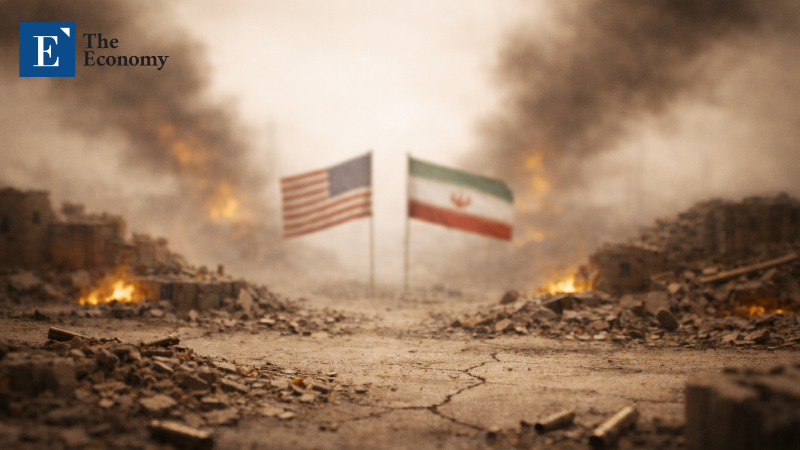
The United States has effectively failed to achieve its strategic objectives in the war with Iran, according to emerging assessments. Although many core figures in the Iranian regime, including the supreme leader, were eliminated, the anticipated popular uprising did not materialize and the system remained firmly intact. Experts say the standing of the Iranian regime, having withstood the U.S. offensive, will depend on the outcome of future ceasefire negotiations. They argue that Iranian public opinion could shift depending on whether Washington eases sanctions and provides economic support to Tehran.
The Ultimate Goal of the U.S. and Israel
On the 25th, U.S. President Donald Trump said in a post on his social media platform Truth Social that “negotiations with Iran are proceeding smoothly,” adding that “this will be a great agreement for everyone, or there will be no deal.” His remarks came as media outlets around the world reported that ceasefire negotiations between Iran and the United States were entering their final stage. Trump added, “If there is no agreement, we will return to the battlefield and attacks will resume, and they will be bigger and stronger than ever before,” stressing that “nobody wants that.”
However, experts believe that even if the agreement proceeds smoothly, the United States will still fall short of a “strategic success.” According to U.S. current affairs magazine The New Yorker, Danny Citrinowicz, a nonresident fellow at the Atlantic Council and Middle East expert, recently said in an interview that “this deal may be a tactical success for the United States, but strategically it is a clear failure,” adding that “President Trump likely had no alternative and was forced to accept this agreement after being trapped between a bad option and an even worse one.” In fact, within six weeks of the war’s outbreak, the U.S. military achieved tactical gains by destroying many of Iran’s core military assets, including air defense systems, ballistic missile storage facilities, drone bases and naval vessels, but it failed to produce meaningful political change.
Across the international community, the U.S. and Israeli airstrikes on Iran are widely seen as a move effectively aimed at regime removal. They expected the system to collapse as large-scale popular uprisings spread after the war began. On the first day of Israel’s military operation against Iran, Israeli Prime Minister Benjamin Netanyahu said the campaign would “create the conditions for the brave Iranian people to throw off the yoke of this murderous regime,” encouraging resistance against the system, and has continued making remarks to that effect until recently. According to a U.S. State Department diplomatic cable disclosed in March by The Washington Post, senior Israeli officials told their U.S. counterparts that “if large-scale protests occur again, the people will be massacred,” while also saying they “hope for a popular uprising inside Iran.”
Iranian Regime Remains Firm Amid Turmoil
In the course of the actual airstrikes, the United States and Israel eliminated many top military figures, including Supreme Leader Ayatollah Seyyed Ali Khamenei, Islamic Revolutionary Guard Corps (IRGC) Commander-in-Chief Hossein Salami, Iranian Armed Forces Chief of Staff Mohammad Bagheri and IRGC Aerospace Force Commander Amir Ali Hajizadeh. Yet the expected collapse of the regime did not materialize. The state system remained intact as the IRGC and clerical networks immediately activated a succession mechanism and a succession structure centered on Mojtaba Khamenei began to take shape.
No large-scale internal uprising occurred. After the war began, the Iranian government tightened nationwide security control through the IRGC and intelligence agencies, while also imposing internet restrictions and conducting extensive checkpoints and arrest operations to block the spread of organized protests. This explains why a mood of “wartime solidarity” became more visible in Iranian society than anti-government demonstrations. Some analysts also argue that external military intervention instead stoked Iranian nationalist sentiment. As resentment spread over foreign powers trying to impose regime change, public opinion formed around the idea that, apart from criticism of the regime, citizens should participate in national defense.
The exceptional conditions of wartime are also cited as a factor constraining “collapse from below.” Of the 9 million people living in key areas of Tehran, Iran’s capital, about 6 million have moved to the outskirts of the city to avoid risks such as airstrikes. In a situation where immediate survival is the priority, raising a political voice is highly likely to be treated as a kind of “luxury.” Many assessments also suggest that the economic hardship weighing on Iran is insufficient to move public sentiment. Critics say the United States and Israel underestimated the “threshold” of Iranians, who have endured decades of repeated sanctions and war. One diplomatic expert said, “Iranians who have survived in a long-isolated environment have developed considerable resilience against various forms of pressure,” adding that “power grid disruptions and inflation are unlikely to become immediate triggers for protests.”
Regime Standing Hinges on Ceasefire Negotiations
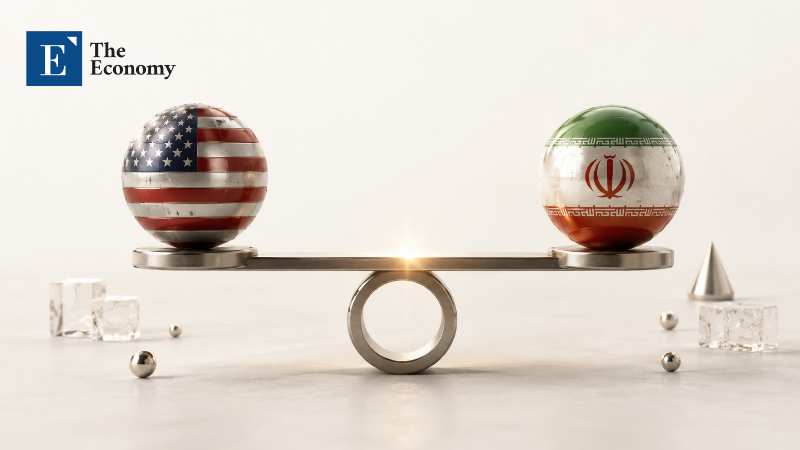
The future standing of the Iranian regime is expected to depend on the ceasefire agreement reached by the United States and Iran. Iran is currently arguing at the negotiating table that “economic normalization” is necessary. As Washington struggles to secure an exit strategy, Tehran is maintaining that no agreement is possible without economic recovery and is seeking to extract favorable terms. Iran’s specific demands include the complete lifting of U.S. sanctions on Iran, the return of frozen assets, normalization of oil exports, an end to the blockade of the Strait of Hormuz and U.S. maritime restrictions, and compensation for war damage.
If the United States accepts these conditions, the possibility of regime collapse in Iran will diminish further. If sanctions relief and large-scale economic support materialize, public discontent among Iranians suffering from severe inflation and unemployment could be eased substantially, weakening the momentum for opposition to the system. Conversely, if Washington maintains harsh sanctions and limited support, postwar hardship and anger over privileges enjoyed by the ruling elite could ignite anti-government sentiment. For the United States, these negotiations represent a critical opportunity to corner Iran’s military and clerical power blocs.
Still, whether Trump can maintain a hardline stance going forward remains uncertain. With high oil prices persisting in the wake of the Strait of Hormuz blockade and Gulf states such as Saudi Arabia and the United Arab Emirates (UAE) pressing for an early compromise, Washington has found itself in a position where it must consider a realistic settlement. In fact, the United States has recently opted for concessions on multiple negotiating issues. The nuclear issue is the most representative example. Initially, Washington demanded the complete dismantlement of Iran’s nuclear program and maintained that highly enriched uranium must be transferred abroad and handled under U.S. leadership. Recently, however, more conciliatory options have been discussed, including the transfer of highly enriched uranium to a third country or its disposal inside Iran. The United States has also reportedly included phased sanctions relief, the resumption of oil exports and the release of some frozen assets in its latest proposal. This marks a reversal of its previous position that sanctions could not be eased before Iran’s nuclear program was fully dismantled.
As one of the youngest members of the team, Tyler Hansbrough is a rising star in financial journalism. His fresh perspective and analytical approach bring a modern edge to business reporting. Whether he’s covering stock market trends or dissecting corporate earnings, his sharp insights resonate with the new generation of investors.
Similar Post