“From Advanced Chip Development to AI Price Cuts” China’s All-Out AI Push Stumbles on Margin Erosion and Technological Constraints Amid Cutthroat Competition

Oliver Griffin is a policy and tech reporter at The Economy, focusing on the intersection of artificial intelligence, government regulation, and macroeconomic strategy. Based in Dublin, Oliver has reported extensively on European Union policy shifts and their ripple effects across global markets. Prior to joining The Economy, he covered technology policy for an international think tank, producing research cited by major institutions, including the OECD and IMF. Oliver studied political economy at Trinity College Dublin and later completed a master’s in data journalism at Columbia University. His reporting blends field interviews with rigorous statistical analysis, offering readers a nuanced understanding of how policy decisions shape industries and everyday lives. Beyond his newsroom work, Oliver contributes op-eds on ethics in AI and has been a guest commentator on BBC World and CNBC Europe.
Authored On
Modified
Huawei unveils advanced chip production technology excluding ASML semiconductor equipment
China’s rapidly expanding AI sector wagers aggressively on price competition to secure global dominance
Profitability deteriorates amid excessive competition, while allegations emerge over imitation of Western AI technologies
China’s Huawei has unveiled plans to produce cutting-edge chips at the 1-nanometer (nm) level. With U.S. sanctions restricting access to extreme ultraviolet (EUV) lithography equipment from Dutch semiconductor equipment maker ASML, Huawei aims to circumvent those constraints through proprietary technologies and strengthen China’s position in the artificial intelligence (AI) race. Chinese AI companies are likewise engaging in fierce price-cutting battles to expand market influence, though questions continue to mount over the long-term sustainability of such growth strategies.
Huawei’s Semiconductor Self-Reliance Strategy
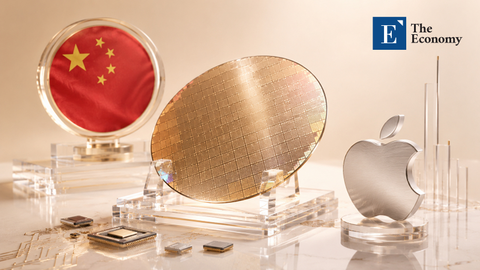
According to a report by The Wall Street Journal (WSJ) on May 25 local time, Huawei unveiled a new technological approach for advanced chips during an event held in Shanghai, China. Unlike conventional cutting-edge semiconductors that improve performance through increasingly fine circuit integration, Huawei explained that it enhanced chip capabilities by stacking multiple circuit layers within a single chip and improving data-transfer efficiency. The company stated that it has mass-produced 381 types of chips using this technology over the past six years and presented a long-term objective of achieving transistor integration density equivalent to a 1.4nm process.
Huawei’s pursuit of this technology stems from its difficulty in securing ASML’s EUV lithography systems. The United States placed Huawei on its Entity List in 2019 and expanded restrictions in 2022 to cover exports of advanced semiconductor equipment to China. The core issue is that ASML’s EUV systems, now effectively inaccessible to China, are considered indispensable for mass production of advanced chips below the 7nm node. Global semiconductor leaders including TSMC, Samsung Electronics, and Intel currently rely on EUV-based processes to develop and manufacture next-generation chips.
Without access to EUV equipment, China has attempted to implement advanced processes by applying “multi-patterning” techniques to older deep ultraviolet (DUV) systems, repeatedly etching a single circuit pattern multiple times. However, such methods dramatically increase manufacturing complexity and slow production speeds, while the higher process complexity also raises the probability of microscopic defects and severely undermines yield rates. Huawei’s 7nm-class chips produced by China’s largest foundry, SMIC, through this method are reportedly far more expensive than comparable products manufactured by TSMC, with yields allegedly falling below 50%. Huawei’s newly unveiled production method therefore represents a strategic gamble aimed at overcoming those limitations and consolidating market leadership in the AI era.
Price Competitiveness as China AI’s Primary Weapon
Chinese AI companies are also aggressively leveraging overwhelming price competitiveness to secure market share. For example, Chinese AI startup DeepSeek announced on May 23 that it would offer its latest flagship AI model, “V4 Pro,” at just 75% of its original launch price. The company effectively decided to make permanent the discounted promotional pricing introduced after launching the V4 model in April. As a result, the official application programming interface (API) pricing for V4 Pro fell to approximately $0.0036 per one million input tokens and $0.87 per one million output tokens. By comparison, OpenAI’s latest GPT-5.5 model reportedly costs $5 per one million input tokens and $30 per one million output tokens.
Industry observers attribute DeepSeek’s pricing power to China’s increasingly self-sufficient supply-chain ecosystem. Following stringent U.S. export controls that effectively blocked imports of Nvidia graphics processing units (GPUs), utilization of Huawei’s “Ascend 950” AI chip architecture appears to have increased significantly. One industry official stated, “DeepSeek had initially set higher pricing for the V4 model last month due to limitations in computing resources,” adding, “The company appears to have finalized the latest price cuts after visibility improved regarding large-scale supply of Huawei chips.” Ironically, infrastructure capabilities accelerated by U.S. sanctions are now evolving into a competitive threat to American big tech firms.
The widening gap in AI price competitiveness between China and the United States is becoming increasingly evident across various benchmarks. According to AI evaluation and benchmarking firm Artificial Analysis, DeepSeek V4 Pro recently ranked first globally in “AI performance efficiency per dollar.” The model reportedly required only about $268 to complete AI index testing, while OpenAI’s GPT-5.5 and Anthropic’s Claude Opus 4.7 incurred costs approximately 12 times and 19 times higher, respectively, for the same task. Other Chinese models, including MiniMax’s M 2.7 and Xiaomi’s MiMo V2.5 Pro, also ranked highly in the same category. As global shortages in AI computing infrastructure continue to drive up the cost of U.S.-developed frontier AI models, Chinese AI offerings are increasingly emerging as attractive alternatives.
Uncertain Sustainability of Growth
Nevertheless, skepticism surrounding the sustainability of China’s pricing strategy continues to intensify. Excessive price competition is increasingly devolving into a destructive “chicken game” that is eroding profitability across the Chinese AI sector. A chicken game refers to a strategic standoff in which competing parties refuse to back down first despite the risk of inflicting severe damage on each other. In prolonged price wars, market instability and cost burdens typically escalate rapidly, often leaving all participants suffering substantial losses.
Recent financial performances among Chinese AI firms illustrate the growing strain. Alibaba’s adjusted EBITA reportedly plunged 84% year-over-year in the first quarter due to expanded AI infrastructure and data center investments, combined with subsidy competition in generative AI services. Its adjusted net profit also effectively fell close to break-even levels. Tencent likewise reportedly suffered a sharp decline in cloud division operating margins amid aggressive AI investments during the same period. Baidu’s first-quarter net profit dropped 55% year-over-year to approximately $480 million, while revenue declined 1.1%, marking a fourth consecutive quarter of contraction.
Some analysts further argue that China’s AI industry could face even deeper structural challenges ahead. Critics contend that China’s AI competitiveness remains fundamentally dependent on replicating technologies developed by advanced economies, leaving the sector vulnerable to long-term technological ceilings. OpenAI and Anthropic previously urged stronger countermeasures, alleging that Chinese firms including DeepSeek, MiniMax, and ByteDance had attempted to replicate proprietary AI models. In response, the White House Office of Science and Technology Policy (OSTP) publicly announced plans to expand information-sharing with U.S. AI companies and strengthen cooperation aimed at detecting unauthorized model extraction attempts. The Chinese Embassy in Washington, meanwhile, dismissed accusations that Chinese firms were stealing American AI intellectual property, describing them as baseless attacks intended to suppress the development of China’s AI industry.
Oliver Griffin is a policy and tech reporter at The Economy, focusing on the intersection of artificial intelligence, government regulation, and macroeconomic strategy. Based in Dublin, Oliver has reported extensively on European Union policy shifts and their ripple effects across global markets. Prior to joining The Economy, he covered technology policy for an international think tank, producing research cited by major institutions, including the OECD and IMF. Oliver studied political economy at Trinity College Dublin and later completed a master’s in data journalism at Columbia University. His reporting blends field interviews with rigorous statistical analysis, offering readers a nuanced understanding of how policy decisions shape industries and everyday lives. Beyond his newsroom work, Oliver contributes op-eds on ethics in AI and has been a guest commentator on BBC World and CNBC Europe.
Similar Post