EU, China Launch Formal Trade Talks Amid Escalating Dispute, Failure to Reach Agreement Could Trigger Mutual Fallout

As one of the youngest members of the team, Tyler Hansbrough is a rising star in financial journalism. His fresh perspective and analytical approach bring a modern edge to business reporting. Whether he’s covering stock market trends or dissecting corporate earnings, his sharp insights resonate with the new generation of investors.
Authored On
Modified
Crushed by Its Trade Deficit With China, EU Establishes Formal Consultation Framework With Beijing
Commitment among EU member states to a tougher stance raises prospects of additional trade restrictions
China vows countermeasures, warning both sides could face backlash if negotiations collapse
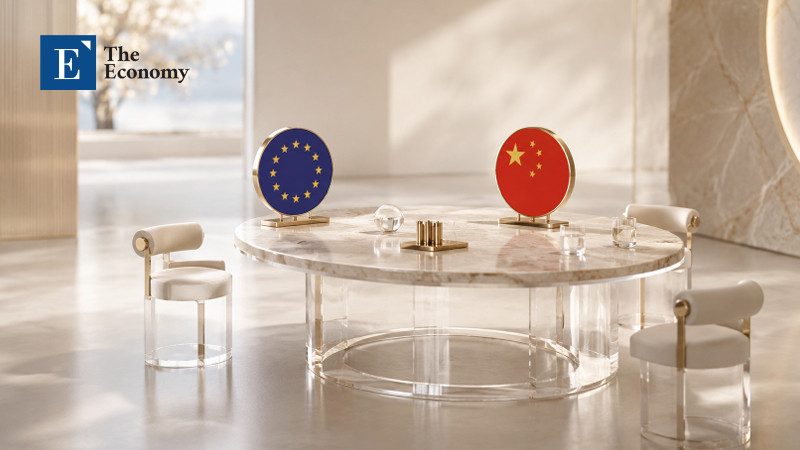
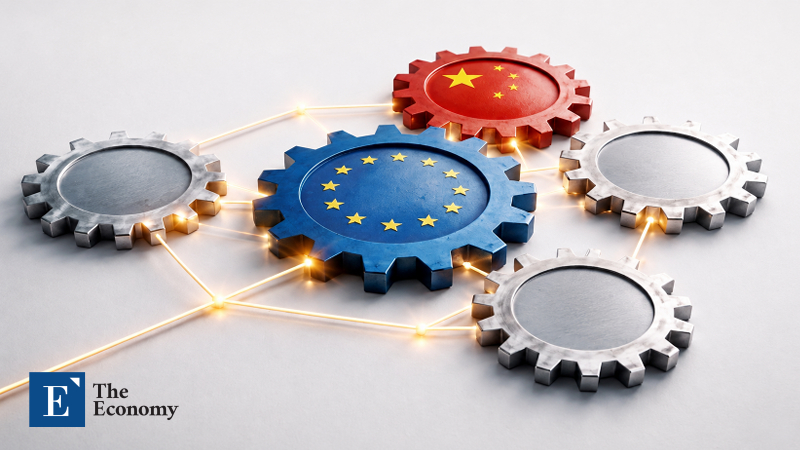
The European Union (EU) and China have launched a formal consultation mechanism aimed at addressing trade imbalances. As tensions deepen over China's industrial subsidies and excess production capacity, the two sides have created a channel for dialogue to manage risks. Market observers believe that if the talks fail to produce meaningful results, both sides could ultimately suffer significant repercussions. The EU remains heavily dependent on low-cost Chinese manufactured goods, while China, increasingly exposed to Western sanctions, has long relied on the EU as a critical alternative export market.
EU, China Launch Trade Dialogue
According to Reuters on June 29 (local time), EU Commissioner for Trade and Economic Security Maroš Šefčovič and Chinese Commerce Minister Wang Wentao held the inaugural EU-China Trade and Investment Dialogue in Brussels. During the meeting, both sides agreed to establish an EU-China trade and investment consultation framework covering four key areas: trade and investment balance, export controls, intellectual property (IP), and World Trade Organization (WTO) reform. They also agreed to establish a joint monitoring mechanism to track trade flows and review market access issues.
Following the talks, Šefčovič said, "Chinese exports to the EU continue to rise, while the EU's market share in China continues to decline," adding, "This trend is not sustainable, and maintaining the status quo is not an option." He described discussions with Wang as "intensive and constructive," noting that working-level officials would intensify efforts to produce tangible outcomes by October. The trade imbalance highlighted by Šefčovič has already been repeatedly confirmed by official data. According to Eurostat, the EU's trade deficit with China reached approximately $424 billion last year, up 15% from the previous year.
The underlying cause of the imbalance lies in China's industrial subsidy policies and structural overcapacity. The Chinese government has provided long-term institutional and financial support to strategic sectors including electric vehicles (EVs), batteries, solar power, wind power, chemicals, and steel, enabling Chinese companies to build production capacity well beyond domestic demand. The problem is that China's domestic market has been unable to absorb the surge in output amid a prolonged property downturn and weak consumer spending. The surplus products have naturally flowed overseas, with the relatively open EU market becoming a primary destination for Chinese exports. The EU argues that China's practices have distorted cost structures within the European market and eroded the competitiveness of domestic industries.
EU Tightens Regulatory Stance Toward China
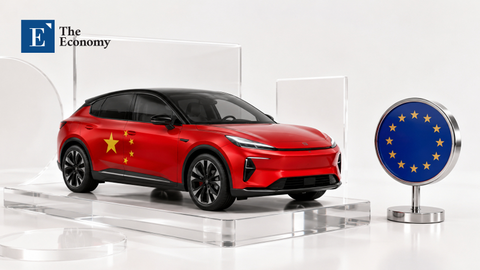
The EU has steadily strengthened trade measures against China in an effort to protect its domestic industries. The most prominent example is tariffs on Chinese EVs. The EU launched an anti-subsidy investigation into Chinese-made EVs in 2023 and imposed provisional countervailing duties in July 2024 after concluding that Chinese government subsidies had distorted competition in the European market. It marked the bloc's first large-scale trade action targeting Chinese EVs. In October of the same year, following approval from member states, the EU finalized additional tariffs of up to 35.3% on Chinese EVs, varying by manufacturer. The two sides are currently exploring a mechanism under which tariffs could be partially eased if Chinese automakers commit to maintaining minimum selling prices, though no substantive agreement has yet been reached.
Stringent regulations have also emerged beyond the EV sector. Last year, the EU implemented measures restricting Chinese companies from participating in public procurement for medical devices, and more recently intensified merger and acquisition (M&A) scrutiny under the Foreign Subsidies Regulation (FSR). A notable example came on May 28, when the European Commission announced an in-depth FSR investigation into Chinese e-commerce company JD.com's proposed acquisition of European electronics retailer Ceconomy. The FSR was introduced to prevent companies benefiting from subsidies, preferential loans, tax incentives, or other forms of state support from non-EU governments from gaining unfair competitive advantages in the EU market.
Additional regulatory tightening remains a distinct possibility as leaders across the bloc increasingly advocate a tougher approach toward China. According to The Wall Street Journal, French President Emmanuel Macron argued during the EU summit in Brussels on June 18 that the bloc should consider introducing a "European version of Section 301" of the U.S. Trade Act to counter the influx of Chinese goods. Rather than relying solely on lengthy product-specific investigations before imposing tariffs, Macron argued that the EU should be able to implement broader and faster trade measures based on national security concerns.
Stéphane Séjourné, Executive Vice-President of the European Commission for Prosperity and Industrial Strategy, made similar remarks in an interview with Le Monde on May 28. He argued that the EU's existing trade defense instruments are "too limited, too slow, and too narrowly focused," adding that safeguard measures should be applicable across entire industries such as chemicals. Italy, the Netherlands, and Lithuania have also supported the tougher approach. In a recent joint document, the three countries called for new trade instruments to reduce excessive dependence on China, including additional tariffs, import quotas, and supply chain restrictions.
Both Sides Face Growing Risks
China has responded directly to the EU's increasingly assertive approach. On June 24, Chinese Ambassador to the EU Cai Run said in Brussels that China opposed restrictive measures introduced under the banners of "de-risking" and "reducing dependence," warning that "if the EU insists on pursuing such measures, China will respond to safeguard its legitimate interests." On June 28, Yuyuantantian, a social media account affiliated with Chinese state broadcaster China Central Television (CCTV), also warned that China was prepared not only to tolerate further deterioration in economic and trade ties but even a freeze in relations if trade negotiations with the EU amounted to little more than symbolic formalities. The account accused the EU of changing its approach following the EV subsidy investigation, claiming that Brussels was using pressure and conditions to strengthen its bargaining position and describing the bloc as "a rule breaker."
As tensions continue to escalate, market participants are increasingly focused on the consequences should the EU and China fail to resolve their differences. For the EU, heavy reliance on low-cost Chinese manufactured goods remains a structural vulnerability. Higher tariffs or import restrictions could simultaneously push up prices for both consumer goods and industrial inputs. Products such as electronics, machinery components, chemical materials, batteries, and solar panels are already deeply embedded throughout Europe's manufacturing supply chains and consumer markets. The recent surge in demand for Chinese-made cooling appliances during the unprecedented heatwave sweeping across Europe illustrates this dependence. Should the EU fail to secure alternative suppliers quickly enough while reducing imports from China, businesses would have little choice but to pass higher procurement costs on to consumers. That, in turn, is expected to intensify inflationary pressures across an economy already grappling with high interest rates and sluggish growth.
A slowdown in trade with the EU would also pose substantial risks for China. With access to major markets including the United States and Japan increasingly constrained, the EU has become one of China's most important alternative export destinations. Although Brussels has tightened a range of trade restrictions, it has stopped short of adopting the kind of sweeping market-wide blockade imposed by Washington, leaving its 27-member single market largely accessible. In sectors where China faces chronic overcapacity—including automobiles, electronics, machinery, chemicals, batteries, and solar energy—the EU remains one of the few advanced markets capable of absorbing large volumes of high-value Chinese products.
As one of the youngest members of the team, Tyler Hansbrough is a rising star in financial journalism. His fresh perspective and analytical approach bring a modern edge to business reporting. Whether he’s covering stock market trends or dissecting corporate earnings, his sharp insights resonate with the new generation of investors.
Similar Post