[Family Office] How Technology Becomes a Prerequisite for Survival, Not a Luxury

The Economy Markets Editorial Board is a multidisciplinary group of researchers, analysts and sector specialists covering the structure and evolution of global professional and institutional markets. Its work examines competitive landscapes, market positioning, buyer choice and the forces reshaping industries across advisory services, capital markets, wealth management, healthcare and other specialist sectors.
The Board also contributes to The Economy’s ranking research, where its members assess firms, institutions and market participants using structured research, sector evidence and comparative analysis. This combination of market research and ranking coverage gives the Board a continuing view of how competitive positions develop within individual industries and how firms differentiate themselves as markets evolve.
Through The Economy Markets, the Board translates this research into accessible analysis of market structure, competitive dynamics and institutional change, complementing The Economy’s rankings, Wiki profiles and broader research coverage with a comparative view of the markets in which ranked organisations operate.
Authored on
Modified
Technology is becoming core infrastructure for modern family offices
Private markets increase demands on data, staffing and diligence
Rankings increasingly reward disclosed data over reputation alone.

An estimated $124 trillion in U.S. wealth is expected to transfer through 2048 as wealth passes from one generation to the next, while family offices themselves already oversee trillions of dollars in assets globally. However, size does not automatically translate into readiness. Seven out of ten family offices were engaged in direct investments in 2025 but the gap between those with real operational infrastructure and those without it is widening. More than four out of ten U.S. family offices cite understaffing as a major barrier to direct investment programs. The demand for specialized infrastructure is clear however the capacity to provide it remains uneven and technology enters this gap not as an auxiliary tool but increasingly as a prerequisite for operation.
Wealth Concentration Raises the Pressure to Organize
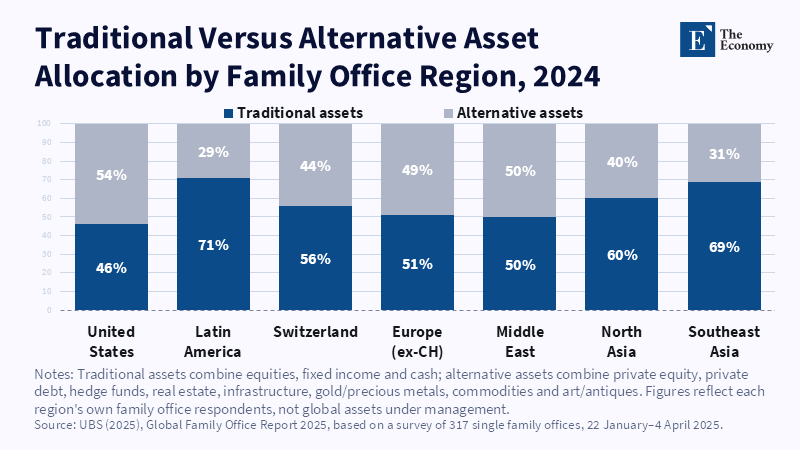
The rise of family offices is not only due to the size of the capital they manage. It is due to the combination of duration, unified decision-making power and operational involvement capacity that traditional investment schemes do not always have. But as the number of families moving from passive investment of funds to active portfolio management increases, the emphasis shifts to internal organization.
Many family offices still operate with fragmented systems, legacy software and data stored in spreadsheets collected over decades. Reporting is delayed when information from banks, custodians and fund managers is processed manually, which also limits the ability to analyze scenarios in real-time and becomes increasingly difficult to manage as portfolios spread across more managers, private investments, currencies and legal entities. Creating a single source of truth for data is no longer a matter of convenience but a prerequisite for timely decision-making.
Technology Becomes a Performance Multiplier
AI has begun to change the way small groups of investors evaluate thousands of opportunities simultaneously, identify comparable data and maintain disciplined decision-making frameworks. Nine out of ten family offices believe AI could enhance their investment returns, while half have already tried it, according to a 2025 Bank of America survey. At the same time, allocations to private equity among family offices increased from 22% in 2021 to 30% in 2023, with private equity outpacing public equity in portfolios for the first time.
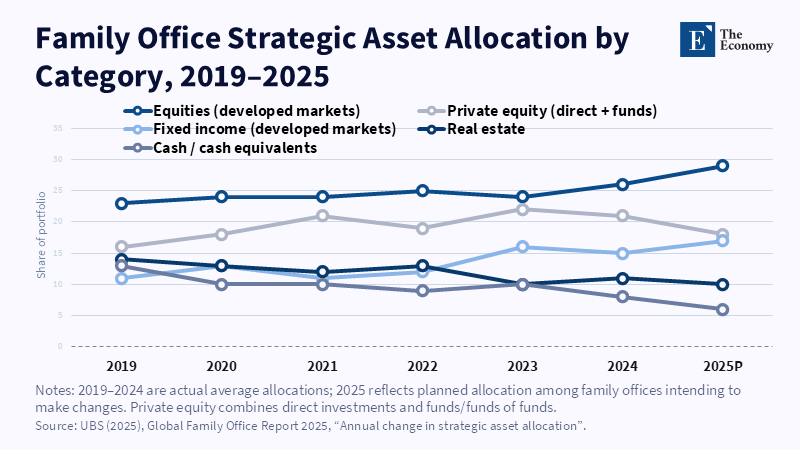
This shift would not be possible without tools that accelerate due diligence and opportunity identification. Human judgment remains essential yet it becomes more useful when technology can screen volumes of data that a small internal team could not reasonably process alone, particularly when investment opportunities arrive from different markets and managers and still need to be compared through a consistent framework. Better data means sharper market intelligence, with price trends and margin pressures becoming visible sooner.
Technology Implementation Is an Ongoing Process
Choosing software is not a one-time project. Eight to twelve weeks may be required for a new technology evaluation, with another three to six months often needed for implementation depending on the complexity of the use cases. Continuous staff training, early stakeholder involvement and collaboration with specialized suppliers are also required across functions ranging from portfolio management to accounting.
Technology infrastructure needs to remain flexible because reporting, investment and governance requirements change as leadership passes between generations and systems selected today may eventually have to support a rather different family office, with different expectations around access to information and different ways of making decisions. For offices developing data tools and secure digital information portals, the transition is increasingly treated as a continuous process of improvement rather than an integrated project that ends after installation.
Fragmented Infrastructure Creates Governance Risk
The absence of proper software governance can derail a technology upgrade project, delaying timelines and reducing stakeholder engagement. Clear responsibility for implementation should be assigned to an in-house financial or technology manager. Without this role, competing priorities tend to weaken implementation.
Understaffing remains a significant constraint, particularly for family offices outside major financial centers. Functions such as accounting, tax structuring and specialist investment work are often outsourced when internal capacity is limited, either to external partners or to multi-family offices. Broader use of external suppliers is becoming part of the operating model as families seek institutional-level expertise without having to build every capability internally from scratch.
Continuity Matters More Than Installation
The private wealth management environment is becoming more operationally complex, making static systems harder to maintain. The combination of continuing wealth transfers, substantial allocations to private capital and demand for faster and more accurate analysis makes technology a key operating component rather than an optional investment. Family offices that treat software as a one-time project risk falling behind those that have built a culture of continuous upgrading, staff training and vendor renewal.
Table 1: Family Office Technology Priorities
| Priority | Current Evidence | Why It Matters |
|---|---|---|
| Technology Infrastructure | 43% developing or rolling out a technology strategy | Reduces fragmented reporting and manual work |
| AI and Analytics | 9 in 10 believe AI could improve returns | Expands research and analytical capacity |
| Private Markets | PE rose from 22% to 30%, 2021 to 2023 | Increases diligence and reporting demands |
| Staffing and Outsourcing | 44% of U.S. offices cite understaffing | External expertise can fill capability gaps |
Investing in technology only pays off when it is accompanied by governance, human resources and a commitment to continuous improvement. The numbers already show some of the direction of travel: continued substantial allocations to private markets, growing experimentation with AI tools and greater willingness to use external expertise where internal capacity is limited, which together mean that technology decisions increasingly affect far more than reporting alone and can influence how effectively a family office handles investment analysis, governance and the transfer of responsibilities between generations. Offices building stronger infrastructure now will be better placed to absorb the next phase of wealth transfer without creating the same level of operational strain.
This article reflects the analytical judgment of The Economy Markets Editorial Board and does not constitute business advice or the official position of any affiliated institution.
References
Edem, E. (n.d.) The General Counsel: The Missing Link in Family Offices. Major, Lindsey & Africa.
Graziotto, F. (2025) Family Offices: Collaboration Among Advisors and Family Members. Global Law Experts.
Joynt, R. (2019) Where to Locate a Family Office: 5 Key Factors to Consider. Ocorian.
Mahdi, S., in Deutsche Bank Wealth Management (2026) What Should Family Offices Look for in a Wealth Manager?.
Withers Worldwide (n.d.) Families and Family Offices.
The Economy Markets Editorial Board is a multidisciplinary group of researchers, analysts and sector specialists covering the structure and evolution of global professional and institutional markets. Its work examines competitive landscapes, market positioning, buyer choice and the forces reshaping industries across advisory services, capital markets, wealth management, healthcare and other specialist sectors.
The Board also contributes to The Economy’s ranking research, where its members assess firms, institutions and market participants using structured research, sector evidence and comparative analysis. This combination of market research and ranking coverage gives the Board a continuing view of how competitive positions develop within individual industries and how firms differentiate themselves as markets evolve.
Through The Economy Markets, the Board translates this research into accessible analysis of market structure, competitive dynamics and institutional change, complementing The Economy’s rankings, Wiki profiles and broader research coverage with a comparative view of the markets in which ranked organisations operate.
Similar Post