“Baltic Flashpoint Emerges” Eastern Europe’s Security Significance Surges Amid Escalating Russian Tensions, U.S. Defensive Frontline Shifts From Germany to Poland

As one of the youngest members of the team, Tyler Hansbrough is a rising star in financial journalism. His fresh perspective and analytical approach bring a modern edge to business reporting. Whether he’s covering stock market trends or dissecting corporate earnings, his sharp insights resonate with the new generation of investors.
Authored On
Modified
U.S. plans additional deployment of 5,000 troops to strategically vital Poland
Germany transformed from frontline state into logistical rear base as U.S. troop withdrawals accelerate
Rising escalation risks near the Baltic Sea fuel implicit Russia-NATO and U.S. military standoff
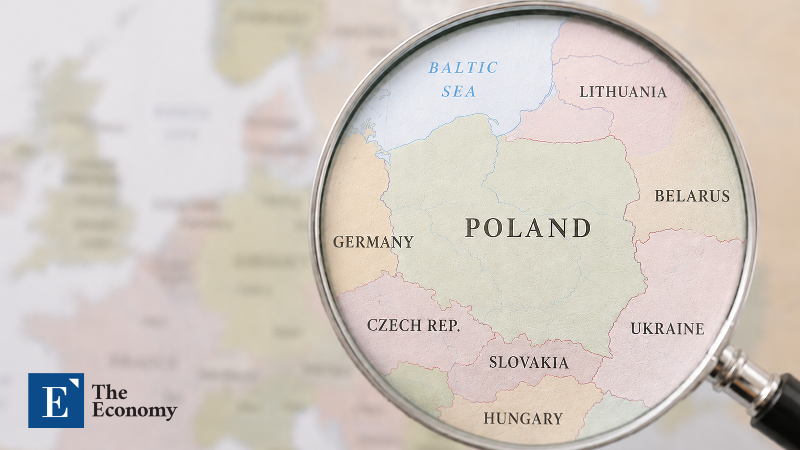
Poland has emerged as the central pillar of Europe’s evolving security architecture. As Russia intensifies military pressure on Baltic states following the outbreak of the Ukraine war, Eastern Europe — led by Poland — has transformed into NATO’s primary deterrence stronghold against Moscow. In response, the United States has begun repositioning troops and defense assets previously concentrated in Germany toward the alliance’s eastern flank, reinforcing efforts to contain further Russian expansion toward the West.
U.S. Focuses on Poland’s “Strategic Value”
According to a report published on the 26th by Polish financial outlet Forsal, the Center for European Policy Analysis (CEPA), a U.S. think tank, stated in a recent analytical report that “Poland’s importance is far greater than commonly recognized thanks to the infrastructure that keeps Europe moving, including ports, roads and pipelines.” The report underscored Poland’s strategic value as a practical deterrence hub centered around the Port of Gdansk and the Long-Term Military Storage and Maintenance Site-Depot (LTMS-D) in Powidz. Poland has already emerged as a critical node in Eastern European security following Russia’s invasion of Ukraine, serving both as a key transit corridor for military aid into Ukraine and as a strategic anchor on NATO’s eastern frontier.
Major Western powers are increasingly acknowledging Poland’s strategic importance. The United States stands at the forefront of this shift. Earlier this month, Polish President Karol Nawrocki stated during a visit to Lithuania that “we are fully prepared with the infrastructure necessary to host U.S. troops,” openly extending an invitation for deeper American military presence. U.S. President Donald Trump responded on the 21st through his social media platform Truth Social, declaring that “the United States will send an additional 5,000 troops to Poland.” The move would increase the American military presence in Poland from roughly 10,000 troops to approximately 15,000.
U.S. military publication Military Times reported that the Pentagon could revive plans to rotationally deploy the U.S. Army’s 2nd Armored Brigade Combat Team under the 1st Cavalry Division — a force of approximately 4,000 personnel originally intended for stationing in Poland. Washington had previously suspended the deployment abruptly as part of broader force realignment measures across Europe. The Wall Street Journal (WSJ) also reported that the U.S. is internally reviewing a proposal to relocate the 2nd Cavalry Regiment currently stationed in Vilseck, Germany, to Poland.
Germany Retreats Into Rear-Area Security Role
While expanding its military footprint in Poland, the United States is simultaneously moving to reduce troop levels in Germany. The Trump administration officially announced on the 1st that approximately 5,000 U.S. troops stationed in Germany would be withdrawn. The redeployment is expected to be completed within the next six to twelve months, although detailed operational plans remain unclear. Since the end of World War II, Washington has maintained a substantial military presence in Germany, where approximately 35,000 to 36,000 American troops are currently stationed, centered around facilities such as Ramstein Air Base in Rhineland-Palatinate.
The underlying rationale behind the decision reflects broader changes in Europe’s security environment. The United States originally stationed large-scale forces in Germany after World War II to stabilize the Franco-German border region. During the Cold War, U.S. forces based in Germany functioned as rapid-response units designed to block potential Soviet armored advances into Western Europe. Germany effectively represented the primary frontline between NATO and the Soviet-led Warsaw Pact. Military facilities in western Germany — particularly Ramstein Air Base — long served as critical hubs for European defense and broader U.S. strategic operations.
The outbreak of the Ukraine war fundamentally altered that strategic equation, elevating Eastern Europe into NATO’s primary frontline theater. Within Washington, perceptions have intensified that the existing U.S. troop presence in Germany reflects an outdated Cold War-era force posture. Germany’s role is therefore increasingly being redefined as a rear-area logistics hub responsible for transferring NATO troops and military supplies toward Eastern Europe. NATO and the German military formally reinforced this transition through the 2024 “Operation Plan Germany” (OPLAN DEU), which designated Germany as a central transit platform for eastern frontline deployments.
Russia’s Western Expansion Scenario
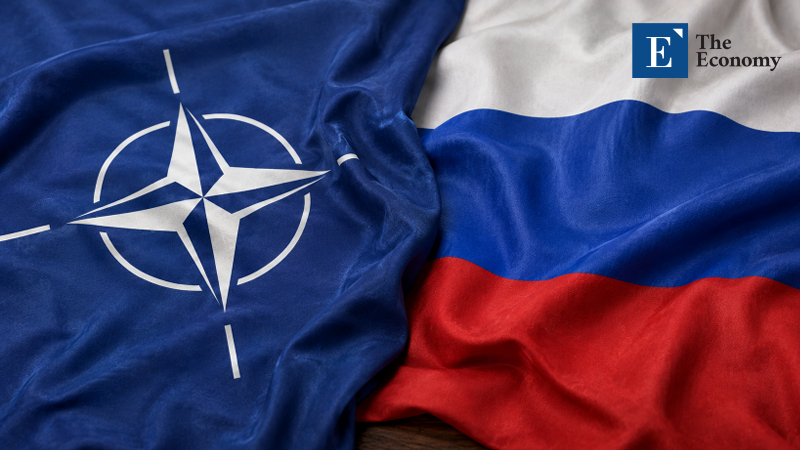
The broader transformation of Europe’s security environment has become increasingly visible amid escalating military tensions centered around Russia. Moscow has sharply intensified threats directed toward Baltic states in recent months. One prominent example came after Latvia provided support for Ukraine’s drone operations, prompting Russia to threaten strikes against Latvian military leadership and related infrastructure. Moscow additionally conducted surprise nuclear drills this month involving the deployment of nuclear warheads to Belarus, while simultaneously warning foreign embassies and civilians to evacuate Kyiv amid the possibility of large-scale bombardment targeting the Ukrainian capital.
Against this backdrop, European security officials are increasingly warning that Russia could attempt broader escalation scenarios in the future. While a full-scale invasion of NATO territory remains unlikely in the immediate term, analysts believe Moscow retains ample room to test NATO cohesion and political resolve through limited military actions or hybrid warfare tactics. Baltic states and NATO territories in the Arctic region are frequently cited as potential pressure points. Should Russia initiate military operations in such areas, NATO could rapidly face a high-stakes decision regarding activation of its collective defense clause.
To prepare for potential Russian “unexpected actions,” NATO has already begun expanding multinational battlegroups in Poland and the three Baltic states. The alliance is accelerating efforts to move beyond symbolic deterrence deployments toward a forward defense posture capable of sustained combat operations. The United States has also strengthened defense cooperation with Poland over recent years through large-scale sales of advanced American weapon systems, including M1A2 Abrams tanks, F-35A stealth fighters, AH-64E Apache attack helicopters and High Mobility Artillery Rocket System (HIMARS) launchers. In 2024, the United States formally activated its Aegis Ashore missile defense site in Redzikowo, northern Poland — a facility widely viewed as one of the core pillars of Europe’s missile defense architecture.
As one of the youngest members of the team, Tyler Hansbrough is a rising star in financial journalism. His fresh perspective and analytical approach bring a modern edge to business reporting. Whether he’s covering stock market trends or dissecting corporate earnings, his sharp insights resonate with the new generation of investors.
Similar Post