“U.S. Pulls Military Lever as Iran Employs Delay Tactics” U.S.-Iran Clash Again in the Strait of Hormuz, Ceasefire Talks Back in the Fog

Siobhán Delaney is a Dublin-based writer for The Economy, focusing on culture, education, and international affairs. With a background in media and communication from University College Dublin, she contributes to cross-regional coverage and translation-based commentary. Her work emphasizes clarity and balance, especially in contexts shaped by cultural difference and policy translation.
Authored On
Modified
U.S. launches another strike just three days after ceasefire
IRGC retaliates with additional attacks on U.S. military positions
Disputes reset over Hormuz, Iran sanctions, and nuclear material
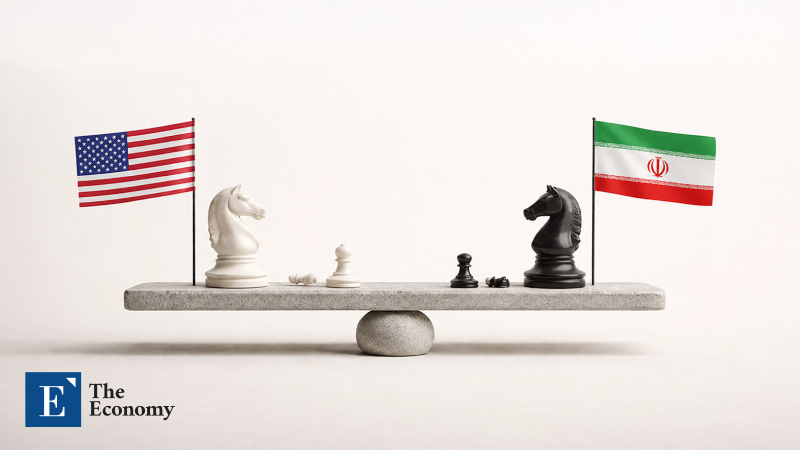
The ceasefire has effectively collapsed as last-minute negotiations aimed at ending the Iran war continue. U.S. forces carried out two rounds of airstrikes against military facilities in southern Iran, while the Islamic Revolutionary Guard Corps (IRGC) retaliated by attacking U.S. air force installations, pushing negotiations back into difficulty. With localized clashes resurfacing, prospects for a final peace agreement have once again become uncertain.
U.S. Resumes Attacks on Iran as Tehran Retaliates
According to Iran’s semi-official Tasnim News Agency on June 28 (local time), the IRGC announced that it had attacked a nearby U.S. air force base. In a statement, the IRGC said, “We are sending the enemy a serious warning that aggression will not go unanswered,” adding that “the aggressor will bear full responsibility.” Iran’s Foreign Ministry also condemned the U.S. airstrikes as a violation of the ceasefire, warning that “Iran possesses the firm determination to take all necessary measures to defend its territory and sovereignty in accordance with the United Nations Charter.” While the IRGC did not specify the exact location targeted, the attack is believed to have been directed at a U.S. military base in Kuwait. On the same day, the Kuwaiti military posted on X that “air defense systems are currently intercepting hostile missile and drone attacks,” adding that “explosions are being heard as enemy projectiles are engaged.”
Iran’s retaliation came in response to two earlier U.S. strikes against southern Iran. Iran’s semi-official Mehr News Agency reported that three explosions were heard at approximately 1:30 a.m. in the southern port city of Bandar Abbas on June 28. According to Reuters, U.S. forces shot down multiple drones deemed threats to military personnel and commercial traffic while targeting related military facilities. The United States had previously carried out limited strikes against Iranian vessels near the Strait of Hormuz on June 25, though the U.S. military downplayed the action at the time as an exercise of self-defense, and Iranian forces refrained from an immediate response. This time, however, Washington struck a key Iranian port responsible for overseeing the Strait of Hormuz, prompting an immediate Iranian counterattack and sharply escalating tensions once again.
The renewed use of force came as diplomatic efforts faced mounting obstacles. The United States and Iran continue negotiations over a memorandum of understanding (MOU) aimed at ending the conflict, but significant differences remain unresolved on core issues. Washington believes Tehran is deliberately prolonging negotiations to buy time, while Iran continues to refuse concessions on sanctions relief and security guarantees. As the stalemate deepened, U.S. President Donald Trump publicly intensified his warnings. During a Cabinet meeting at the White House on June 27, Trump stated, “We have not yet reached a point that satisfies us,” adding, “If we don’t get a deal, we may just have to finish the job.” The remark suggested that Washington could abandon the peace negotiations altogether.
Dispute Over Control of the Strait of Hormuz
Differences over the peace process had already surfaced before the latest clashes. On June 27, the White House rejected as a “complete fabrication” a reported draft agreement between Washington and Tehran aired by Iran’s state-run IRIB. The document, reportedly titled the “Islamabad MOU,” was said to include provisions covering the withdrawal of U.S. forces, the reopening of commercial shipping within one month, the exclusion of naval warships, and navigation authority vested in Iran and Oman. Tehran appears determined to retain postwar control of the Strait of Hormuz. IRIB reported that “service fees” imposed following the outbreak of the U.S.-Iran war would remain in effect. The broadcaster further stated that Iran, in cooperation with neighboring Oman, would designate and manage shipping routes through the strait.
Responding during a question-and-answer session with reporters at the Cabinet meeting, Trump declared that “the Strait of Hormuz is international waters and no one controls it.” Addressing Oman, which Iran had identified as a cooperative partner, Trump said, “I assume they will behave like every other country,” adding, “Otherwise, they know we will blow them away.” Washington simultaneously intensified economic pressure on Tehran. On June 27, the Treasury Department’s Office of Foreign Assets Control (OFAC) added the Persian Gulf Strait Authority (PGSA), established by Iran to collect transit fees in the Strait of Hormuz, along with all affiliated individuals and entities, to its Specially Designated Nationals and Blocked Persons (SDN) list. The SDN list is maintained by OFAC and targets individuals and organizations suspected of violating international sanctions or related security regulations. Inclusion results in the freezing of U.S.-based assets and a comprehensive prohibition on transactions with U.S. persons.
U.S. Treasury Secretary Scott Bessent accused Iran of attempting to extort global maritime trade through the creation of the PGSA, stating that “this effort by Iran’s military establishment demonstrates the financial strain caused by America’s Economic Fury measures.” Earlier, the Trump administration imposed sanctions on individuals and companies supporting Iranian oil exports to China on June 11 and on entities linked to Iran’s shadow financial networks on June 19 as part of its Economic Fury campaign. The PGSA was recently established by Tehran to oversee navigation through the Strait of Hormuz and announced a “controlled maritime zone” on June 20. The authority has sought to impose transit fees of up to $2 million per vessel during the approval process. Trump, however, has maintained a hardline position, reaffirming what he described as a U.S. red line.
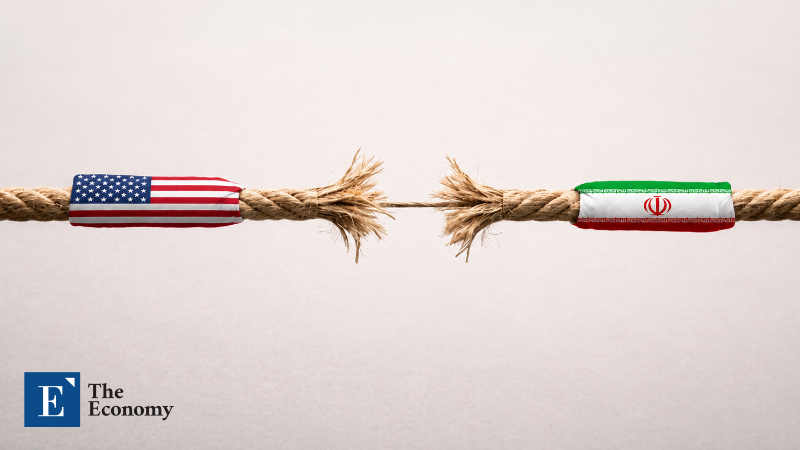
Differences Persist Over Frozen Assets and Nuclear Negotiations
The two sides remain far apart on several other key issues. Washington insists that financial sanctions against Iran cannot be lifted without tangible changes by Tehran. In an interview with PBS prior to the Cabinet meeting on June 27, Trump stated that “the abandonment of highly enriched uranium (HEU) alone will not lead to sanctions relief.” During the Cabinet session, he further emphasized that “we are not discussing sanctions relief or financial assistance.” Iran’s negotiating team, by contrast, is demanding the release of $24 billion in frozen assets and insists that half of that amount, $12 billion, must become immediately accessible once an MOU with Washington is signed. Tasnim reported on June 28 that a member of the negotiating team stated, “If the United States does not implement these measures, it will be difficult to proceed to the next stage.”
Major differences also remain over Iran’s nuclear program. Speaking to reporters during the Cabinet meeting, Trump stated that negotiations with Iran were “still not at a satisfactory stage,” suggesting that the process could drag on. In particular, when asked about a proposal to transfer Iran’s stockpile of 440 kilograms of uranium enriched to 60% purity to China or Russia, Trump replied, “I would be uncomfortable with that,” signaling opposition. The remark was interpreted as an indication that Washington wants to remain at the center of any uranium dismantlement process. Responding to media reports suggesting sanctions relief could be offered in exchange for peace, Trump declared, “There is no sanctions relief, no money, no anything in this negotiation.” Iranian negotiators, however, dismissed those remarks, arguing that the MOU currently under review contains no nuclear provisions and that sanctions relief would be addressed only in subsequent negotiations.
The red lines of both sides remain directly opposed. Iranian hardliners continue to insist on retaining control of the Strait of Hormuz and preserving the country’s nuclear program, while Washington views those same issues as central conditions for any agreement. One key difference is that the United States operates with a relatively unified decision-making structure, whereas multiple hardline factions and political groups within Iran continue to issue divergent positions. This lack of clarity regarding negotiating authority has become a major factor prolonging the stalemate. At the same time, Washington remains concerned that Tehran could secure limited sanctions relief while continuing to buy time. Both sides, however, face mounting domestic political and economic pressures and recognize the need for an eventual agreement. Trump confronts rising global oil prices and growing domestic fatigue associated with a prolonged conflict, while Iran continues to suffer severe economic hardship resulting from years of sanctions and maritime restrictions.
As the deadlock drags on, Washington’s options are steadily narrowing. The fact that the United States resumed bombing operations just three days after the ceasefire appears to reflect frustration with the prolonged negotiations and a determination to increase pressure. In the absence of a visible diplomatic breakthrough, Washington is attempting to combine sanctions and military pressure to force Iranian concessions. The Washington Post and The New York Times observed that “Trump abruptly reverted to a hardline approach after finding it difficult to extract concessions from Iran that would satisfy hawkish elements within the United States.”
Siobhán Delaney is a Dublin-based writer for The Economy, focusing on culture, education, and international affairs. With a background in media and communication from University College Dublin, she contributes to cross-regional coverage and translation-based commentary. Her work emphasizes clarity and balance, especially in contexts shaped by cultural difference and policy translation.
- Previous “Baltic Flashpoint Emerges” Eastern Europe’s Security Significance Surges Amid Escalating Russian Tensions, U.S. Defensive Frontline Shifts From Germany to Poland
- Next Following the UK and Switzerland, France Extends Public Insurance Coverage to Wegovy and Mounjaro, Marking a Paradigm Shift From ‘Personal Responsibility’ to ‘Treatable Disease’
Similar Post