“A Soft Touch Toward Africa and the U.S., an Onslaught Against the EU”: China’s Selective Trade Strategy and the Limits of Interest-Driven Calculus

Aoife Brennan is a contributing writer for The Economy, with a focus on education, youth, and societal change. Based in Limerick, she holds a degree in political communication from Queen’s University Belfast. Aoife’s work draws connections between cultural narratives and public discourse in Europe and Asia.
Authored On
Modified
China Becomes World’s First Country to Apply Zero Tariffs Across African Imports
Limited Compromise With the U.S. Through Partial Tariff Easing Despite Trade Frictions
As EU Unveils a Barrage of China-Focused Regulations, Beijing Warns: “Will Europe Repeat America’s Mistake?”

China has eliminated tariffs on imports from 53 African countries. The move marks another visible sign of the conciliatory trade-policy posture recently evident in U.S.-China relations. However, experts say China’s approach reflects strategic interests rather than a genuine commitment to market opening. In practice, China continues to remain locked in trade friction with the European Union (EU), which has been rolling out strong China-focused countermeasures in strategic industries.
China’s Bold Trade Strategy
According to The Wall Street Journal (WSJ) on the 26th, China began applying zero tariffs to all goods from 53 African countries on the 1st. Under United Nations (UN) standards, Africa has 54 countries in total, and only Eswatini, which maintains diplomatic relations with Taiwan, was excluded. As a result, more than 9,000 major African export items have entered China tariff-free since this month. China’s state-run Xinhua News Agency said the measure expands the zero-tariff policy introduced in December 2024 for 33 least-developed African countries, adding that China is the first country in the world to implement fully tariff-free trade with African nations.
Market analysts say the shift could deliver substantial economic and strategic gains for China. China-Africa trade is structured around Africa exporting raw materials such as cobalt, copper, manganese, rare earths and crude oil, while China exports manufactured goods. A tariff-free environment would allow China to stabilize supplies of strategic minerals needed for core industries including electric-vehicle batteries, semiconductors and defense. Easier access to agricultural goods such as South African wine, Kenyan coffee and avocados, and cocoa from Ghana and Côte d’Ivoire could also help partly stabilize prices in China.
The move is also favorable for China because it can sell electronics, solar equipment and other goods more aggressively into African markets. It has secured an outlet to ease pressure from Western protectionism and domestic overproduction. Some observers also see the tariff adjustment as a strategic step to expand China’s influence across emerging and developing economies in the Global South. The assessment is that China aims to use the zero-tariff measure as a platform to secure support from 53 African countries on the diplomatic stage.
U.S.-China Tariff War Enters a Pause
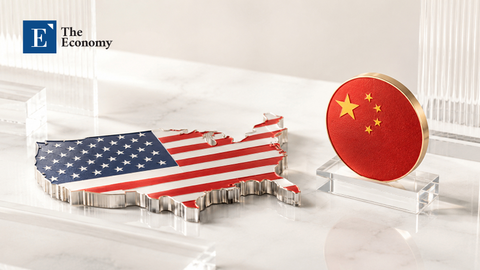
China is also easing pressure in its long-running trade dispute with the United States. The conflict between the two countries escalated in earnest in 2018 during the first administration of U.S. President Donald Trump. At the time, the United States imposed high tariffs on $360 billion worth of Chinese goods, citing the U.S. trade deficit with China and Beijing’s forced technology-transfer practices. China responded by levying retaliatory tariffs on U.S. agricultural and energy products. The dispute later expanded across strategic industries. Supply-chain confrontation deepened as the United States restricted exports of advanced semiconductors and equipment to China, while China imposed export controls on rare earths and critical minerals.
Meaningful progress in bilateral relations has emerged only recently. On the 16th, a spokesperson for China’s Ministry of Commerce said in a statement that “the United States and China formed a positive consensus in the economic and trade fields through a high-level meeting held in South Korea on the 13th and a summit held in Beijing on the 14th.” The spokesperson added, “Positive conclusions were reached on some tariff measures,” and said, “The two countries will discuss issues such as tariff reductions through the trade committee and have agreed in principle to reduce tariffs on products of mutual concern on an equivalent scale.” On the 26th, U.S. Trade Representative (USTR) Jamieson Greer also referred to the situation at a Council on Foreign Relations (CFR) event, saying the U.S. would begin a domestic comment process through a Federal Register notice on which Chinese products should receive tariff relief.
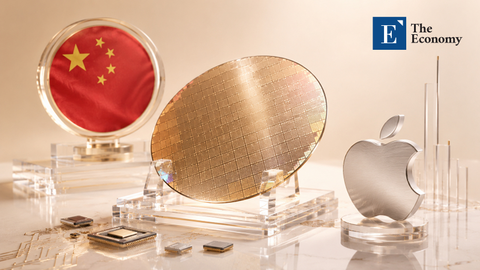
According to Reuters and other foreign media outlets, the two countries first agreed to review whether to reduce or eliminate tariffs on $30 billion worth of non-strategic goods. The arrangement represents a limited compromise under which existing export controls and high tariffs would remain largely in place for security-sensitive items such as semiconductors, artificial intelligence (AI), military technologies and critical minerals, while some tariffs would be eased mainly on less strategic items such as consumer goods and general manufactured products. As prolonged trade tensions increased the burden on companies and consumers in both countries, the two sides effectively opted for mutual concessions to reduce tangible damage.
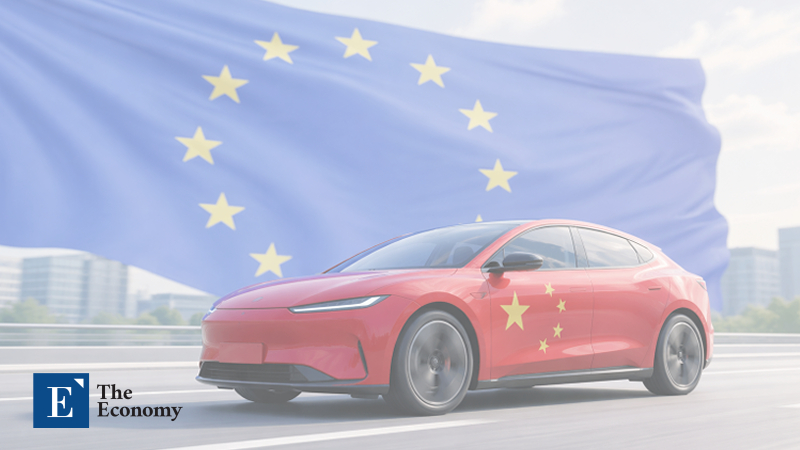
China-EU Conflict Remains Ongoing
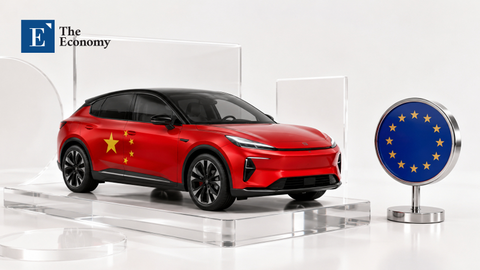
China, however, is not pursuing a conciliatory trade policy toward all countries. It is actively adjusting its trade-policy stance according to its strategic interests and the need to protect domestic industries. The state of EU-China trade tensions clearly illustrates this trend. The EU has steadily raised the level of regulation, arguing that Chinese industries are threatening Europe’s strategic industrial ecosystem by flooding the market with low-priced goods backed by government subsidies. A representative example is the draft Industrial Accelerator Act (IAA) unveiled in March.
The core of the draft IAA is to tighten standards for public procurement, state subsidies and foreign investment regulations in strategic industries. Under its foreign investment rules, if a single non-EU country accounts for more than 40% of global production capacity in a strategic industry, investments of more than $117 million by companies from that country would be subject to prior review. The measure is widely interpreted as a standard effectively aimed at China. Companies subject to review would be required to ensure that at least 50% of their total workforce consists of EU citizens and meet conditions including integration into European supply chains, technology transfer and contributions to local research and development (R&D). In addition, on the 19th, the European Parliament approved a strengthened steel safeguard measure that would raise import tariffs on steel from 25% to 50% and reduce the tariff-free import quota from 35 million tons a year to 18.3 million tons. As concerns grew that low-priced Chinese steel products could flood into the European market following the U.S. steel tariff increase, the EU moved preemptively to raise trade barriers.
Regulation could intensify further going forward. According to Politico Europe, five countries — France, Italy, Spain, the Netherlands and Lithuania — recently delivered a joint informal paper to the European Commission and member states stating that “some countries are causing structural industrial overcapacity.” This is widely understood as a de facto criticism of China’s trade practices. The five countries argued that the EU should more actively trigger safeguard measures and launch trade investigations, while also emphasizing the need to pursue steps such as expanding World Trade Organization (WTO) complaints, increasing investigative staffing and strengthening criteria for trade-remedy decisions. They also called for rules to be revised so foreign companies cannot circumvent EU-level investigations, and for the Commission’s authority to be expanded so it can impose anti-subsidy duties directly on individual foreign companies.
China strongly pushed back against the EU’s moves. In an editorial on the 26th, China’s state-run Global Times argued that the “China shock theory” based on the EU’s trade deficit with China has been exaggerated, saying that Chinese exports in new industries such as electric vehicles, solar power and batteries reflect Europe’s structural demand. It went on to criticize Europe, saying, “The weakening of European industrial competitiveness is a problem Europe itself has caused through the energy crisis, excessive regulation and insufficient R&D investment,” and that “it cannot be solved with trade barriers.” The editorial also stressed that “America’s tariff policy against China ultimately burdened U.S. companies and consumers as well as global supply chains,” adding that “the EU must not repeat the same mistake.”
Aoife Brennan is a contributing writer for The Economy, with a focus on education, youth, and societal change. Based in Limerick, she holds a degree in political communication from Queen’s University Belfast. Aoife’s work draws connections between cultural narratives and public discourse in Europe and Asia.
- Previous “U.S.-China Rivalry Expands Into Minerals” As Chinese Miners Absorb Overseas Assets, Washington Responds With Industrial Policy Counteroffensive
- Next “Baltic Flashpoint Emerges” Eastern Europe’s Security Significance Surges Amid Escalating Russian Tensions, U.S. Defensive Frontline Shifts From Germany to Poland
Similar Post