Trump Deal Faces Republican Backlash as Ceasefire Roadmap Advances, While Dispute Over Uranium Removal Remains Unresolved

Anne-Marie Nicholson is a fearless reporter covering international markets and global economic shifts. With a background in international relations, she provides a nuanced perspective on trade policies, foreign investments, and macroeconomic developments. Quick-witted and always on the move, she delivers hard-hitting stories that connect the dots in an ever-changing global economy.
Authored On
Modified
Hardline Republicans push back as Vice President Vance heads to the negotiating table after delays
Disagreements over the future of Iran’s nuclear program persist despite the conclusion of the first high-level talks
Disposition of highly enriched uranium and the scope of nuclear facility inspections emerge as decisive factors for a final agreement
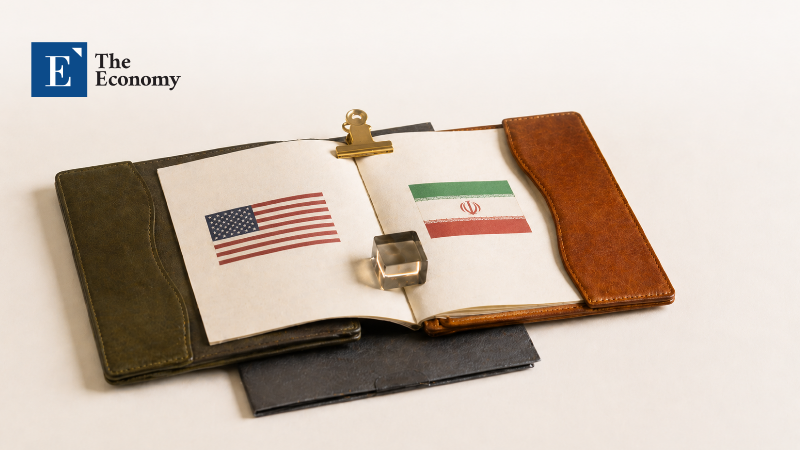
The United States and Iran have concluded their first high-level meeting since signing a memorandum of understanding (MOU) centered on ending the war, but significant differences remain over how Iran’s nuclear program should be handled. While the two countries are set to begin follow-up negotiations aimed at reaching a final peace agreement within the next 60 days, they continue to diverge on the treatment of highly enriched uranium and verification measures for nuclear facilities. Whether the two sides can reach common ground on the future of the nuclear program has emerged as the key variable that will determine the success or failure of the peace negotiations.
First High-Level U.S.-Iran Peace Talks Conclude in Switzerland
According to Reuters and other foreign media outlets on June 22 (local time), Qatar and Pakistan, which are mediating the peace process, announced in a joint statement that the first round of high-level talks between the United States and Iran concluded early that morning. The statement said the two sides agreed to establish a high-level committee that will provide political oversight for implementation of the MOU. The committee will be responsible for drafting a detailed roadmap for concluding a final peace agreement within the next 60 days.
The two sides also agreed to establish a deconfliction cell involving the United States, Iran, and Lebanon under the support of the mediating countries to ensure the effective implementation of a ceasefire arrangement covering military operations in Lebanon. In addition, they agreed to create a direct communication channel between Washington and Tehran to guarantee the safe passage of commercial vessels through the Strait of Hormuz and prevent accidental clashes or miscalculations.
The talks were far from smooth from the outset. A day earlier, Iran threatened to reimpose a blockade on the Strait of Hormuz, arguing that Israel had continued attacking Hezbollah even after the MOU was signed. During the negotiations, President Donald Trump posted on Truth Social that Iran would face another powerful strike if it failed to restrain Hezbollah, pushing the talks toward a potential breakdown. Iran’s state-run IRNA news agency reported that the talks were suspended after just 80 minutes and that the Iranian delegation abruptly left the venue, raising concerns that negotiations had reached a critical impasse.
Nevertheless, neither side abandoned the negotiating table. AFP, citing an anonymous diplomatic source familiar with the discussions, reported that “the Iranian delegation remains engaged in the talks and has given no indication to mediators of any intention to withdraw.” U.S. online outlet Axios assessed that the “near-continuous marathon negotiations suggest both sides remain committed to dialogue despite substantial disagreements.”
Vice President Vance Returns to Switzerland as Discontent Grows Among Republican Hardliners
The meeting was attended by U.S. Vice President JD Vance and Iranian Parliament Speaker Mohammad Bagher Ghalibaf. Although the high-level session has concluded, working-level negotiations will continue throughout the week at the Bürgenstock Resort in Switzerland. Vance had originally planned to attend negotiations scheduled for June 19 at the resort near Lucerne but abruptly canceled the trip, citing operational issues. Analysts believe the move was heavily influenced by mounting opposition within the Republican Party to the contents of the MOU.
Iran hawks have been particularly vocal. Senator Roger Wicker (R-Mississippi), chairman of the Senate Armed Services Committee, said in a June 18 statement that “the $300 billion intended for Iran’s reconstruction, even if not funded by American taxpayers, makes the concessions contemplated under the Obama administration’s 2015 nuclear deal look insignificant.” Critics argue that Washington effectively suffered a strategic defeat by failing to secure meaningful concessions on the nuclear issue, which had been the central justification for the war. Foreign media outlets have likewise characterized the ceasefire arrangement as a major economic concession.
Incumbent lawmakers who previously challenged Trump and lost their Republican primary races also joined the criticism. Senator Bill Cassidy (R-Louisiana) said, “President Ronald Reagan is rolling over in his grave. This is the worst foreign policy mistake in decades.” The remark reflected concerns that Trump is fundamentally reshaping the Republican Party’s traditional conservative foreign policy doctrine. Senator John Cornyn (R-Texas) also criticized the agreement, saying it “hands massive sums of money to support Iranian proxies while failing to stop Iran’s uranium enrichment and its imposition of transit fees in the Strait of Hormuz.”
Earlier, Senator Lindsey Graham, one of Trump’s closest allies, expressed concern after the MOU announcement on June 15, posting on X that “Iran’s interpretation of the agreement appears different from that of the U.S. negotiating team.” Graham called for any final agreement with Iran to be submitted to Congress for a vote. While he stopped short of directly attacking the MOU, his comments reflected skepticism toward Iran and a call for caution by the Trump administration.
For weeks, Republican hardliners and former senior Trump administration officials have publicly warned that the proposed agreement would settle for far less than what Trump originally promised. Former Secretary of State Mike Pompeo argued that the deal differed little from the Obama-era nuclear agreement and amounted to financing Iran’s Islamic Revolutionary Guard Corps while enabling continued development of weapons of mass destruction programs.
Despite the backlash, Vance arrived in Switzerland on June 21 and joined the negotiations, just two days after canceling his trip. Washington had initially believed there was little need to rush, given its dominant negotiating position, and intended to calm internal Republican opposition before assessing progress in working-level talks. However, as Iran raised the possibility of reblocking the Strait of Hormuz and reports surfaced suggesting the Iranian delegation might walk out, the deteriorating situation appears to have forced the vice president to engage directly in the negotiations.
The 60-Day Nuclear Negotiations and the Uranium Dilemma
One factor complicating the negotiations is the starkly different interpretations of the agreement by the two sides. The sharpest divergence concerns the treatment of highly enriched uranium and the abandonment of nuclear weapons development. Iran emphasized that it never intended to develop nuclear weapons in the first place. While Tehran acknowledged agreeing to certain restrictions on uranium enrichment and highly enriched uranium, it argued that these issues remain under Iran’s sovereign control and that the original wartime objective pursued by the United States and Israel—“the removal of nuclear material by force”—had not been achieved.
A prohibition on possessing nuclear weapons constitutes a political and declaratory commitment by Iran not to develop or acquire nuclear arms in the future. Because Iran has long maintained that it never sought nuclear weapons, such a pledge is relatively easier for Tehran to accept. The handling of the nuclear program itself is a far more sensitive issue. It involves concrete implementation measures, including whether existing stocks of highly enriched uranium will be exported or destroyed, whether enrichment facilities and centrifuges will be dismantled, and how international verification will be conducted.
The United States ultimately seeks the latter. Washington believes that eliminating both the materials and infrastructure required to build nuclear weapons is the only way to permanently prevent Iran from becoming a nuclear-armed state. The U.S. negotiating team has two core demands: the immediate removal from Iran—or permanent destruction—of all nuclear materials, including highly enriched uranium accumulated to date, and the institutionalization of a strict prohibition on any future enrichment activity within Iranian territory. Iran, however, maintains that retaining enriched uranium domestically and preserving a peaceful nuclear program are matters of national sovereignty that cannot be relinquished. Iranian officials have repeatedly stated throughout negotiations with Western powers that “Iran’s nuclear program is entirely peaceful in nature and has never sought nuclear weapons.”
According to the International Atomic Energy Agency (IAEA), Iran possessed approximately 441 kilograms of uranium enriched to 60% and 184 kilograms enriched to 20% as of June last year. Uranium-235, the fissile isotope contained in natural uranium, accounts for less than 1% of the material. As a result, enrichment is essential for both nuclear fuel production and nuclear weapons development. Iran has conducted enrichment activities using centrifuges at facilities including Natanz, Fordow, and Isfahan. Experts believe that if Tehran secures additional enrichment capacity, it could reach the 90% enrichment level generally associated with weapons-grade material within a matter of weeks. The current stockpile is theoretically sufficient to produce roughly ten nuclear bombs.
Experts caution, however, that recovering nuclear material through military means would be extremely difficult in practice. Eric Brewer, a senior fellow at the Center for Strategic and International Studies (CSIS), said, “There is a possibility that Iran dispersed some nuclear materials to other locations before the airstrikes,” adding that “it is difficult to assume we know the precise location of all of them.” Ultimately, the success or failure of the negotiations is likely to hinge on the scope of verification. The decisive question is how much access Iran will grant IAEA inspectors to nuclear facilities, enriched uranium inventories, and centrifuge inspections. The United States is likewise concentrating its negotiating leverage on securing meaningful verification authority over both nuclear materials and nuclear facilities.
Anne-Marie Nicholson is a fearless reporter covering international markets and global economic shifts. With a background in international relations, she provides a nuanced perspective on trade policies, foreign investments, and macroeconomic developments. Quick-witted and always on the move, she delivers hard-hitting stories that connect the dots in an ever-changing global economy.
Similar Post
















