Why Supply Chain Diversification Is Essential for Business Resilience

Working across research, policy, and data-driven analysis, the Editorial Board ensures that published pieces reflect a consistent institutional perspective grounded in quantitative reasoning and long-term structural assessment.
Authored On
Modified
Supply chain diversification reduces exposure to regional shocks
Resilience now matters alongside cost efficiency in sourcing
Redundancy helps firms survive geopolitical and infrastructure disruptions

As of February 2026, about a quarter of the world's maritime trade in crude oil and petroleum products passed through the Strait of Hormuz every day. The conflict between Iran, Israel and the United States effectively closed this passage for months. Insurers withdrew their war coverage. The carriers changed routes. No company had planned this conflict, but few were completely unprepared. The last decade has taught industry leaders the same lesson in a hard way, first in 2022 with the war in Ukraine and now again in the Gulf. Production based on a single area is production that can be stopped overnight. Supply chain diversification is no longer the prerogative of the proactive few. It has become a condition of survival for any business that depends on global production.
Why Supply Chain Diversification Has Become Essential
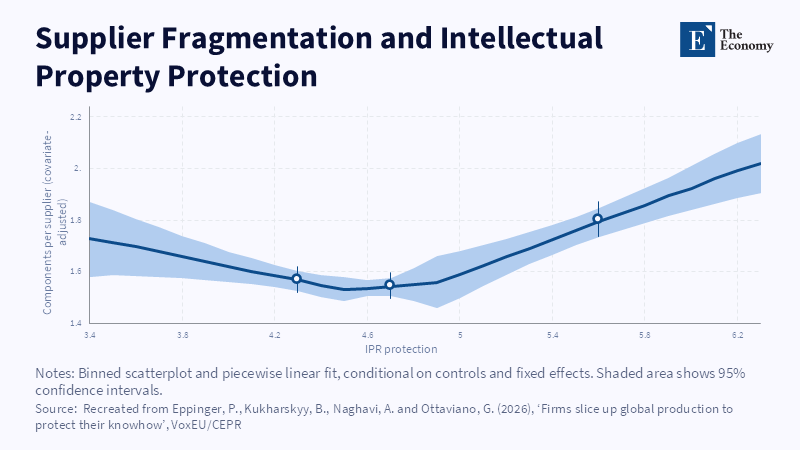
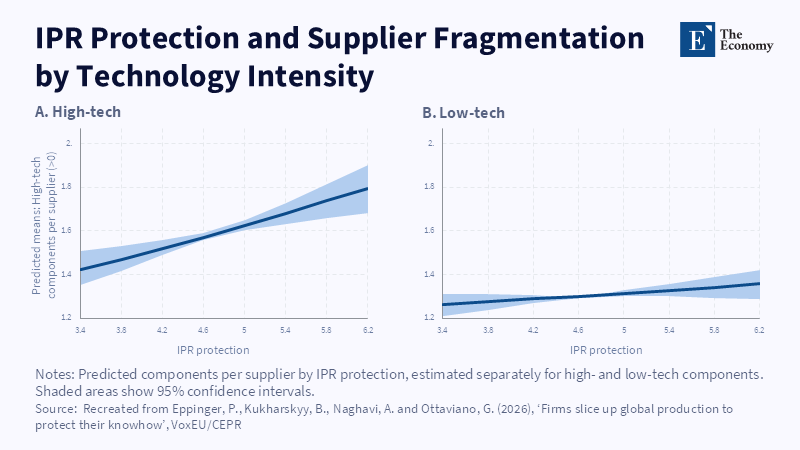
There is a version of this story that emphasizes know-how protection. According to it, businesses are splitting production across multiple suppliers to prevent sensitive technology from being copied from countries with weak intellectual property protection. This is a well-documented phenomenon, particularly in the automotive industry, where high-tech components require careful separation of knowledge. However, this explanation concerns a narrow category of decisions. It doesn't explain why a food company, furniture manufacturer, or fabric supplier chooses to produce on three continents instead of one. The majority of global production placement decisions are not about patent secrets. It's about something more mundane and more urgent, the possibility that a region will stop producing and the cost of that pause will be transferred directly to the company's balance sheet.
The logic is simple. When a company depends on a single region for a critical component or raw material, every local shock becomes a global production problem. When production is split between two or three regions that do not share the same risks, one area can absorb the shock while the rest continue as normal. This is not a theoretical argument. It's the difference between a production line that stops for months and a line that just slows down for weeks. Production costs remain, of course, a second key factor, as businesses are always looking for cheaper labor costs and more favorable tax terms. The cost alone does not explain, however, why so many companies have accelerated their dispersion over the past four years. The risk of disruption does.
Europe Shows the Cost of Single-Source Dependence
Europe offered the first major experiment in real conditions. Before Russia's invasion of Ukraine, Russia supplied around 45 percent of EU gas imports. By 2024, that share had fallen to around 19 percent and by 2025 it had declined further to 12 percent, as the Union shifted its supply to liquefied natural gas from the United States and pipelines from Norway. The adjustment was neither painless nor cheap. It demanded new terminals, new contracts and significantly higher energy prices for industries and households. But it proved something crucial: that dependence on one source turns a geopolitical crisis into an economic disaster, while differentiation reduces it to a serious but manageable problem.
Britain shows how slowly this lesson is being assimilated at the business level. A survey of supply chain executives by the consulting firm SCALA found that 52 percent of businesses maintained safety stocks below 25 percent of their needs, while 71 percent said they would not be able to increase their storage capacity in the country by more than a quarter. More worryingly, 43 percent of respondents admitted that, if their main warehouse stopped operating, no other facility would be able to take over its missions. Only 33 percent had fully implemented resilience strategies. These numbers do not describe weak businesses. They describe businesses that optimized their efficiency so much that they eliminated their margin of endurance. The social infrastructure in many European states, especially in the food and energy supply, is not ready to withstand a prolonged supply shock and the British case proves this with numbers.
The same survey found something equally important, that almost half of the businesses drew more than half of their revenue from their three largest customers. A prolonged interruption therefore not only threatens daily operations, but it threatens a significant part of the entire year's revenues. SCALA called for storage and transport to be recognized as critical national infrastructure, on a par with energy or telecommunications. The request is not excessive. A country can produce enough food and at the same time be unable to distribute it if its storage and transport network collapses at a single critical moment.
From Cost Efficiency to Regional Supply Networks
Businesses did not ignore these lessons. McKinsey's survey of supply chain executives in 2024 found that between 60 percent and 73 percent of businesses were actively pursuing dual sourcing and regionalization efforts of their production, with steady progress year-over-year. The "China plus one" strategy, where a company maintains a Chinese manufacturing base but adds at least one alternative country, became the norm rather than the exception in industries such as electronics and automotive.
The scale of the shift can also be seen at the country level. In 2000, Greater China's five largest trading partners absorbed 60 percent of its export value. By 2024, that figure had fallen to 35 percent, as Chinese industry built networks in Southeast Asia, Africa and Latin America, while its total export value jumped from $443 billion to $4.5 trillion. Europe has taken a more restrained path, maintaining ties with both major economic powers, but its semiconductor industry now accounts for just 8 percent of global production, while consuming 20 percent of global demand. This gap shows how vulnerable even a large economy remains when its production base does not follow its consumption. Production costs remain a key criterion for choosing a country. However, the diversification of the supply chain between many countries, instead of one, is now a prerequisite and not a luxury.
The degree of freedom varies by industry and this deserves attention. In the textile and apparel industries, where labor costs dominate and facilities do not require huge capital investments, companies can move supplies from one country to another within months. In electronics and automotive, where each new unit costs billions and takes years to set up, dispersion must be planned long before the need arises. In both cases, however, the direction is the same, less dependence on a single geographical area and more shock-absorbing capacity wherever they occur.
The Hidden Benefits of Multinational Production
Once a company has a presence in many regions for risk management reasons, other benefits appear that were not the original justification. The multinational operation allows for performance comparison between factories, the transfer of administrative practices from one unit to another and access to local talent that would not be available in a single country. A plant in Vietnam can develop a process improvement that is then applied to a facility in Mexico, without the company having to purchase new technology from an external supplier. The same logic applies to procurement, as a company with a presence in many markets gains bargaining power against raw material suppliers that would be impossible for a company with a single production base.
A 2024 Bruegel study, with data from multiple countries at the level of individual firms, identified positive effects of productivity diffusion from foreign direct investment in developed economies, especially when it comes to investments from scratch rather than acquisitions. This diffusion of knowledge is real, but it remains a side effect and not the reason why a company decides to disperse its production. No management approves a second factory budget because it is waiting for a transfer of know-how. He approves the budget because he fears what will happen if the first factory stops working. The knowledge that circulates between the units is the profit that comes after, not the motivation that starts the process.
There is a second collateral benefit, less measurable but just as real. Executives working in multiple markets develop adaptability that is difficult to cultivate in a company with a single production base. They learn to negotiate with different regulatory regimes, manage teams with different work cultures and recognize warning signs of crisis earlier than a central administration away from production would. But this is not the original goal either. It's just what builds on a decision made to reduce risk, not to increase learning.
Building Supply Chains That Can Survive the Next Shock
Some will argue that the dispersion of production increases the complexity and cost of coordination and they are partly right. More vendors mean more contracts, more quality checks and more points of potential communication failure. A company with ten suppliers on three continents needs more sophisticated monitoring systems than a company with one supplier in one country. But this cost must be compared with the alternative scenario. Coordination costs are measured as percentages of the operating budget. The cost of a complete production stoppage, as shown by the British survey of 43 percent of businesses without an alternative warehouse, is measured in loss of revenue, customers and reputation. The comparison is not even close.
Others will insist that know-how protection remains the real reason behind the dispersion, at least in tech-sensitive industries. The argument has some basis in narrow technological domains, but it does not stand up to wider examination. Textiles, food and household goods do not hide patents of corresponding value and yet companies in these sectors disperse their production at the same rate as electronics. If the only concern was to copy technology, the diaspora would be limited to a few high-tech sectors. In practice, it spreads everywhere where there is exposure to geographic risk, regardless of how sensitive the underlying technology is.
For industry leaders, the direction is clear. Mapping critical points of dependency must precede the next crisis, not follow it. For policymakers, especially in Europe, the priority is to treat storage, transport and energy infrastructure as elements of national resilience rather than secondary services. The two groups share the same interest. An economy with dispersed output withstands shocks that would tear apart an economy concentrated in one source, whether that shock is called war, pandemic, or simple infrastructure failure. No policy can eliminate the next shock. But it can determine whether the economy will absorb it or collapse under its weight.
Even when normal traffic through the Strait of Hormuz eventually resumes, the underlying vulnerability will remain. At some point, a truce will be signed, war premiums will fall and ships will return to their usual route. But the next shock will not be long in coming. It could be a weather phenomenon, a cyber attack or a new geopolitical rupture in an area that today seems quiet. The businesses that will endure will not be those with the lowest production costs in a country. They will be the ones who decided, before it was necessary, to divide the risk into more than one area. Supply chain diversification costs today so as not to cost many times more tomorrow. Any administration that still bases critical components or raw materials in a single area must ask a simple question, what will happen if this area stops tomorrow morning? If the answer is a cause for concern, the time for dispersion is now.
This article reflects the analytical judgment of The Economy Editorial Board and does not constitute policy advice or the official position of any affiliated institution.
References
Ahn, J., Aiyar, S. and Presbitero, A.F. (2024) ‘Productivity spillovers from FDI: A firm-level cross-country analysis’, Bruegel Working Paper, 4 July.
Congressional Research Service (2026) The Strait of Hormuz: Security Developments and Impacts on Oil, Gas, and Other Commodities. CRS Report R45281, updated 7 August. Washington, DC: Congressional Research Service.
Eppinger, P., Kukharskyy, B., Naghavi, A. and Ottaviano, G. (2026) ‘Firms slice up global production to protect their knowhow’, VoxEU, Centre for Economic Policy Research, 17 August.
European Commission (2025) Roadmap towards ending Russian energy imports. COM(2025) 440 final. Brussels: European Commission.
European Commission (2026) REPowerEU – Phase Out of Russian Energy Imports. Brussels: European Commission.
KPMG International (2026) Splintering Supply Chains: Trade Shocks, Intermediary Hubs, and the Financial Architecture of Resilience. KPMG International.
McKinsey & Company (2024) ‘Supply chains: Still vulnerable’, 14 October.
SCALA Consulting (2026) The Resilience Gap: Assessing the Risks and Readiness of Global Supply Chains. SCALA Consulting.
Working across research, policy, and data-driven analysis, the Editorial Board ensures that published pieces reflect a consistent institutional perspective grounded in quantitative reasoning and long-term structural assessment.