“Power Plants Are Expanding, but the Grid Is Standing Still” Hanwha’s Spanish Solar Project Halted on the Verge of Construction, With Total Investment Costs Set to Surge 40% if Alternative Transmission Infrastructure Is Built

Anne-Marie Nicholson is a fearless reporter covering international markets and global economic shifts. With a background in international relations, she provides a nuanced perspective on trade policies, foreign investments, and macroeconomic developments. Quick-witted and always on the move, she delivers hard-hitting stories that connect the dots in an ever-changing global economy.
Authored On
Modified
Hanwha abandons construction of two solar plants after a 40% CAPEX surge collapses project IRR
KHNP also withdrew from a 143MW project as rising costs forced it to shelve investment plans
Projects becoming stranded assets even after securing permits, raising recurring profitability concerns in Spain
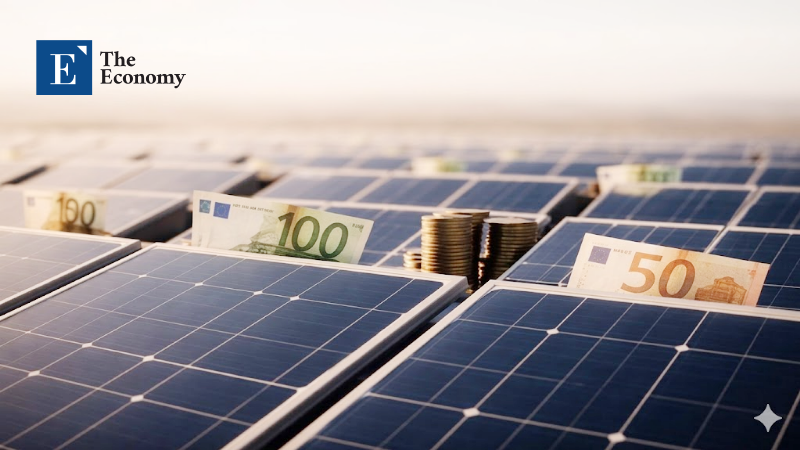
Spain, widely regarded as Europe’s largest solar market, has once again exposed the limitations of its power grid. Following Korea Hydro & Nuclear Power (KHNP), Hanwha Energy has also decided to withdraw plans to build two solar power plants due to transmission infrastructure constraints. While generation capacity continues to expand rapidly, the infrastructure required to reliably transmit and sell electricity has failed to keep pace, intensifying profitability pressures across Spain’s renewable energy sector.
‘Poniente Solar’ and ‘Sur Solar’ Projects Officially Scrapped
According to Spanish media outlet El Confidencial on June 23 (local time), HECE Renovables, the European subsidiary of Hanwha Energy, recently abandoned a solar development project planned in Los Barrios, Cadiz Province. Technical limitations in the originally designed transmission infrastructure, combined with profitability deterioration caused by local environmental regulations, ultimately undermined the project.
The canceled development consisted of two solar power plants, Poniente Solar and Sur Solar, located east of Los Barrios. The two facilities were originally designed with a combined generation capacity of 14 megawatts (MW), but grid connection approvals granted by Spanish authorities were limited to 4.99MW for each facility, reducing the effective combined capacity to roughly 10MW. Both projects received final construction approval from the Andalusian regional government at the end of December last year and were scheduled to begin construction simultaneously within this year.
However, during the final design phase, the projects encountered a technical obstacle after the planned transmission line route was found to violate distance and crossing regulations involving nearby facilities. The direct cause was transmission infrastructure. According to the Cadiz provincial gazette, HECE Renovables explained in its withdrawal application submitted to Andalusia’s industrial and energy authorities that certain transmission facilities intended to deliver electricity from the plants to the grid failed to satisfy regulations governing crossings, proximity, and parallel alignment. The company concluded that the previously approved transmission route represented the only viable option for construction and operation, while alternative routes were incapable of meeting both economic and technical requirements.
According to industry estimates, constructing a new transmission route to circumvent regulatory constraints would increase total capital expenditure (CAPEX) by at least 30% and potentially more than 40% compared with the originally planned investment of approximately $9.3 million. As a result, the project’s internal rate of return (IRR) was projected to collapse from the initially expected level of around 8% to the 3% range, below the 4% commercialization threshold. Such returns also fall short of the average weighted average cost of capital (WACC) for European solar projects, effectively rendering continued investment unviable. Hanwha Energy ultimately adopted a defensive strategy aimed at limiting losses by blocking additional CAPEX spending and submitted a withdrawal application to Andalusian authorities on April 22. The regional government formally accepted the request the previous day, officially canceling the construction permits.
KHNP Also Withdrew From a Spanish Solar Project in 2023
This is not the first time a Korean company has exited Spain’s renewable energy market. KHNP also decided to withdraw from a Spanish solar project in 2023. The company entered the European renewable energy market in 2021 through the acquisition of Spanish solar developer Ibersun. The project eventually abandoned by KHNP involved 143MW of solar generation capacity across three locations, including Valencia in southeastern Spain. Construction was scheduled to begin in 2022, with a planned operating period of 30 years.
However, the business environment deteriorated rapidly. Following the outbreak of the Russia-Ukraine war in 2022, raw material prices and equipment procurement costs surged across Europe, while rising global interest rates increased project financing burdens. Growing price volatility in solar modules, inverters, and electrical equipment also began to undermine profitability metrics established during the initial planning stage.
Grid connection costs and transmission infrastructure challenges further compounded the situation. Competition for grid access intensified in areas where solar development was concentrated, and some projects found themselves spending more time and money securing grid connections than constructing generation facilities. Even projects that successfully obtained generation permits faced additional investment burdens during the infrastructure build-out process required to actually sell electricity.
Spain’s solar market also moved in a direction different from expectations. Although solar generation capacity continued to expand, electricity prices came under increasing downward pressure. According to OMIE, the operator responsible for Spain’s wholesale electricity market, power prices during daytime hours—when solar generation is concentrated—repeatedly plunged, with negative electricity prices appearing during certain periods. In 2024, Spain ranked alongside Germany as one of the European countries experiencing negative electricity prices most frequently. Generation capacity increased, but electricity demand failed to keep pace, creating an environment in which producers struggled to sell power at economically viable prices.
Even after KHNP’s withdrawal, profitability conditions in Spain’s solar market failed to improve. Rapid growth in solar generation capacity repeatedly pushed daytime electricity supply above demand, while power price volatility widened. As rising generation volumes ceased to translate directly into higher revenues, profitability pressures intensified for operators with significant exposure to the spot market.

A Power Grid Unable to Control Conditions Even During Spain’s Major Blackout
These cases clearly reveal the grid bottlenecks rooted in Spain’s underlying characteristics. Andalusia, where Hanwha ultimately withdrew its projects, is one of Europe’s most sun-rich regions and has become heavily saturated with solar installations developed by private-sector companies. While power plants have expanded rapidly through private investment, transmission infrastructure remains constrained within a public regulatory framework dominated by the national transmission system operator (TSO), with expansion delayed by environmental permitting hurdles and declining local acceptance. The resulting imbalance has steadily accumulated over time.
In Europe’s renewable energy market, obtaining a grid connection application slot or receiving approval for permitted capacity does not guarantee project viability. A significant gap remains between administrative approval and the actual physical deliverability required to transport electricity to market. In other words, even a completed power plant can become a stranded asset incapable of selling the electricity it produces.
The importance of grid infrastructure for transporting generated electricity to market was demonstrated during Spain’s nationwide blackout on April 28 of last year. The outage began with rising voltage levels. Electricity requires stable voltage to flow reliably, but on the day of the incident, voltage levels across Spain’s power grid climbed rapidly. The system began to destabilize as operators failed to bring the situation under control. Several factors converged simultaneously. Solar generation increased during a spring daytime period, electricity flows became concentrated in specific regions, and grid stability deteriorated. Oscillations in power flows further amplified voltage fluctuations.
However, the systems responsible for managing those fluctuations failed to function properly. When voltage rises, mechanisms designed to lower it must respond immediately. Yet some facilities depended on manual intervention, delaying their response, while conventional power plants also failed to stabilize voltage as effectively as expected. In effect, the brakes failed to engage even as voltage levels accelerated toward dangerous territory. As voltage reached critical levels, power plants began shutting down one after another. Large-scale solar, wind, and other generation facilities disconnected from the grid, while smaller rooftop solar installations also went offline. Some facilities automatically shut down despite being capable of continuing operations because their safety settings had been configured more conservatively than necessary.
As generation assets successively disconnected, the balance between electricity supply and demand collapsed almost instantly. Spain’s grid became separated from the broader European power network, and the entire system failed within a matter of seconds. Following a decline in generation output and widespread facility shutdowns after 12:32 p.m., the nationwide blackout occurred at approximately 12:33 p.m. On the surface, the incident appeared to be a blackout that occurred on a day of elevated renewable energy generation. The core cause, however, was the failure of voltage control mechanisms to function properly. The problem did not stem from the presence of renewable energy itself; it resulted from the inability of the power grid to operate effectively in response to those changing conditions.
Anne-Marie Nicholson is a fearless reporter covering international markets and global economic shifts. With a background in international relations, she provides a nuanced perspective on trade policies, foreign investments, and macroeconomic developments. Quick-witted and always on the move, she delivers hard-hitting stories that connect the dots in an ever-changing global economy.
Similar Post
















