“No Room for Unchecked Optimism” — South Korea’s Bid for Canada’s CPSP Requires Additional Strategic Leverage to Overcome Germany’s ‘NATO Security Cohesion’ Argument

Aoife Brennan is a contributing writer for The Economy, with a focus on education, youth, and societal change. Based in Limerick, she holds a degree in political communication from Queen’s University Belfast. Aoife’s work draws connections between cultural narratives and public discourse in Europe and Asia.
Authored On
Modified
Expectations Persist, but Seoul Adopts a Cautious Stance on CPSP Contract Prospects
Germany Emphasizes North Atlantic Defense Architecture and NATO Interoperability
Strong NATO Security Cohesion Expected to Raise South Korea’s Strategic Entry Costs
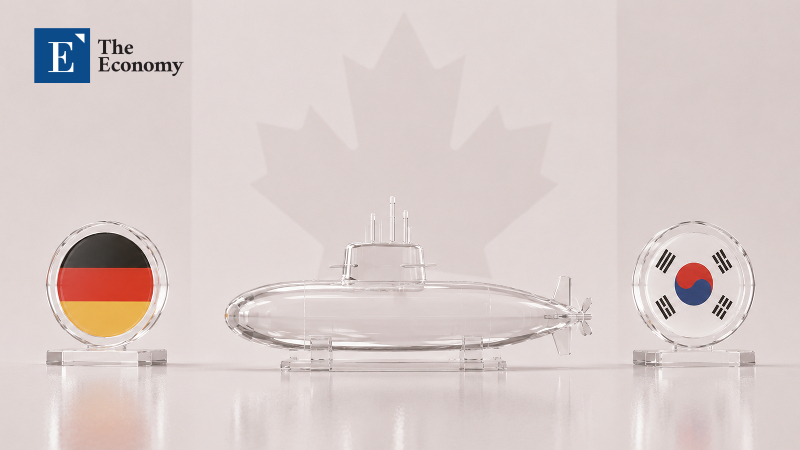
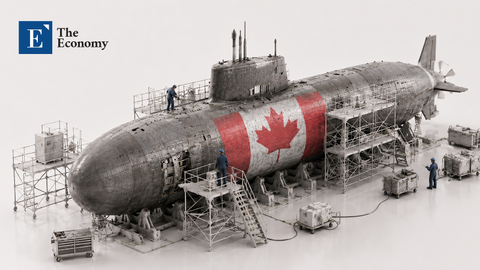
As competition intensifies between South Korea and Germany for Canada’s Canadian Patrol Submarine Project (CPSP), senior South Korean government officials have adopted a cautious tone. While South Korea’s industrial cooperation package offers meaningful competitiveness, they acknowledge that NATO-level strategic cohesion cannot be overlooked. Experts likewise argue that South Korea may need to absorb additional strategic entry costs if it hopes to surpass the security and interoperability advantages emphasized by Germany.
South Korea’s CPSP Strategy
On July 22, Industry Minister Kim Jung-kwan stated during a media briefing at the Government Complex Sejong regarding his recent European trip that, concerning the CPSP competition, “we are waiting with expectations.” He added, “If we succeed in winning the contract, it would mean Canada placed substantially greater weight on our industrial cooperation package,” noting that “considering the competitiveness of our submarines, if we lose the competition, it would indicate that Canada made a strategic choice in favor of NATO.” President Lee Jae-myung also commented on the issue during a briefing on the outcomes of his European tour on July 19, stating, “We have expectations, but it is not a situation that warrants easy optimism.” Canada previously selected South Korean shipbuilders, including Hanwha Ocean, and Germany’s Thyssenkrupp Marine Systems (TKMS) as qualified suppliers for the CPSP, a project valued at approximately $44 billion. Final bids closed in March, and the evaluation process is currently underway ahead of the selection of a preferred bidder in the second half of this year.
South Korea is currently intensifying its efforts in line with the requirements laid out by the Canadian government. Ottawa has identified performance (20%), maintenance and logistics support (50%), contract terms and pricing (15%), and economic and strategic cooperation (15%) as the key evaluation criteria. In response, Hanwha Ocean has sought to demonstrate operational capability by deploying South Korean naval assets, including the 3,000-ton Dosan Ahn Changho-class (Jangbogo-III/KSS-III) submarine currently in active service with the Republic of Korea Navy, to Canadian waters for joint exercises. The company has also proposed a delivery schedule under which, if a contract is signed in 2026, four submarines would be delivered before 2035, followed by one vessel annually for the remaining eight units, enabling delivery of all 12 submarines by 2043.
South Korea has also presented a long-term industrial cooperation proposal extending beyond the submarine project itself. Hanwha Ocean and HD Hyundai are understood to have submitted a detailed roadmap covering the reconstruction of Canada’s shipbuilding infrastructure, technology transfer, and workforce development. Cooperation with private-sector partners is also expanding. Hanwha Ocean signed a memorandum of understanding (MOU) with Canadian steelmaker Algoma Steel covering steel supply as well as submarine construction and maintenance infrastructure cooperation. The plan aims to connect steel demand generated by submarine construction and maintenance, repair, and overhaul (MRO) activities with Canadian industry. The company also signed an MOU with Canadian real estate developer PCL Construction for submarine infrastructure development, while Babcock Canada, the Canadian subsidiary of the global defense and engineering company Babcock, has been identified as a potential long-term operational support partner.
Germany’s Advantage in Alliance Defense Integration
South Korea’s aggressive pursuit of the contract reflects the broader significance of the competition. The project offers an opportunity to expand the geographic and institutional boundaries of South Korea’s defense exports beyond a single naval procurement program. South Korea’s defense industry has already strengthened its presence on NATO’s eastern flank through exports of K2 main battle tanks, K9 self-propelled howitzers, and FA-50 light attack aircraft to Poland. Should South Korea defeat Germany in the Canadian competition or secure even a portion of the procurement volume, it would represent the first major validation that South Korean naval and defense technologies are compatible with NATO naval acquisition frameworks. Such an outcome would establish South Korean firms as long-term naval force development partners rather than low-cost suppliers within Europe. This position could have significant implications for future submarine export competitions in countries such as Saudi Arabia and Greece.
Nevertheless, as both Minister Kim and President Lee noted, it remains uncertain whether South Korea can ultimately secure victory. Germany is pursuing a strategy aimed at integrating Canada into a NATO northern maritime defense architecture centered on Germany and Norway. The Type 212CD submarine proposed by TKMS is a diesel-hydrogen fuel-cell air-independent propulsion (AIP) submarine jointly developed and procured by Germany and Norway. In addition to offering Canada a package encompassing military and economic cooperation, Germany and Norway have reportedly proposed reallocating one Type 212CD submarine each from their own planned deliveries to Canada on an accelerated basis.
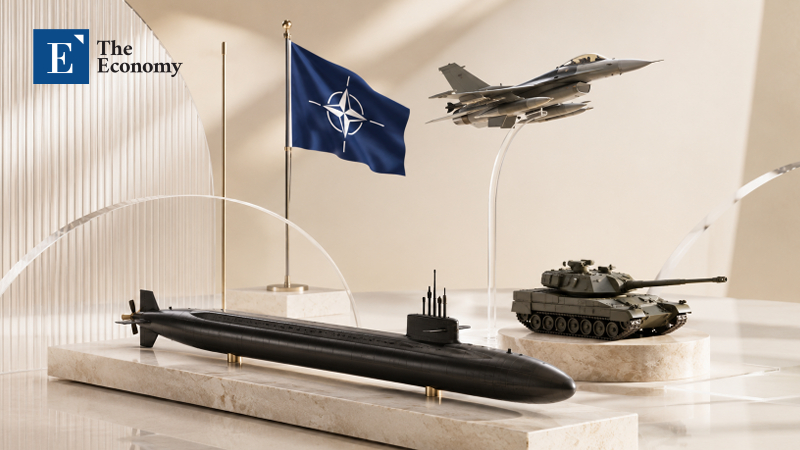
This approach carries significant implications for NATO interoperability. NATO defines interoperability as the ability of allied forces to operate together in a “coherent, effective, and efficient” manner. This includes communications systems, common doctrines and procedures, and the shared use of infrastructure and military bases. Submarines require substantially more closed and complex operational systems than tanks or self-propelled artillery. Operating the same submarine class delivers benefits extending far beyond shared parts inventories, creating alignment in operational concepts, tactical data, and training systems. If Canada selects the Type 212CD, Germany, Norway, and Canada would collectively possess an interoperable submarine network spanning the North Atlantic and Arctic regions.
Strategic Cost Absorption as Seoul’s Breakthrough Option
The European defense procurement financing program SAFE is also reinforcing this cooperative framework. SAFE is a joint defense procurement financing initiative worth approximately $173 billion established by the European Union after the outbreak of the Ukraine war to strengthen Europe’s defense industrial capabilities and support member states’ weapons acquisitions. On July 15, Canada became the first non-European country to formally join the program by signing a SAFE agreement. The move signaled Ottawa’s strategic intention to deepen security and defense cooperation with Europe while reducing dependence on a U.S.-centric defense partnership structure.
Experts argue that if South Korea intends to break through NATO’s institutional cohesion, it may ultimately need to prioritize winning the contract over maximizing profitability. Additional investment may be necessary to enhance the attractiveness of its proposal. Relevant precedents include exports of the K239 Chunmoo multiple-launch rocket system to Poland and Norway. Since the outbreak of the Ukraine war in February 2022, the EU has pursued defense rearmament while reforming its institutional framework to strengthen Europe’s defense technological and industrial base. This has also functioned as a mechanism favoring European suppliers over non-European competitors. Despite these dynamics, Poland signed a contract with Hanwha Aerospace in 2022 to acquire 288 K239 Chunmoo systems, followed by an additional order for 72 units in 2024. At the end of last year, the two sides also concluded an implementation agreement worth approximately $4 billion for the production and supply of CGR-080 guided rockets in Poland. The arrangement shifted from the import of finished South Korean weapons systems to a localized model integrated with domestic Polish industry. In its dealings with Poland, South Korea lowered entry barriers by combining manufacturing, technology cooperation, and industrial participation within Europe rather than merely offering competitively priced weapon systems.
The Norwegian case follows a similar pattern. In January, Norway selected Hanwha Aerospace as the supplier of a land-based long-range precision strike system. The Norwegian government described the project as one of the largest investments in the history of its army and stated that Hanwha was the only supplier capable of meeting all performance, delivery, and cost requirements. Regarding the broader implications, a diplomatic source stated, “In Poland, South Korea reduced institutional resistance through rapid delivery, large-scale supply, local production, and industrial cooperation. In Norway, it successfully met demanding requirements and prevailed against both European and American alternatives. Applying that framework to the CPSP suggests that South Korea ultimately faces a situation in which absorbing strategic entry costs, rather than maximizing profitability, may be the necessary approach.”
Aoife Brennan is a contributing writer for The Economy, with a focus on education, youth, and societal change. Based in Limerick, she holds a degree in political communication from Queen’s University Belfast. Aoife’s work draws connections between cultural narratives and public discourse in Europe and Asia.
Similar Post