
Political upheaval has lasting economic costs Institutional instability weakens growth and human capital Protecting governance and education reduces long-term damage The ripple impacts of a single event can reshape national dis
Read More
Sanctions reshape economies slowly, but the structural damage runs deep The Russian sanctions impact is generational, not temporary Recovery will require rebuilding skills, institutions, and trust over a decade or more In
Read More
AI safety and national security now shape how institutions teach and build technology Procurement incentives quietly determine what engineers learn to design and value Education reform is the only durable way to align AI safety with national security
Read More
Workplace flexibility is a central driver of the between-firm gender wage gap Sorting into flexible but lower-premium firms explains a significant share of persistent pay differences Policy must decouple workplace flexibility from lower earnings to close the gap sustainably
Read More
LLM limitations stem from confusing probabilistic fluency with real causal reasoning Hallucination and poor judgment arise because models generate a linguistic silhouette of reasoning, not true intelligence High-stakes decisions require causal validation, not correlation masked as confidence
Read More







AI is reshaping the life trajectory of young adults, not just their jobs Economic insecurity linked to automation delays marriage, housing, and family formation Without structural policy reform, AI will redefine adulthood itself
Read More
Cash bonuses cannot fix delayed childbearing policy failures Later births reflect structural insecurity, not lost desire for children Only institutional reform can shift fertility timing sustainably The most telling
Read More
AI speed is a policy choice, not a universal race Rushing adoption can deepen inequality and strain education systems Measured AI adoption builds lasting capacity and stability In 2024, the United States saw a substantial amou
Read More
AI is changing wildfire management by prioritizing where human effort matters most, not by predicting fires. Human-in-the-loop systems cut response time and reduce ignition risk under tight resource limits. This shift turns wildfire control from emergency reaction into practical prevention.
Read More
A million satellites would overwhelm orbital coordination long before technical limits are reached Collision risk, debris, and governance failures scale faster than engineering solutions Without strict global control, orbital AI becomes a systemic liability, not progress
Read More


Climate shocks now directly strain public budgets and weaken tax bases Disaster spending and insurance gaps are becoming fiscal risks Without EU coordination, climate risk turns into a lasting deficit The most revealing
Read More
Tariffs do not just redirect trade; they quietly reroute skills, students, and institutions Trade diversion reshapes education and jobs Policy must treat trade shocks as human-capital shocks, not only as economic ones. When the U.S.
Read More
This is no longer a race to catch up, but a push to reduce strategic dependence on China Supply chains and education systems are now instruments of geopolitical power Resilience will depend on how quickly institutions adapt skills, policy, and procurement
Read More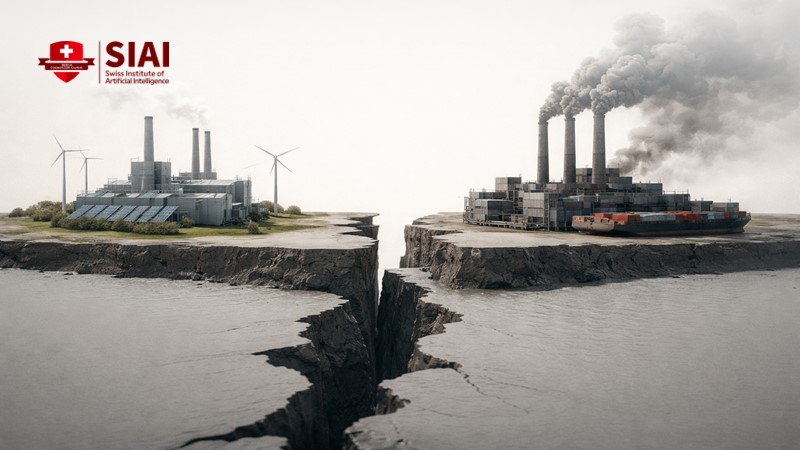
Misaligned climate policy shifts emissions across borders instead of cutting them globally Uneven rules push firms to relocate production rather than invest in deep decarbonisation Only coordinated incentives can stop carbon leakage and restore policy credibility
Read More

The market value of a degree now depends more on skills than prestige Employers pay for verified, job-ready learning Education policy must validate outcomes, not labels The worth of a college degree is changing quickly.
Read More