“Patriotic Consumption Extends to AI Chips” China's Domestic Push Emerges as a New Variable in the AI Race

Anne-Marie Nicholson is a fearless reporter covering international markets and global economic shifts. With a background in international relations, she provides a nuanced perspective on trade policies, foreign investments, and macroeconomic developments. Quick-witted and always on the move, she delivers hard-hitting stories that connect the dots in an ever-changing global economy.
Authored On
Modified
Chinese Firms Expand Adoption of Domestic AI Semiconductors
AI Infrastructure Spending Exceeds Budget This Year
Global AI Competitive Landscape Poised for Change
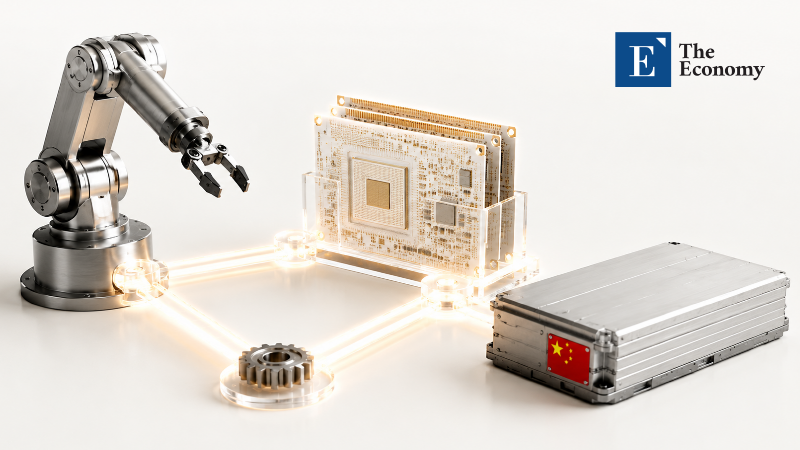
China is accelerating the buildout of a self-reliant AI infrastructure by elevating AI semiconductor localization to the level of a national strategic industry. As domestic AI chip adoption gathers pace following U.S. export restrictions, state-led investment in data centers is converging with the expansion of private-sector AI services to rapidly establish an indigenous supply chain. Analysts believe China's strategy of offsetting technological disadvantages through massive domestic demand and policy-driven procurement is set to become a significant new variable in the global AI semiconductor race.
Chinese Companies Allocate 46% of AI Budgets to Domestic Products
According to a survey released on July 7 (local time) by Bloomberg Intelligence (BI), the research arm of Bloomberg, Chinese corporate executives plan to allocate 46% of their AI-related budgets to domestically produced products over the next 12 months, up sharply from the current level of 30%. The survey polled 60 executives from Chinese software, financial services, manufacturing, and retail companies. Eighty percent of respondents said their total infrastructure spending this year has already exceeded initial budgets, citing rising costs associated with AI projects as the primary reason.
Companies expected to benefit most from China's AI infrastructure transition include Tencent Holdings, Alibaba Group Holding, and Huawei Technologies, all of which are regarded as leading AI infrastructure builders and major suppliers in the country. AI accelerators produced by Hygon Information Technology and Cambricon Technologies were also identified as key alternatives.
Although Nvidia products continue to enjoy strong demand in the Chinese market, their market share is gradually eroding as U.S. export restrictions coincide with Beijing's policies encouraging the adoption of domestically developed technologies. In the survey, Huawei's Ascend 910B/C recorded the highest combined pilot deployment and evaluation rate among the 12 accelerators surveyed at 65%, surpassing Nvidia's China-specific H20/L20 chips (47%) as well as its older A800/H800 products (47%).
Huawei also outperformed AMD's MI308 chips (55%), while Hygon's DCU (52%) and Cambricon Technologies' MLU/Siyuan accelerators (52%) likewise posted higher deployment and evaluation rates than Nvidia's offerings. Proprietary chips developed by major platform companies, including Baidu's Kunlunxin and Alibaba's T-Head, followed at 50%. Moore Threads' MTT (48%) and MetaX's C-series (47%) also matched or exceeded Nvidia's figures, while accelerators developed by emerging Chinese semiconductor firms—including Iluvatar CoreX and Tianshu (38%), Enflame CloudBlazer (38%), and Biren's BR100/104 (40%)—are also receiving substantial consideration, according to the survey.
U.S. Export Controls Fuel China's AI Infrastructure Boom
The primary catalyst behind this shift has been the tightening of U.S. export controls on China. After access to cutting-edge AI chips was effectively cut off last year, China sharply ramped up AI infrastructure investment at both the central and local government levels. According to market research firm IDC, a new wave of AI infrastructure spending by the central government, coupled with local governments' construction of intelligent computing centers, has effectively reshaped the market by enforcing a "domestic-first" procurement policy. Chinese authorities have required major companies to justify purchases of Nvidia's H20 chips while pressuring them to reduce dependence on foreign AI semiconductors under the banner of information security.
The Chinese government invested approximately $98 billion in AI last year alone, including roughly $56 billion in direct state-backed funding. The investment has been concentrated in data centers and energy infrastructure, standing in contrast to the United States' heavier emphasis on semiconductor investment. One example came in September last year, when China Unicom launched a 3,579-petaflop (PF) data center in Xining, Qinghai Province, powered by 23,000 domestically produced AI chips supplied by companies including Alibaba. The project has been widely viewed as a symbolic milestone in Beijing's effort to eliminate dependence on foreign technology.
Authorities have also introduced guidelines requiring state-funded data centers to use domestically produced AI chips. Over the next five years, the Chinese government plans to invest approximately $279 billion in building data centers nationwide. Early last month, the National Development and Reform Commission (NDRC), together with several key government agencies, finalized a blueprint for an integrated national computing hub designed to consolidate China's fragmented computing resources under centralized management. At the heart of the initiative is a unified national computing network connecting data centers and computing resources across different regions, enabling businesses and research institutions to access computing power more efficiently and reliably.
Compared with the $725 billion that U.S. Big Tech companies are expected to invest in AI infrastructure this year alone, China's investment appears relatively modest. However, experts argue that when China's lower labor and construction costs, integrated power grid development expenses, and additional capital expenditures by private companies such as Alibaba and Tencent are taken into account, the country's effective total investment is likely to comfortably exceed $698 billion.
China's rapid expansion of its nationwide data center network reflects a broader shift in the AI race, where competitive advantage is increasingly moving from model development to infrastructure. Training and operating large-scale AI models requires enormous amounts of electricity, high-performance semiconductors, cooling systems, and communications networks. China has adopted a state-led strategy of integrating these critical infrastructure assets to counter the investment offensive led by U.S. technology giants.
The defining characteristic of the project is the complete exclusion of U.S. technology. Beijing has mandated that more than 80% of the core hardware—including AI chips—in newly built data centers must be sourced from domestic companies such as Huawei. The move amounts to a declaration of technological self-sufficiency that would effectively push U.S. chipmakers such as Nvidia and AMD out of China's AI infrastructure market. Last month, nine domestically developed AI chips jointly developed by companies including Huawei and Alibaba simultaneously passed China's national cybersecurity review. Foreign media outlets noted that the success of Chinese AI firms such as DeepSeek in building high-performing AI models without relying on advanced U.S. chips has accelerated Beijing's determination to pursue an independent technological path.
Ecosystem Integration Becomes China's Strategic Advantage as AI Industry Moves Toward Vertical Integration
To be sure, Chinese AI chips have yet to reach technological parity with Nvidia's highest-end products. Nvidia continues to enjoy an overwhelming advantage through its CUDA-based developer ecosystem, mature software toolchain, and extensive experience operating large-scale AI training infrastructure. Chinese chips, however, are gaining traction in energy efficiency and real-time inference workloads. Huawei's Ascend processor delivers only about 6% of the per-chip performance of Nvidia's Hopper architecture, but the company has strengthened its competitiveness in cloud services by leveraging cluster-scale deployment and tightly integrated software. Huawei Cloud had already deployed its CloudMatrix AI infrastructure by the end of last year, serving approximately 1,800 customers worldwide. Alibaba's T-Head chips are likewise expanding external adoption by emphasizing cost efficiency through co-design with the company's Qwen large language model (LLM). China's rapidly growing AI patent portfolio and research and development (R&D) investment are further reinforcing the country's push toward a self-sustaining AI ecosystem.
These developments are also accelerating the vertical integration of China's AI industry. According to Reuters, DeepSeek has recently begun developing its own AI chips to reduce reliance on both Nvidia and Huawei. Rather than focusing on training next-generation AI models, the chips under development are reportedly optimized for inference—the process of generating responses for users after a generative AI model has been trained. DeepSeek is not alone in entering the hardware race. Chinese AI startup Zhipu AI is also considering the development of proprietary AI chips. The company is reportedly in discussions with several Chinese semiconductor firms to jointly develop processors optimized for running its proprietary GLM AI models.
The trend reflects a broader effort by China's leading AI companies to combine model development, chip design, cloud operations, and application deployment within vertically integrated, closed ecosystems. In particular, the inference market presents a significantly lower barrier to entry than cutting-edge training GPUs while delivering immediate reductions in service operating costs, making it the segment where adoption of domestically developed chips is likely to accelerate first. Should Huawei and Alibaba continue bundling their proprietary chips with their own large language models, while DeepSeek joins the market with dedicated AI semiconductors, purchasing decisions in China's AI market may increasingly be driven not by the standalone performance of individual chips but by the degree of optimization achieved across models, chips, and cloud infrastructure.
That said, China's localization drive does not automatically translate into global market dominance. The country's AI chip ecosystem still faces structural bottlenecks, including restricted access to advanced manufacturing processes, constraints in securing high-bandwidth memory (HBM), and the absence of a developer ecosystem comparable to Nvidia's CUDA platform. Nevertheless, China is rapidly expanding real-world deployment of domestic AI chips by combining massive government procurement, nationwide data center construction, and growing industrial AI demand. While Chinese chips are unlikely to displace Nvidia in overseas markets anytime soon, a self-reinforcing domestic ecosystem is already taking shape in China—one in which performance gaps are effectively offset through government subsidies, public procurement, and strong application-driven demand.
Anne-Marie Nicholson is a fearless reporter covering international markets and global economic shifts. With a background in international relations, she provides a nuanced perspective on trade policies, foreign investments, and macroeconomic developments. Quick-witted and always on the move, she delivers hard-hitting stories that connect the dots in an ever-changing global economy.
Similar Post