

India labour formalization is redefining the country’s economic base Without social protection and skills, it will stall Done right, it secures growth and worker protection It is estimated that around 90% of Indian workers a
Read More
The WFH wage premium mostly reflects who was already highly paid before the pandemic Remote work has split the labor market between high-skill earners and workers trading pay for flexibility Policy must address this bifurcation instead of treating remote work as a universal wage benefit
Read More
Taiwan AI growth in 2025 was driven mainly by semiconductor exports Tech demand masked weakness in other sectors across East Asia Long-term resilience now requires broader skills and industrial diversification Taiwan’s 2025 bounce was
Read More
Elite lawyer advantage turns money into durable courtroom power Networks and repeat experience, not just ideology, shape Supreme Court outcomes Real reform must redesign the institutional ecosystem, not merely demand fairness The
Read More
The issue is LLM adoption, not ownership Regulation matters more than sovereignty Implementation beats symbolism When large language models (LLMs) first became publicly available, talks frequently focused on a race to own
Read More








AI use in schools is widespread, and surveillance alone will not prevent ChatGPT cheating Redesigning assessments to reward process and reasoning makes shortcutting less attractive Policy must shift from detection to incentive design to reduce reliance on ChatGPT effectively
Read More
AI is eroding the first rung of professional careers Upward mobility is weakening as entry-level roles disappear Education and policy must rebuild structured career pathways By 2030, tens of millions of early-career roles that once
Read More
Japan’s political win does not solve its structural fiscal problem Without stronger Japan fiscal productivity, deficits will widen as debt costs rise Only productivity-led growth can stabilize public finances without harsh tax hikes
Read More
State-backed IPOs shift focus from returns to political trust Government backing reshapes how investors price risk Accountable design will decide their long-term success In late 2025, Beijing quietly rewired listing rules so th
Read More
Section 702 reform must protect privacy and security AI competitiveness does not require unchecked surveillance Clear legal limits can strengthen trust and innovation Reports from 2023 and watchdog groups indicate that U.S.
Read More

Trade resilience has real economic value in a volatile world Protection can act as temporary insurance, but productivity is the stronger long-term hedge Policy must price trade risk honestly and invest in domestic capacity Glob
Read More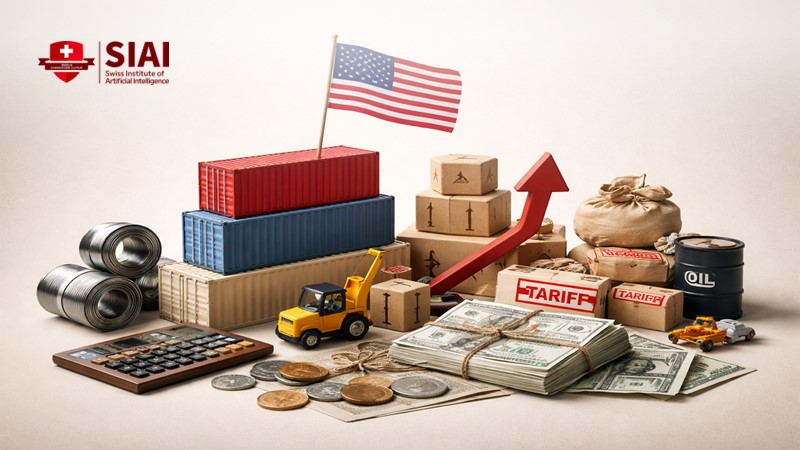
America First tariffs avoided an immediate recession but shifted trade into geopolitical strategy Short-term stability hides real household costs and long-run productivity risks The real test is whether tariffs build lasting capacity without weakening institutions
Read More
Enterprise AI competition is decided inside procurement systems, not public ad campaigns The real battle is over who controls enterprise AI orchestration and workflow integration Governance, interoperability, and institutional trust now matter more than model branding
Read More
Mobile design is now governed, not just created This regime shapes how learning technologies function in schools Policy can still redirect design toward education Back in 2012, Apple won a case where a jury awarded it over a billion dol
Read More
The AI Tax is turning memory scarcity into a hidden cost on education Rising DRAM prices push computing access out of reach for many schools and families Without action, personal computers risk becoming a privilege again The price of memory
Read More

North Korea’s economic rise is less about growth than about funded capabilityConflict-linked cash is speeding up industrial and military learningPolicy must disrupt cash-to-capacity channels, not just impose sanctions
Read More
Selling US Treasuries hurts the seller first by lowering the value of what remains Only coordinated action by major holders could move markets, and that coordination is unlikely US Treasuries function as a shared stability asset, not a usable financial weapon
Read More
FDI now succeeds by linking into global value chains, not by expanding domestic production German investment in China uses local labor and efficiency while value stays global Policy should shape how FDI integrates into chains, not just how much arrives
Read More
Cheap solar has reshaped the growth logic for power-scarce economies Solar-first strategies deliver faster, cheaper energy than nuclear in most cases today The challenge is timing: build solar now and scale complexity only when demand rises
Read More
Payment stablecoins now hold a quiet form of monetary privilege It comes from settlement design, not true money creation Until issuers are regulated as banks, the system remains distorted In 2024, stablecoins used for payments handled tri
Read More