The Cost of Order: Ukraine and the Remaking of Europe

Working across research, policy, and data-driven analysis, the Editorial Board ensures that published pieces reflect a consistent institutional perspective grounded in quantitative reasoning and long-term structural assessment.
In February 2022, Russia’s full-scale invasion of Ukraine shattered more than a border. It disrupted a strategic assumption that had underwritten European politics for three decades: that order on the continent was durable, that interdependence reduced the probability of war, and that large-scale territorial revisionism had become prohibitively expensive in the modern international system.
The war revealed something more fundamental. Order is not self-sustaining. It is not a byproduct of markets, nor a permanent achievement of diplomacy. Order is constructed, maintained, and defended—often at significant cost.
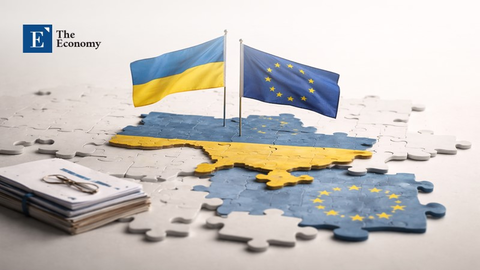
This book argues that the war in Ukraine is not primarily a regional conflict, nor merely a clash between two states. It is a stress test of Europe’s security architecture and of the post–Cold War settlement itself. The central question is not simply how the war ends. The deeper question is whether Europe is willing to bear the cost required to preserve its order.
For three decades after 1991, Europe operated under a set of layered assumptions. NATO expansion would deter aggression. Economic integration would moderate political revisionism. Energy interdependence would stabilize relations. The European Union would gradually extend a zone of prosperity and regulatory governance eastward. American security guarantees would remain credible but would not need to be exercised at scale.
These assumptions reduced visible defense burdens. They enabled fiscal space for welfare states. They encouraged a political culture oriented toward risk minimization rather than deterrence. In retrospect, this period appears less like the natural state of European politics and more like a historically contingent equilibrium—one sustained by asymmetries of power and by strategic restraint that could not be indefinitely guaranteed.
Ukraine exposed the fragility of that equilibrium.
The invasion forced a reckoning across multiple dimensions. Militarily, it reintroduced high-intensity conventional warfare to the European continent. Economically, it disrupted energy markets, altered fiscal priorities, and accelerated defense-industrial expansion. Politically, it compelled governments to confront trade-offs between social expenditure and strategic investment. Institutionally, it tested NATO’s cohesion, the European Union’s capacity for coordinated action, and the credibility of American commitments.
Most importantly, it forced a reconsideration of what “peace” actually means.
Peace is often treated as the absence of active hostilities. But sustainable peace—particularly in regions shaped by historical rivalries—requires more than a ceasefire. It requires deterrence that is believed, borders that are defended, and institutions capable of absorbing shocks without fracturing. Each of these has a price.
The temptation in moments of fatigue is to pursue settlement at reduced cost—to search for diplomatic formulations that minimize immediate burdens. Yet history suggests that deferred costs rarely disappear; they are redistributed across time and actors. Concessions intended to stabilize may instead embed instability. Underinvestment in defense may create larger future liabilities. Ambiguity in security guarantees may invite miscalculation.
This book does not argue for perpetual conflict, nor does it romanticize militarization. It argues instead for clarity. Europe faces a structural choice: whether to reconstitute its security order at higher cost, or to accept a thinner, more uncertain form of stability. Neither path is costless. The question is which costs are visible, which are deferred, and which are existential.
Ukraine stands at the center of this choice—not because it is the only site of geopolitical tension, but because it is the point at which abstract principles become concrete. Sovereignty, deterrence, alliance credibility, and territorial integrity are no longer theoretical commitments; they are being tested in real time.
The remaking of Europe will not be decided solely on the battlefield. It will be determined in budget negotiations, industrial policy decisions, alliance summits, electoral cycles, and public debates over national priorities. It will be shaped by how European societies interpret risk, by how the United States calibrates its global posture, and by how other powers—China, Turkey, the Gulf states—assess the durability of Western commitments.
“The Cost of Order” is therefore not a book about Ukraine alone. It is an examination of the economic, institutional, and strategic foundations of European stability. It asks what it means to defend an order—and who ultimately pays for it.
Order has always carried a cost. The post–Cold War era obscured that reality. The war in Ukraine has made it visible again.
The remainder of this book examines that visibility: the policy debates surrounding diplomacy and deterrence; the fiscal and industrial adjustments required to sustain defense; the risks of escalation under nuclear shadow; the internal politics of Ukraine and Russia; and the broader implications for the European Union and NATO. Taken together, these chapters aim to move beyond immediate headlines and toward a structural assessment of Europe’s future.
The central claim is simple: peace without credible order is temporary. Durable order requires investment—material, political, and institutional. Europe must now decide whether it is prepared to pay.
Working across research, policy, and data-driven analysis, the Editorial Board ensures that published pieces reflect a consistent institutional perspective grounded in quantitative reasoning and long-term structural assessment.
- Previous Unemployed Growth
- Next 3. The Policy Debate in Washington