2. Ukraine as a Sovereignty Test Case

Working across research, policy, and data-driven analysis, the Editorial Board ensures that published pieces reflect a consistent institutional perspective grounded in quantitative reasoning and long-term structural assessment.
Small state vs empire logic
At its core, the war in Ukraine is not only a military confrontation. It is a collision between two conceptions of political order: the sovereignty of small states and the strategic logic of empires.
Since 1945—and more firmly since 1991—the European system has been organized around a principle that borders are not to be changed by force. Sovereignty, regardless of size, is formally equal. Estonia and Germany possess the same juridical standing; Portugal and Poland share the same territorial inviolability. The legitimacy of the system rests on this symmetry.
Yet history offers a different model. For centuries, European security was structured not by sovereign equality but by spheres of influence. Large powers buffered themselves through peripheral territories. Strategic depth mattered. Geography determined hierarchy. Smaller states survived not through formal equality but through alignment, neutrality, or absorption.
Ukraine sits precisely at the fault line between these two logics.
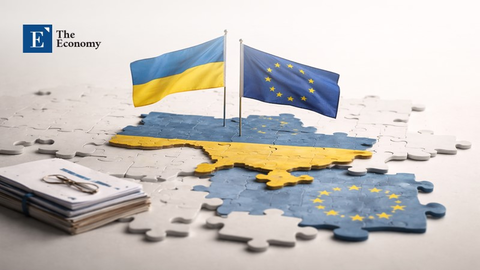
From the perspective of post–Cold War Europe, Ukraine is a sovereign state entitled to determine its alliances, economic orientation, and political trajectory. Its decisions—whether to pursue European Union membership, deepen cooperation with NATO, or reform its domestic institutions—are matters of national self-determination.
From the perspective of traditional imperial strategy, Ukraine represents something else: a buffer, a corridor, a strategic threshold. Its alignment alters the military geometry of Eastern Europe. Its political orientation affects regional balance. In this view, sovereignty is conditional when it intersects with the core security interests of a major power.
The tension between these perspectives was not immediately explosive. For years, Ukraine balanced between orientations—maintaining economic ties with Russia while exploring closer integration with Europe. Its internal politics reflected this duality, oscillating between competing visions of national identity and geopolitical alignment.
What transformed Ukraine from a borderland into a battlefield was not simply domestic revolution or foreign interference. It was the gradual crystallization of an incompatibility: a sovereign state seeking alignment within one institutional order, and a neighboring power unwilling to accept that realignment as strategically neutral.
Small states in contested regions often confront a structural dilemma. Their formal rights under international law do not eliminate the material realities of geography. The closer a small state moves toward one pole of power, the more it may be perceived as reducing the security margin of another. In stable systems, institutions mediate this tension. In unstable ones, it escalates.
Ukraine became a test case because it exposed whether Europe’s sovereignty principle was substantive or symbolic. If a large power can redraw borders or coerce alignment through force, then the equality of states becomes contingent. If, however, the defense of sovereignty requires sustained military, economic, and political commitment from others, then sovereignty becomes a collective undertaking rather than an abstract norm.
This chapter examines Ukraine not as an isolated tragedy but as a structural hinge in European order. It explores how imperial logic operates in modern form—through narratives of historical unity, security buffer arguments, and protection of co-ethnics—and how small states navigate existential pressure from larger neighbors. It also considers how Western support transforms a bilateral conflict into a systemic confrontation over the meaning of sovereignty itself.
The stakes extend beyond Ukraine. The credibility of borders in Eastern Europe, the security calculations of Baltic states, the strategic posture of Poland, and even debates in regions such as Taiwan or the South China Sea are indirectly influenced by how this test case unfolds. If sovereignty is defensible only for states under the protection of overwhelming power, then the principle is selective. If it is defensible even in contested geography, then the post–Cold War norm retains force.
Ukraine thus represents more than territory. It represents a boundary between two organizing principles of international order: one based on equal sovereignty under shared rules, and one based on hierarchy and strategic depth. The outcome of this confrontation will shape not only the map of Eastern Europe but the durability of the system that map represents.
In the chapters that follow, the focus shifts from the structural collision itself to the debates over how it should be managed. But the essential question remains: can a small state’s sovereign choice withstand the logic of empire—and at what cost to the broader order?
Working across research, policy, and data-driven analysis, the Editorial Board ensures that published pieces reflect a consistent institutional perspective grounded in quantitative reasoning and long-term structural assessment.