1. The Collapse of the Post-Cold War Assumption

Working across research, policy, and data-driven analysis, the Editorial Board ensures that published pieces reflect a consistent institutional perspective grounded in quantitative reasoning and long-term structural assessment.
NATO Expansion, Russian Resentment, European Complacency
The war in Ukraine did not begin in 2022. It began in the failure of an assumption.
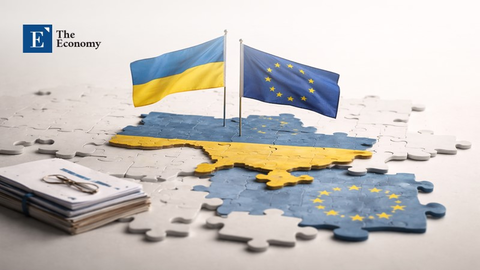
After the Cold War, Europe operated under a strategic premise that was rarely articulated but widely internalized: the security architecture built in the 1990s would expand without triggering systemic rupture. NATO enlargement, European Union integration, and economic interdependence were treated not as sources of instability but as instruments of stabilization. The enlargement of institutions was equated with the enlargement of order.
For a generation, this assumption appeared justified. Central and Eastern European states joined NATO and the European Union without major conflict. Trade between Russia and Europe deepened. Energy flows tied Germany to Russian gas fields; financial networks connected Moscow to London and Frankfurt. Even moments of tension—the Baltic accession to NATO, the Kosovo intervention, the 2008 war in Georgia—were interpreted as manageable disruptions rather than warnings of structural fracture.
The post–Cold War settlement rested on three interlocking beliefs.
First, that Russia, though diminished, would gradually integrate into the European economic system and therefore moderate its geopolitical ambitions. Interdependence was expected to discipline revisionism. The costs of isolation were presumed too high for sustained confrontation.
Second, that NATO expansion was inherently defensive and therefore strategically stabilizing. Enlargement was framed not as encirclement but as the voluntary accession of sovereign states seeking security guarantees. The alliance’s growth was understood as an extension of rules, not a projection of threat.
Third, that large-scale war between major powers on European soil had become implausible. The combination of nuclear deterrence, institutional integration, and economic globalization was believed to have raised the threshold of conflict beyond the point of political rationality.
These beliefs were not naïve; they reflected the historical experience of the 1990s and early 2000s. Russia’s economy was weak. Its military was underfunded. Its political system was consolidating internally rather than projecting power externally. The European Union was expanding its regulatory reach eastward, and the United States remained the uncontested security anchor of the continent.
Yet embedded within this settlement was a strategic asymmetry. While Western policymakers viewed enlargement as the consolidation of order, segments of the Russian elite interpreted it as the erosion of strategic depth and status. The collapse of the Soviet Union had already reduced Moscow’s sphere of influence. NATO’s movement toward Russia’s borders was experienced not merely as a military development but as a symbolic one—a confirmation of diminished power in a system defined by hierarchy.
Resentment, however, does not automatically translate into war. What transformed grievance into aggression was the interaction between Russian revisionism and European complacency.
Over time, European defense spending declined relative to GDP. Industrial capacity for sustained high-intensity warfare atrophied. Political cultures shifted toward risk avoidance and domestic economic management. Energy dependence on Russia deepened, reinforcing the belief that mutual economic exposure reduced the likelihood of conflict. The architecture of deterrence remained in place, but its operational credibility became increasingly abstract.
Events in 2008 and 2014 offered partial signals. The war in Georgia demonstrated Russia’s willingness to use force in its near abroad. The annexation of Crimea revealed both strategic intent and Western reluctance to escalate in response. Yet these episodes were treated as contained crises rather than structural inflection points. Sanctions were imposed, but energy flows continued. Diplomatic channels remained open. The broader assumption—that systemic war in Europe was improbable—survived.
What collapsed in 2022 was not simply a ceasefire or a bilateral relationship. It was the belief that the post–Cold War architecture could expand indefinitely without encountering hard limits imposed by power politics. NATO enlargement, in retrospect, was both a consolidation of security for some states and a cumulative source of insecurity for another. Russian resentment, long present, intersected with perceptions of Western distraction and declining resolve. European complacency reduced the margin for rapid adjustment when deterrence failed.
This chapter does not argue that NATO expansion caused the war, nor that Russian aggression was inevitable. It argues instead that the post–Cold War order contained unresolved tensions that were managed rather than resolved. Expansion proceeded faster than strategic reconciliation. Economic integration advanced without parallel security accommodation. Deterrence remained credible in principle but uneven in perception.
The collapse of the post–Cold War assumption marks the beginning of a new European era. The continent can no longer rely on the belief that institutional growth alone guarantees stability. Security must once again be actively constructed, not merely inherited. The remainder of this book examines what that construction requires—and what it will cost.
Working across research, policy, and data-driven analysis, the Editorial Board ensures that published pieces reflect a consistent institutional perspective grounded in quantitative reasoning and long-term structural assessment.