[Fed Watch] U.S. Rate-Hold Expectations Gain Traction as Middle East Conflict Nears Endgame and Oil Prices Retreat; Major Economies Including Japan Move Toward Tightening

As one of the youngest members of the team, Tyler Hansbrough is a rising star in financial journalism. His fresh perspective and analytical approach bring a modern edge to business reporting. Whether he’s covering stock market trends or dissecting corporate earnings, his sharp insights resonate with the new generation of investors.
Authored On
Modified
"Pause Rather Than Hike" Narrative Gains Momentum Following U.S.-Iran Peace MOU
Bond Markets and Crude Prices React Immediately, Though Timing of Disinflation Remains Uncertain
Japan Struggles Under Inflation and Yen Weakness as Even a 1% Policy Rate May Offer Limited Relief

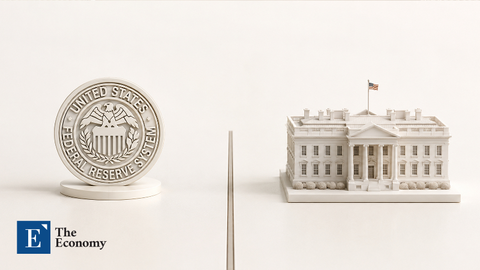
As the U.S. Federal Reserve's June Federal Open Market Committee (FOMC) meeting gets underway, market expectations for monetary policy are undergoing a significant shift. With the conflict between the United States and Iran entering its final phase and inflationary pressures showing signs of easing, expectations for further rate hikes have weakened while support for a policy pause has expanded. At the same time, several major economies outside the United States, including Japan, are increasingly pursuing interest-rate increases aimed at defending their currencies and stabilizing exchange rates.
Diminishing Middle East Risk Premium
According to the CME FedWatch Tool on June 16, federal funds futures markets assigned a 42.1% probability that the benchmark rate will remain unchanged through year-end, compared with a 41.9% probability of a 25-basis-point increase. Relative to a week earlier, the probability of a rate hike edged down from 42.6%, while the likelihood of rates remaining unchanged rose markedly from 27.8%. The probability of a 50-basis-point increase declined from 23.2% to 14.9% over the same period. The prolonged Middle East conflict had fueled expectations of tighter monetary policy, but that narrative has begun to lose momentum. The Fed's June FOMC meeting runs from June 16 through June 17.
The shift in market sentiment was triggered by the signing of a peace memorandum of understanding between the United States and Iran. On June 14, President Donald Trump announced on Truth Social that "the agreement with the Islamic Republic of Iran has now been finalized." He added, "I fully authorize the toll-free reopening of the Strait of Hormuz and approve the immediate lifting of the U.S. Navy's maritime blockade. Let the world's ships start their engines and allow oil to flow." The agreement effectively relieved pressure on Middle Eastern oil supply chains that had faced severe logistical disruptions since the outbreak of war in late February.
Markets are now focused on the implications for the U.S. economy. During the conflict, international crude prices hovered around $100 per barrel, intensifying inflationary pressure across the United States. According to the U.S. Department of Labor, the Consumer Price Index (CPI) rose 4.2% year-over-year last month, surpassing the 4% threshold for the first time in three years. The acceleration in inflation has become a growing political burden for the Trump administration, complicating efforts to highlight economic achievements such as tax cuts, rebate payments, and deregulation ahead of the midterm elections. E.J. Antoni, chief economist at the Heritage Foundation, remarked during an appearance on Steve Bannon's podcast last week, "This is not good, and there is no way to spin it positively. The administration has achieved many excellent policy outcomes, but the ripple effects of the Iran war are overwhelming them."
Immediate Market Response, Uncertain Long-Term Outlook
Conditions changed rapidly after news of the peace agreement emerged. Bond markets responded first. According to the Financial Times on June 16, the yield on the benchmark 10-year U.S. Treasury note fell approximately 4 basis points to 4.44%. The two-year Treasury yield, which is particularly sensitive to monetary policy expectations, declined about 1.5 basis points to 4.05%, while the 30-year Treasury yield dropped roughly 4 basis points to 4.94%. Treasury yields and prices move inversely. The rally in longer-dated bonds reflected growing confidence that financial markets would stabilize after the conflict and that the Fed's policy trajectory could shift accordingly.
Crude oil prices have also moved decisively lower. On the same day, ICE Futures Europe reported that August Brent crude futures settled at $78.96 per barrel, down 5.1% from the previous session. Meanwhile, July West Texas Intermediate (WTI) crude futures closed at $76.05 per barrel on the New York Mercantile Exchange, representing a decline of 5.8%. For comparison, on February 27—the final trading day before U.S. and Israeli strikes on Iran—Brent crude closed at $72.48 per barrel and WTI settled at $67.02 per barrel.
Nevertheless, declining oil prices do not guarantee that global inflationary pressures will dissipate quickly. Retail fuel prices typically lag movements in crude markets, while the earlier surge in energy costs is still filtering through producer prices and import costs before reaching consumers. Additional uncertainty surrounds the timeline for restoring normal shipping operations through the Strait of Hormuz and repairing logistics networks. Production facilities across Middle Eastern oil-exporting nations are also expected to require several months for full recovery. In its latest Oil Market Report released in May, the International Energy Agency (IEA) warned that "even if the Middle East conflict ends in early June, global oil markets could face supply shortages through the end of the third quarter." Should that scenario materialize, the Fed would likely maintain a prolonged pause rather than move quickly toward rate cuts.
Japan's Benchmark Rate Returns to 1% for the First Time in 31 Years
The Fed is not the only central bank adjusting policy in response to the evolving environment. Other major monetary authorities are also moving. Japan provides a notable example. According to Reuters and other media outlets on June 16, the Bank of Japan (BOJ) raised its short-term policy rate by 25 basis points from 0.75% to 1.0% following its monetary policy meeting. The move marked the first increase in six months since December and aligned precisely with economist forecasts surveyed by Reuters. It also pushed Japan's benchmark rate above the 1% threshold for the first time since 1995, shortly after the collapse of the country's asset-price bubble.
Elevated energy prices were a primary driver behind the decision. With more than 90% of Japan's crude oil imports historically sourced from the Middle East, the closure of the Strait of Hormuz delivered a severe shock to the economy. Excluding the effects of government subsidies for electricity and gas bills, Japan's CPI rose 2.8% year-over-year in April. The Corporate Goods Price Index climbed 6.3% from a year earlier in May, marking its highest level since March 2023. The sharp depreciation of the yen, which has increased import costs, also intensified pressure on policymakers to tighten monetary conditions.
Even so, many market participants doubt that the rate increase will generate a meaningful appreciation of the yen. According to Nikkei on June 17, BOJ Deputy Governor Shinichi Uchida acknowledged during a press conference on June 16 that rising inflation posed a risk of pushing core inflation away from the central bank's target, but he refrained from offering clear guidance regarding the pace of future tightening. Naka Matsuzawa, chief strategist at Nomura Securities, commented, "The press conference passed without incident, but viewed negatively, it offered very little new information. The broader trend of yen weakness remains unchanged." Nikkei noted that while BOJ rate hikes typically encourage capital repatriation and support the Japanese currency, tightening momentum among central banks worldwide has strengthened amid the Middle East crisis. As a result, narrowing interest-rate differentials alone may prove insufficient to generate sustained yen appreciation.
As one of the youngest members of the team, Tyler Hansbrough is a rising star in financial journalism. His fresh perspective and analytical approach bring a modern edge to business reporting. Whether he’s covering stock market trends or dissecting corporate earnings, his sharp insights resonate with the new generation of investors.
Similar Post