"Infrastructure at Its Limits": Vulnerabilities in the U.S. Power Grid Exposed by Extreme Heat and AI Demand as Big Tech Races to Secure Its Own Energy Supply

Aoife Brennan is a contributing writer for The Economy, with a focus on education, youth, and societal change. Based in Limerick, she holds a degree in political communication from Queen’s University Belfast. Aoife’s work draws connections between cultural narratives and public discourse in Europe and Asia.
Authored On
Modified
U.S. faces mounting strain from soaring electricity demand, rising renewable energy costs, and extreme heat
Aging infrastructure pushed to its limits, triggering widespread power outages across the country
Big Tech accelerates investment in proprietary energy supply chains, reshaping the AI competitive landscape
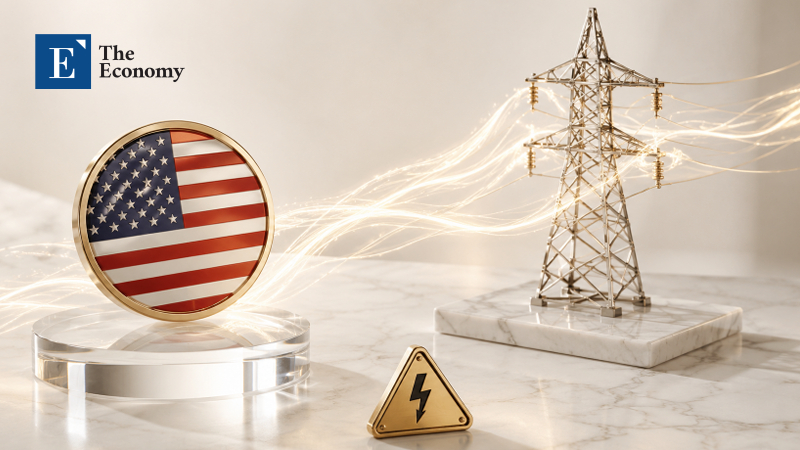
The U.S. power system is coming under mounting strain. Aging infrastructure is running into structural limitations just as multiple pressures—including reduced renewable energy subsidies, extreme heat, and surging electricity demand from data centers—rapidly erode available supply capacity. Against this backdrop, America's largest technology companies, whose AI businesses depend on massive power consumption, are dramatically expanding investments in energy assets ranging from power plants and transmission networks to nuclear facilities in a bid to preserve their competitive edge.
U.S. Power Grid Nearing Overload
On July 4 (local time), the Financial Times (FT), citing a survey conducted by clean energy marketplace LevelTen Energy among U.S. solar and wind developers, reported that prices for U.S. clean electricity power purchase agreements (PPAs) could rise between 40% and 120% following the expiration of government subsidies. The Donald Trump administration has already terminated tax incentives for renewable energy projects introduced under the Biden administration through the One Big Beautiful Bill Act (OBBBA). Those incentives had reduced development costs for U.S. solar and wind projects by roughly 30%.
Price pressures are also intensifying on the demand side. A powerful heat dome and record-breaking temperatures sweeping across the United States have significantly increased stress on the power grid. On July 2, reserve generating capacity at PJM Interconnection, the nation's largest grid operator, plunged nearly 80% from 22 gigawatts (GW) in the morning to roughly 5 GW by evening, while peak electricity demand surged to approximately 166 GW. Peak prices in PJM's Western Hub, the benchmark for wholesale electricity pricing, soared 150% to $479.27 per megawatt-hour (MWh), while real-time electricity prices in Dominion's Northern Virginia service territory—home to one of the world's largest concentrations of data centers—briefly exceeded $2,500 per MWh.
Electricity demand from data centers has also become a growing burden on the U.S. power grid. Fueled by the rapid expansion of artificial intelligence (AI) and cloud computing services, data centers already consume enormous amounts of electricity on a continuous basis, with demand escalating further during periods of extreme heat. As outdoor temperatures rise, cooling systems must work harder to dissipate the heat generated by servers, and declining cooling efficiency increases the amount of electricity required to process the same computational workload. In response, PJM has urged major industrial customers, including data centers, to reduce their reliance on the grid and utilize their own backup power systems.
Power Outages and Operational Disruptions Continue
America's aging power grid is increasingly unable to withstand these mounting pressures. According to the U.S. Department of Energy, more than 70% of the nation's transmission lines and power transformers have been in service for over 25 years. These components represent critical bottlenecks within the grid, as failures can trigger widespread blackouts, yet expanding supply remains difficult because manufacturing, permitting, and installation require lengthy lead times. Taking these challenges into account, PJM's board of directors warned stakeholders in a letter late last year that "capacity shortages could become apparent beginning with the 2026–2027 delivery year."
These structural weaknesses are already causing repeated disruptions across the country. On July 2, Consolidated Edison (Con Edison), the utility serving New York City and Westchester County, announced that it had restored power to approximately 31,000 customers who had experienced scattered outages since the onset of the heat wave. Riverdale, northeastern Bronx, Richmond Hill in Queens, and Flushing were among the hardest-hit areas. The following day, direct power shutoffs were implemented in parts of New York City after equipment failures caused by exceptionally high electricity demand. Power service was temporarily suspended for roughly 9,800 residential and commercial customers in southwestern Queens while repairs were carried out.
Around the same time, PJM expanded emergency measures aimed at preventing large-scale blackouts. On July 2, it ordered all available generating units to operate at maximum output and sequentially brought idle power plants back online. The following day, PJM announced that a federal emergency alert had been issued to reduce electricity consumption across its service territory and instructed utilities to curtail power usage among customers participating in demand-response programs designed for emergency situations.
Big Tech's Race to Secure Electricity
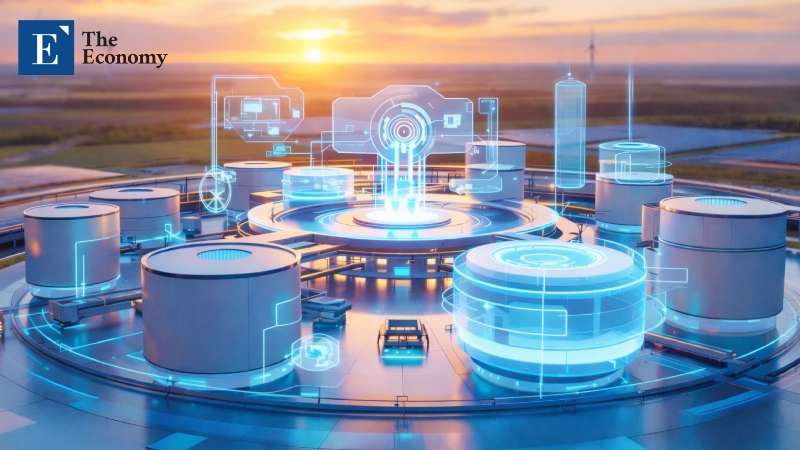
Meanwhile, major technology companies that require enormous amounts of electricity to sustain AI services are aggressively investing in proprietary energy infrastructure. According to global consulting firm Deloitte, mergers and acquisitions (M&A) in the U.S. power and utilities sector totaled $203.6 billion during the first five months of this year, exceeding the $141.7 billion recorded during all of last year by more than 40%. A market insider noted, "Big Tech companies are no longer simply building data centers—they are increasingly acquiring power plants, transmission networks, and even utility companies alongside them. The AI race is no longer determined solely by who develops the most advanced models or secures the largest supply of memory chips. It is increasingly defined by who can secure the electricity needed to keep those servers running."
Demand for directly sourced electricity is also accelerating. In April, Meta announced plans to construct 10 large-scale natural gas power plants to supply its Hyperion data center in Louisiana. The Hyperion facility is designed to consume 7.5 GW of electricity—nearly 30% of Louisiana's total installed power generation capacity of approximately 24.7 GW. Without dedicated power infrastructure, the project would impose an enormous burden on the regional grid. Meta plans to fully fund the necessary power infrastructure in partnership with local utility Southwestern Electric Power Company and intends to minimize electricity consumption by adopting air-based cooling technologies.
Investment in nuclear power is also gathering momentum. Microsoft agreed in September 2024 to restart Unit 1 of the Three Mile Island nuclear power plant, which had been shut down following an accident, securing exclusive access to its electricity output for the next 20 years. The reactor is scheduled to resume operations in 2028. The following month, Google signed a corporate power purchase agreement with Kairos Power, a developer of fourth-generation small modular reactors (SMRs). The two companies plan to bring the first reactor online by 2030 and deploy six to seven reactors by 2035. Around the same time, Amazon invested $500 million in SMR developer X-energy and plans to partner with U.S. utility Energy Northwest to build an SMR complex that will supply electricity for its operations.
Aoife Brennan is a contributing writer for The Economy, with a focus on education, youth, and societal change. Based in Limerick, she holds a degree in political communication from Queen’s University Belfast. Aoife’s work draws connections between cultural narratives and public discourse in Europe and Asia.
- Previous “From Memory Game-Changers to AI Neural Chips” Chinese Semiconductors Break Through U.S. Curbs, Accelerating an All-Out Push for Technological Supremacy
- Next "As Chinese Competition Intensifies" German Auto Industry Buckles Under Restructuring-Driven Labor Strife, Calls Grow for Japan-Style Collective Response
Similar Post