“Foreign-Made Pistols Turn Scrap Metal When the Bullets Run Out” — The Era of Selling Weapons Alone Is Over, With the ‘Operational Ecosystem’ Now Deciding Contracts

Anne-Marie Nicholson is a fearless reporter covering international markets and global economic shifts. With a background in international relations, she provides a nuanced perspective on trade policies, foreign investments, and macroeconomic developments. Quick-witted and always on the move, she delivers hard-hitting stories that connect the dots in an ever-changing global economy.
Authored On
Modified
Vulnerability in Spain’s Foreign Procurement Exposed by Dependence on Proprietary Ammunition and Parts
Growing Buyer Demand for Wartime Readiness and Domestic Industrial Capacity
Defence Competition Shifting From Finished-Product Sales to Joint Production and Long-Term Sustainment
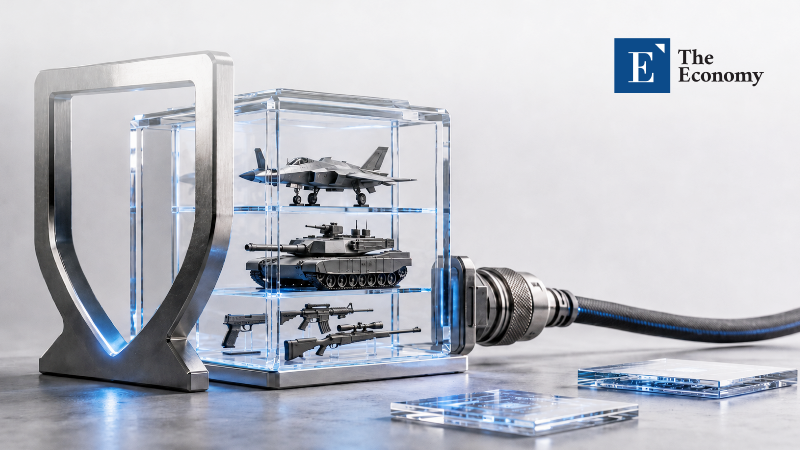
Spain has suspended the use of more than 9,000 Israeli-made Ramon pistols after supplies of their proprietary ammunition were cut off and recurring mechanical defects emerged. The episode illustrates that simply purchasing weapons does not secure operational capability: buyers must also control ammunition procurement, parts supply and maintenance capacity to guarantee equipment availability. Since the war in Ukraine, concerns over such risks have intensified, spurring a broader push in the global defence market to make local production, technology transfer and long-term maintenance infrastructure integral to procurement conditions. South Korea’s defence industry, led by the K2 main battle tank and K9 self-propelled howitzer, is likewise accelerating exports that bundle weapon systems with production and maintenance frameworks—an “operational ecosystem.”
The Capability Gap Created by Proprietary Ammunition Dependence
According to Spanish outlet The Objective on July 13, Spain’s Interior Ministry recently halted the use of more than 9,000 Israeli-made Ramon pistols. Spain’s Civil Guard had purchased 9,216 Ramon 9mm pistols from Israeli defence manufacturer Emtan between 2021 and 2023. However, technical assessment documents obtained by The Objective indicated that the weapon suffered chamber-blockage malfunctions during firing unless it used proprietary ammunition produced by Israel’s IMI Systems.
The ammunition procurement issue became protracted as it collided with Spain’s policy toward Israel. In 2024, the Civil Guard agreed to purchase 15.3 million rounds of 9mm ammunition produced by IMI Systems for €6.64 million, or roughly $7.8 million. The Spanish government, however, sought to cancel the contract, citing the Gaza war and opposition within the governing coalition. When the Interior Ministry resumed performance of the contract in April last year, citing potential damages and ammunition demand in the field, its left-wing coalition partner Sumar strongly objected and the prime minister’s office again refused the import permit. A royal decree banning arms and dual-use trade with Israel took effect in September of the same year, and the contract was formally terminated on the grounds of “subsequent legal impossibility of performance.” As a result, more than 9,000 pistols that could not obtain their proprietary ammunition were effectively rendered unusable.
Durability defects in the weapon itself further aggravated the situation. Ramon pistols had been deployed to frontline units since 2021, but frequent feeding failures and spent-cartridge ejection malfunctions were reported during live-fire training. In a 2023 parliamentary response, the Spanish government acknowledged that 87 of the 6,144 pistols delivered at the time had experienced abnormalities. An internal Civil Guard report also identified defects in the extractor mechanism responsible for removing spent casings from the chamber. Consequently, at least 4,000 of the pistols issued during the early rollout had already been removed from frontline service because of extractor failures. Emtan supplied replacement tools for the components, but the defects were not resolved. Even so, the Spanish government reportedly paid the contract in full, unable to terminate it because of contractual penalty clauses.
Spain’s Interior Ministry is now pursuing a new contract with Guardian Homeland Security for 7,500 replacement pistols. Local reporting indicates that the new weapons will cost about €600, or roughly $700, per unit—more than 120% above the price of the existing model. Total spending could reach €4.5 million, or approximately $5.3 million. The episode has underscored how a procurement policy that imports foreign weapons without securing technology transfer and local production conditions can lead to serious fiscal waste.

Linking Weapons Procurement With Supply-Chain Localisation
The case exposed a defining characteristic of defence supply chains: the disruption of even a single ammunition or parts stream can undermine the availability of an entire weapons system. Such vulnerabilities have already emerged as a central issue in the global defence market through the war in Ukraine. As prolonged attritional warfare rapidly depleted national ammunition stockpiles while expansion of production facilities lagged behind, procurement competitiveness has come to depend not only on weapons performance and price but also on stable production and delivery capacity.
According to the Stockholm International Peace Research Institute (SIPRI), global transfers of major arms increased 9.2% in 2021–2025 from the preceding five-year period, while European arms imports surged 210%. Poland’s import volume rose by 852% over the same period. As competition to secure weapons in response to mounting security concerns intensified, demand also expanded for placing production capacity, ammunition reserves and maintenance infrastructure under domestic control.
The North Atlantic Treaty Organization (NATO) has defined such vulnerabilities as an alliance-wide challenge. Its revised Defence Production Action Plan (DPAP), released last year, calls for identifying bottlenecks in critical manufacturing capabilities and raw materials and components, while jointly managing supply-chain risks for key materiel, including ammunition. Standardisation and interoperability were also identified as core priorities. NATO aims to expand joint design, joint development, joint production and joint sustainment arrangements in order to disperse supply burdens concentrated on particular companies or countries during a crisis.
The European Union has gone further by directly linking domestic production ratios and design authority to eligibility for financial support. The Security Action for Europe (SAFE) programme, which provides up to €150 billion, or about $176 billion, in long-term loans, limits the share of components procured from outside the EU, European Economic Area and Ukraine to no more than 35% of the cost of a finished product. In certain strategic sectors—including air defence, maritime systems, drones and artificial intelligence—the contractor must also retain decision-making authority over product design definitions, modifications and performance upgrades. The €1.5 billion, or roughly $1.8 billion, European Defence Industry Programme (EDIP) imposes the same cap on non-regional components and establishes an EU-wide supply-security framework.
The United States is also incorporating buyers’ demands for local production and maintenance capabilities into export agreements. Under Finland’s F-35 procurement programme, for example, Finnish defence company Patria assembles F-35 forward fuselages at its Halli facility in Jämsä, while the F135 turbofan engine used in the F-35 undergoes final assembly, inspection and testing at Nokia’s Linnavuori site. Patria began forward-fuselage assembly in April this year, while F135 engine production started in February. Engine assembly will continue through 2030 before shifting to maintenance, repair, overhaul and upgrade work for F135 engines. The view that local assembly, key-component production and long-term maintenance infrastructure must be embedded in export contracts to ensure supply stability and wartime readiness has become a concrete contractual principle even in U.S. weapons procurement programmes.
South Korea Also Sells the ‘Weapon-Operational Ecosystem’
South Korea, a late entrant to the global defence market, is also reshaping its export strategy to meet localisation demands. SIPRI data show that South Korea accounted for 3.0% of global major arms exports in 2021–2025, ranking ninth worldwide, with export volumes rising 24% from the previous five-year period. South Korean weapons accounted for 8.6% of imports by NATO members, while 47% of Poland’s major arms imports over the same period were supplied by South Korea. The chief attraction of K-defence exports is production speed. Since the outbreak of the war in Ukraine, countries have sought reliable weapon systems that can be fielded immediately. South Korea possesses major land, sea and air platforms—including tanks, self-propelled howitzers, multiple-launch rocket systems, light attack aircraft, naval vessels and air-defence missiles—along with mass-production experience and competitive delivery schedules.
South Korea’s most concrete response has been the second implementation contract for Poland’s K2 tanks. The agreement signed last August covered 180 K2 tanks, 81 support vehicles—including armoured recovery, engineering and bridge-laying vehicles—as well as training, maintenance and repair systems. Of the 180 tanks to be supplied, 64 will be built to the K2PL configuration tailored to Polish military requirements, with 61 of them to be produced at a factory in Gliwice, Poland, using locally sourced components. Poland’s Defence Ministry at the time outlined plans to establish a full-scale domestic tank-production system between 2028 and 2030.
In April this year, Hyundai Rotem subsequently signed a local-production and maintenance cooperation agreement for K2PL tanks and armoured recovery vehicles with Bumar, a subsidiary of Poland’s state-owned defence group PGZ. The arrangement incorporates Polish-made equipment, including front and rear cameras and inertial navigation systems, while assigning Bumar technical personnel to Hyundai Rotem’s local maintenance operations to build sustainment expertise before production begins. As Poland acquires tank assembly, component manufacturing and maintenance capabilities, the K2 contract has expanded into a project to establish a local industrial base. South Korean companies, meanwhile, have secured production and maintenance footholds in Europe that can support follow-on orders and demand from neighbouring markets.
The same strategy is being applied to K9 self-propelled howitzer exports. Hanwha Aerospace has signed an agreement with Egypt covering K9 howitzers, K10 ammunition resupply vehicles and armoured fire-direction vehicles, while supporting local production. Its K9 agreement with Poland includes 152 howitzers, ammunition, integrated logistics support and technology transfer for local production of maintenance parts. The export model has evolved beyond weapons sales into a framework that simultaneously establishes factories, maintenance networks and parts supply chains.
Government policy is also shifting from support for arms exports toward support for industrial packages. On June 4, the Ministry of National Defense and the Ministry of Trade, Industry and Energy held the 12th Defence Industry Development Council, where they discussed the development of advanced defence strategic industries—including AI, drones and aircraft engines—and whole-of-government export-support measures. At the meeting, the government decided to establish a private-sector industrial cooperation task force for defence exports, responsible for identifying industrial-cooperation items, preparing package proposals and overseeing promotion and implementation. The goal is for the government and companies to jointly design the local production, technology transfer, parts supply and workforce training arrangements required by importing countries.
Anne-Marie Nicholson is a fearless reporter covering international markets and global economic shifts. With a background in international relations, she provides a nuanced perspective on trade policies, foreign investments, and macroeconomic developments. Quick-witted and always on the move, she delivers hard-hitting stories that connect the dots in an ever-changing global economy.
Similar Post