“Memory Supercycle Has Changed”: AI-Centric Production Realignment Extends Boom as DRAM and NAND Competition Intensifies

Oliver Griffin is a policy and tech reporter at The Economy, focusing on the intersection of artificial intelligence, government regulation, and macroeconomic strategy. Based in Dublin, Oliver has reported extensively on European Union policy shifts and their ripple effects across global markets. Prior to joining The Economy, he covered technology policy for an international think tank, producing research cited by major institutions, including the OECD and IMF. Oliver studied political economy at Trinity College Dublin and later completed a master’s in data journalism at Columbia University. His reporting blends field interviews with rigorous statistical analysis, offering readers a nuanced understanding of how policy decisions shape industries and everyday lives. Beyond his newsroom work, Oliver contributes op-eds on ethics in AI and has been a guest commentator on BBC World and CNBC Europe.
Authored On
Modified
AI boom constrains commodity DRAM supply, reinforcing price downside rigidity
South Korea secures market advantage and pricing power as China and Japan accelerate pursuit
Major manufacturers benefit from AI-driven surge in NAND flash demand
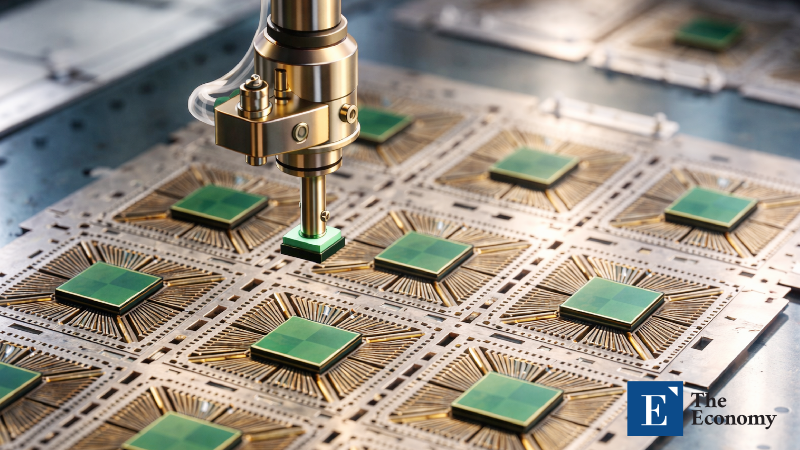
The artificial intelligence (AI) boom is reshaping the memory semiconductor market. As memory manufacturers concentrate their production capacity on high-value-added products such as high-bandwidth memory (HBM), commodity DRAM prices—which previously fluctuated sharply in line with consumer electronics demand—have developed strong downside rigidity. Countries are committing extensive resources to strengthen their memory competitiveness in response to this shift, while the intensifying rivalry is spreading beyond DRAM to the NAND flash market, where AI-driven demand is rapidly expanding.
Transformation of the Memory Market Landscape
On July 10, DigiTimes reported that HBM prices could more than double from current levels by 2027 amid growing demand for AI accelerators and structural capacity constraints. Demand for HBM4 is expected to rise rapidly, led by Nvidia’s next-generation Rubin AI accelerator platform, but analysts say memory manufacturers will find it virtually impossible to expand supply within a short period. HBM4 is manufactured by vertically stacking multiple DRAM dies and interconnecting them using through-silicon vias (TSVs) or hybrid bonding technology. The production process takes four to six months, while its wafer capacity requirements are approximately three times those of standard DDR5.
These characteristics of HBM have directly affected the supply of commodity DRAM. HBM commands an average selling price (ASP) several times higher than that of conventional DRAM. When HBM accounts for 10% of total DRAM wafer output, its contribution to overall operating profit can approach 30–40%. This explains why Samsung Electronics, SK hynix and Micron—the world’s three leading memory manufacturers—are allocating their limited advanced DRAM production lines to HBM and other high-value-added products amid the AI boom. Counterpoint Research estimates that server DRAM and HBM will account for as much as 57% of total DRAM shipments this year and generate a combined 65% of industry revenue.
As production capacity becomes increasingly concentrated on high-value-added products, commodity DRAM prices are rising accordingly. TrendForce expects contract prices for commodity DRAM to increase by another 13–18% quarter on quarter in the third quarter of this year. Taiwanese memory module manufacturer ADATA has also said that producers notified customers of third-quarter DRAM price increases ranging from 20% to 30%. The market is focusing on how the recent strength in DRAM prices differs fundamentally from a traditional demand-led supercycle. “In the past, slowing PC and smartphone sales caused inventories to accumulate, prompting manufacturers to push excess volume into the market and triggering steep price declines,” one market expert said. “Today, however, AI-driven demand is absorbing production capacity even as consumer demand remains weak, preventing any meaningful increase in commodity product supply.” The expert added, “Because supply is being constrained alongside any slowdown in demand, prices have developed downside rigidity and are unlikely to fall easily.”
Semiconductor Strategies of the Three East Asian Powers
As the memory market undergoes a rapid transformation, the strategic calculations of individual countries are becoming increasingly complex. South Korea, which currently dominates the market, is seeking to maximize profits in a supplier-driven environment. On July 6, U.S. financial news outlet MarketWatch reported that Samsung Electronics had proposed raising its DRAM ASP by 20% for customers in the third quarter. However, with prices having already maintained a steep upward trajectory for an extended period, it remains uncertain whether customers will accept the proposal. Samsung Electronics’ DRAM ASP jumped by a low-90% range quarter on quarter in the first quarter. The second-quarter increase is estimated at 50–60%.
Japan has accelerated efforts to rebuild its semiconductor industry in a bid to restore its competitiveness. A prominent example is the attraction of TSMC’s Kumamoto manufacturing facilities. The completed first plant is already producing chips based on 12- to 28-nanometer processes, while construction of a second plant is underway with operations scheduled to begin by the end of 2027. Micron is also investing approximately $9.24 billion in a new production building at its Hiroshima plant, where it plans to begin manufacturing next-generation AI memory products, including DRAM and HBM4E, in the second half of 2028. Rapidus, a foundry established jointly by the Japanese government and private-sector companies, is developing technology with the goal of commencing mass production of 2-nanometer semiconductors before March 2028. The Japanese government plans to provide more than $61.63 billion in support for the semiconductor industry.
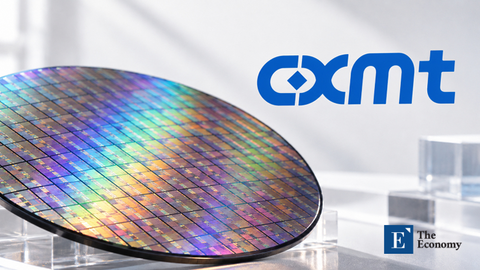
China, meanwhile, is expanding its influence in the DRAM market through ChangXin Memory Technologies (CXMT). Amid shortages of commodity DRAM, CXMT has rapidly increased its market share by filling supply gaps left by the three leading memory manufacturers. According to Omdia, CXMT’s share of the DRAM market climbed from 4.7% in the preceding quarter to 7.6% in the first quarter of this year. CXMT, which is currently pursuing an initial public offering (IPO), said in its prospectus that it would invest the approximately $4.34 billion to be raised through the listing in production-line technology upgrades, advanced DRAM development and research and development (R&D) for next-generation DRAM technologies. The actual investment is expected to total approximately $5.07 billion, with the shortfall to be covered through the company’s own resources.
Government-level financial support is also continuing. China Life Insurance, the country’s largest state-owned life insurer and a company backed by the State Council, recently disclosed in filings to the Shanghai and Hong Kong stock exchanges that it would establish a semiconductor-focused partnership fund worth approximately $735 million. The fund is designed to channel capital into semiconductor design companies, or fabless chipmakers, that possess technological advantages in core areas and robust R&D systems. It will concentrate on investments during its first two years before recovering capital over the following six years. The structure reflects the semiconductor industry’s relatively long development cycles.
Demand Ignites in the NAND Market
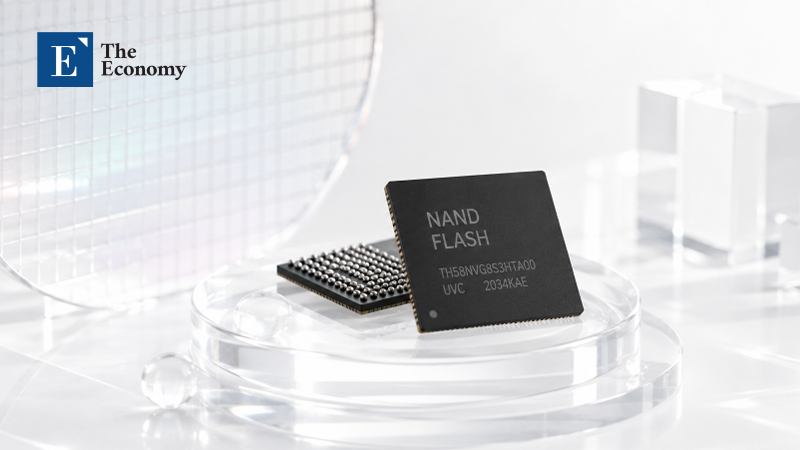
The intensifying competition in memory is also extending beyond DRAM into the NAND market. NAND demand, once heavily dependent on shipments of smartphones and PCs, is increasingly being reshaped around AI data centers. As the AI industry’s center of gravity shifts from “training”—the development of large-scale models—to “inference,” in which services are delivered repeatedly in real-world environments, enterprise solid-state drives (SSDs) capable of rapidly storing and retrieving vast quantities of data have become increasingly important. Omdia forecasts that global NAND market revenue will surge 394%, from $73 billion last year to $360.1 billion this year.
The benefits of this market expansion are being concentrated among the three leading memory manufacturers and established NAND producers such as Japan’s Kioxia and U.S.-based SanDisk. According to TrendForce, Samsung Electronics retained the top position in the first quarter of this year, generating $13.51 billion in NAND revenue and capturing a 31.6% market share. Samsung Electronics possesses vertically integrated capabilities spanning in-house NAND production and finished enterprise SSD manufacturing, alongside an extensive product portfolio. SK hynix ranked second with a 17.6% share. The figure combines the results of SK hynix and Solidigm, the NAND and SSD business that SK hynix acquired from Intel in 2020.
Kioxia, Micron and SanDisk each recorded comparable market shares of approximately 14%. Kioxia supplies a broad range of NAND products for smartphones and SSDs for data centers, lifting its first-quarter revenue to $5.96 billion. This represented an 80% increase from the preceding quarter. Over the same period, NAND revenue at both SanDisk and Micron also increased to approximately $5.95 billion. SanDisk has steadily expanded its supply of NAND products for data centers, while Micron is increasing sales of enterprise SSDs and TLC and QLC products for AI data centers using its internally produced NAND.
Oliver Griffin is a policy and tech reporter at The Economy, focusing on the intersection of artificial intelligence, government regulation, and macroeconomic strategy. Based in Dublin, Oliver has reported extensively on European Union policy shifts and their ripple effects across global markets. Prior to joining The Economy, he covered technology policy for an international think tank, producing research cited by major institutions, including the OECD and IMF. Oliver studied political economy at Trinity College Dublin and later completed a master’s in data journalism at Columbia University. His reporting blends field interviews with rigorous statistical analysis, offering readers a nuanced understanding of how policy decisions shape industries and everyday lives. Beyond his newsroom work, Oliver contributes op-eds on ethics in AI and has been a guest commentator on BBC World and CNBC Europe.
- Previous “FCAS Collapse, GCAP Survival, and America’s Solo Push” Diverging Sixth-Generation Fighter Strategies Reshape Western Defense Landscape amid China’s Expanding Airpower
- Next “From Latin American Retail Payments to Middle Eastern Asset Tokenization”: Stablecoins Emerge as America’s New Tool for Reinforcing Dollar Dominance
Similar Post