“Safe-Haven Playbook Upended”: Gold Slides Amid Middle East Turmoil as Central-Bank Selling and Delayed U.S. Rate Cuts Emerge as Key Variables

Oliver Griffin is a policy and tech reporter at The Economy, focusing on the intersection of artificial intelligence, government regulation, and macroeconomic strategy. Based in Dublin, Oliver has reported extensively on European Union policy shifts and their ripple effects across global markets. Prior to joining The Economy, he covered technology policy for an international think tank, producing research cited by major institutions, including the OECD and IMF. Oliver studied political economy at Trinity College Dublin and later completed a master’s in data journalism at Columbia University. His reporting blends field interviews with rigorous statistical analysis, offering readers a nuanced understanding of how policy decisions shape industries and everyday lives. Beyond his newsroom work, Oliver contributes op-eds on ethics in AI and has been a guest commentator on BBC World and CNBC Europe.
Authored On
Modified
Gold Retreats Despite Middle East Risks as Selling by Some Central Banks Draws Attention
“Inflation Is Rising, Economy Remains Resilient”: Fed Lacks Case for Rate Cuts
Higher-for-Longer U.S. Rates Exert Downward Pressure, Deepening Dilemma for New Gold Investors
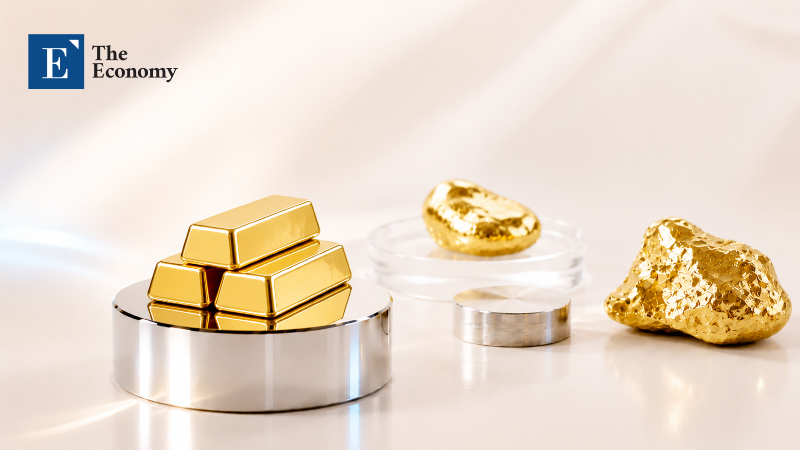
Gold prices have recorded a marked decline. Despite protracted tensions in the Middle East, the conventional safe-haven playbook has shown little sign of working. The downturn appears to reflect a combination of factors: some central banks are using their gold reserves to secure liquidity amid foreign-exchange and fiscal pressures, while resilient U.S. economic data and persistent inflation are increasing the likelihood that the Federal Reserve will keep interest rates unchanged.
An Unusual Decline in Gold Prices
According to a July 14 report by The Wall Street Journal, gold traded at $3,997 per troy ounce, equivalent to approximately 31.1 grams, on July 13. That represented a 25% plunge from the all-time high of $5,318 per troy ounce set in January. Prices have shown no meaningful signs of rebounding even as renewed military hostilities involving the United States, Israel and Iran have heightened geopolitical risks. Gold, widely regarded as a quintessential safe-haven asset, typically appreciates as geopolitical tensions and financial-market uncertainty spur demand.
One factor behind the breakdown of this traditional market dynamic is a shift in the stance of central banks, the largest source of gold demand. In recent years, central banks worldwide have aggressively accumulated gold to reduce their dependence on the dollar and diversify their foreign-exchange reserves. Since the beginning of this year, however, energy shocks emanating from the Middle East and instability in foreign-exchange markets have prompted some countries to liquidate existing holdings rather than continue purchasing gold.
Türkiye has been the most aggressive seller. The Central Bank of the Republic of Türkiye reportedly sold 52 metric tons of gold outright and deployed approximately 79 tons in gold swap transactions between late February and late March, following the outbreak of the war with Iran. A gold swap involves using gold as collateral to obtain foreign currency before recovering the gold after a specified period, effectively adding to supply pressure in the market.
Gold selling has also been pronounced in Russia, reflecting mounting fiscal pressure from Western sanctions and declining oil exports. Because Russia cannot freely dispose of its dollar- and euro-denominated assets, it effectively relies on gold and the Chinese yuan as its principal liquid assets. The Central Bank of Russia sold a net 34 metric tons of gold during the first five months of this year, reducing its holdings to 2,292 tons. As countries confronting short-term economic shocks increasingly use gold as an emergency liquidity facility, aggressive purchases by China and other countries no longer provide a one-way catalyst for higher prices.
Obstacles to U.S. Policy Rate Cuts
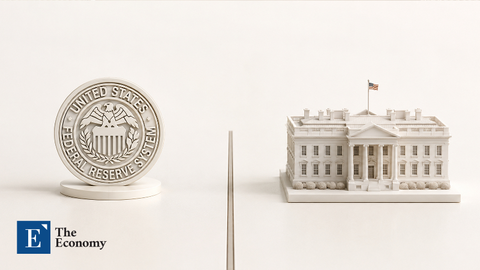
The trajectory of Federal Reserve interest-rate policy is another major variable influencing gold prices. Since the beginning of his second administration, U.S. President Donald Trump has repeatedly urged the Fed to cut rates promptly, arguing that the federal funds rate is excessively high relative to prevailing economic conditions. The demand is widely viewed as an attempt to ease borrowing costs for households and businesses. Lower policy rates would reduce the cost of consumer credit and corporate loans, while mortgage rates could also decline if long-term Treasury yields stabilize. The enormous federal debt burden further reinforces the case for lower rates. If policy rates and Treasury yields fall, the U.S. Treasury’s interest costs would also decline when it issues new debt or refinances maturing securities.
The problem is that the war with Iran is intensifying inflationary pressure in the United States. According to a Wall Street Journal survey of 72 economists conducted from July 2 to 7, respondents expected the U.S. Consumer Price Index to rise 3.4% by the end of this year, slightly above the 3.2% forecast recorded in the April survey. The projected increase in the core Personal Consumption Expenditures Price Index, the Fed’s preferred inflation gauge, also rose to 3.2% from 2.9% in April. Most economists expected the Fed to hold rates at their current range of 3.5% to 3.75% through December. Fifteen percent of respondents anticipated a rate increase.
The same survey placed the probability of a U.S. recession within the next 12 months at 25%. That was below the 33% recorded in April and marked the lowest level since early last year. The economic growth forecast was revised upward to 2.1% from 2.0% in April, while the projected unemployment rate stood at 4.3%, broadly in line with the estimated long-run equilibrium rate. These economic conditions constrain the Fed’s room for maneuver. Cutting rates prematurely when recession risks remain limited could rapidly accelerate consumption and investment, thereby reigniting inflationary pressure.

The Right Gold Investment Strategy
If the Fed delays rate cuts, downward pressure on gold prices will naturally intensify. When U.S. policy rates remain elevated, yields on dollar-denominated assets such as U.S. Treasuries, bank deposits and money market funds tend to remain correspondingly high. Gold, by contrast, pays neither interest nor dividends, meaning that the longer investors hold it, the greater the interest income they forgo. If the likelihood of a recession is also low, the rationale for holding safe-haven assets weakens further, increasing the prospect that capital will migrate toward short-term U.S. Treasuries and other instruments offering stable interest income.
Dollar strength driven by high interest rates is another factor weighing on gold prices. If major central banks such as the European Central Bank or the Bank of Japan lower rates while the Fed maintains its current stance, widening interest-rate differentials between the United States and other major economies could draw yield-seeking capital into the United States. As demand for the dollar increases and a sustained appreciation takes hold, gold becomes more expensive for countries using other currencies because it is priced in dollars on international markets. This could dampen demand for physical gold and gold exchange-traded funds outside the United States while encouraging existing investors to take profits.
Against this backdrop, the calculus for new gold investors is becoming increasingly complex. Addressing the issue on July 10, U.S. broadcaster CBS said, “Gold price declines are rare and, even when they occur, often do not last long,” adding that “new investors should be prepared to move quickly but strategically.” It continued, “There are numerous ways to invest, including gold bars, gold coins, gold individual retirement accounts and gold ETFs,” while cautioning that “not every option will necessarily be suitable for every individual.” CBS also recommended limiting gold exposure to no more than 10% of an overall portfolio. Because gold primarily serves to preserve the value of assets already held, excessive exposure could cause investors to forgo return-generating opportunities offered by equities, bonds, real estate and other asset classes.
Oliver Griffin is a policy and tech reporter at The Economy, focusing on the intersection of artificial intelligence, government regulation, and macroeconomic strategy. Based in Dublin, Oliver has reported extensively on European Union policy shifts and their ripple effects across global markets. Prior to joining The Economy, he covered technology policy for an international think tank, producing research cited by major institutions, including the OECD and IMF. Oliver studied political economy at Trinity College Dublin and later completed a master’s in data journalism at Columbia University. His reporting blends field interviews with rigorous statistical analysis, offering readers a nuanced understanding of how policy decisions shape industries and everyday lives. Beyond his newsroom work, Oliver contributes op-eds on ethics in AI and has been a guest commentator on BBC World and CNBC Europe.
- Previous “From Stake Sales to Prime Site Acquisitions” Massive Capital Pours into Data Centers Amid AI Boom, Fueling M&A Frenzy in South Korea and the US
- Next “Beyond Tariffs to Local-Content Rules”: EU Tightens Pressure on Chinese EVs, but Effectiveness Questioned as Chinese Brands Expand European Production
Similar Post