AI Industrial Policy & Geopolitics

Europe can benefit from foreign AI without capturing an equal share of its rents Fiscal resilience requires compute, capital, ownership and local industrial capability The viable strategy is high adoption with minimum technological sovereignty
Read More
AI export controls protect U.S.
Read More
EU trade de-risking should not be driven by import shares alone The real risk lies in concentrated, hard-to-replace inputs Europe needs selective resilience, not broad decoupling EU trade de-risking could fail in two c
Read More
EU strategic autonomy depends on reducing critical bottlenecks, not cutting trade China-linked inputs matter most where Europe cannot switch suppliers quickly The answer is targeted de-risking, stockpiles and crisis planning
Read More
Europe’s green transition depends on foreign-controlled supply chains Factories alone do not create industrial autonomy Selective de-risking is stronger than full decoupling In 2024, China supplied 98 per
Read More








South Korea bears real costs from US AI export controls The AI memory boom has provided temporary compensation Submarine cooperation adds a major strategic return In 2025, South Korea shipped $130.8 billion worth of goods to Ch
Read More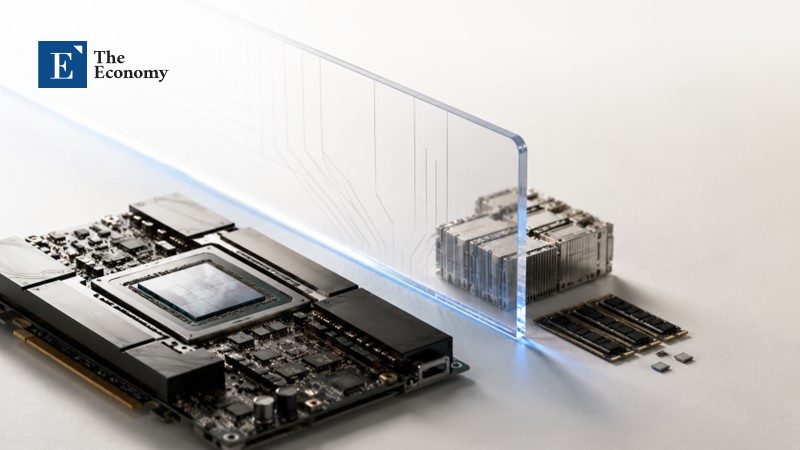
AI chip controls can buy time, not permanent dominance Chinese substitution limits their long-term power That time must build U.S. and allied capacity In 2024, U.S.
Read More
US restrictions exposed the fragility of allied AI access Europe needs leverage through capital, chips and compute A formal access compact could balance security with continuity One order from Washington on 12 June 2026 cut all f
Read More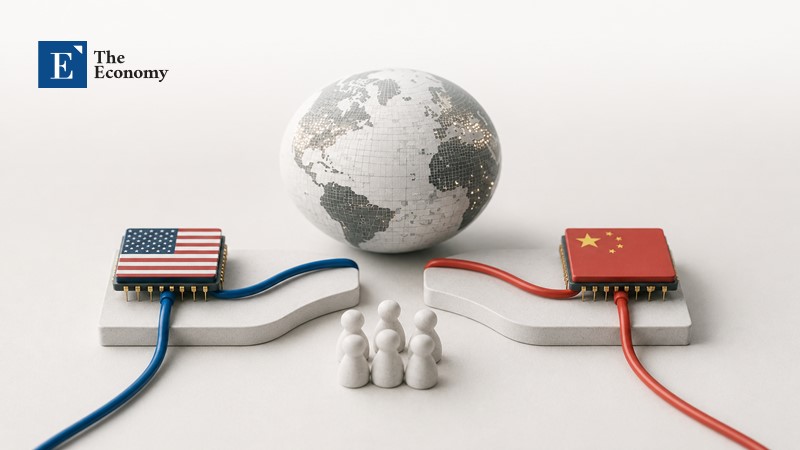
The US–China AI split is becoming structural The Global South must secure access without accepting permanent dependence Cheaper AI matters only when it builds local capacity and bargaining power The global AI divide is ofte
Read More
The AI adoption gap is an institutional gap, not just a tool gap The U.S.
Read More

Europe should build chip power through indispensability, not full self-sufficiency The real strategy is to control key bottlenecks others cannot replace A stronger chip policy must focus on leverage, coordination, and industrial demand
Read More
AI standards are the only realistic truce in the US-China AI race Rivals may not trust each other, but they can still agree on basic safety rules Without shared standards, AI competition will become more costly, fragmented, and dangerous
Read More
Shanghai’s single AI cluster outpaces United States’ scattered hubs. Talent gravity widens innovation and wage gaps. Focus investment, cushion workers. In July 2025, Shanghai caught the attention of global policymakers when the
Read More
Federal AI spending alone no longer secures United States dominance after decades of relative decline. China is sprinting ahead as AI-driven “super-human” productivity makes vast swathes of labour redundant. Research budgets must be tied to strong worker protections to win the tech race without fracturing society.
Read More
The Anthropic–OpenAI shift exposes flaws in Pentagon AI procurement Replacing an AI model triggers deep operational and institutional disruption Procurement reform is needed to balance speed, ethics, and security The pivot
Read More

AI chip export controls are tools of geopolitical leverage, not just technology denial China’s pragmatic strategy limits the long-term impact of chip restrictions Effective AI chip export controls must tie semiconductor access to strategic conditions
Read More

AI is triggering a new global divergence, much like the industrial revolutions before it Countries that control AI systems and skills will gain lasting economic and institutional power Education and policy now decide who leads and who is left behind
Read More
Export controls slow foes, not secure leadership Invest in compute, clean power, talent Make NAIRR-style Compute Commons permanent U.S. data centers used about 183 terawatt-hours of electricity in 2024, roughly 4% of total U.S.
Read More
Defense AI education is the bottleneck between record defense spending and real capability Train stack-aware teams with mission credentials Scale safely with oversight and shared compute In 2024, global military spendi
Read More