Chinese Semiconductor Wafers Accelerate Price Offensive, Could They Disrupt a Market Structure Defined by Persistent Supply Shortages Despite U.S. Restrictions?

Aoife Brennan is a contributing writer for The Economy, with a focus on education, youth, and societal change. Based in Limerick, she holds a degree in political communication from Queen’s University Belfast. Aoife’s work draws connections between cultural narratives and public discourse in Europe and Asia.
Authored On
Modified
Chinese 6-inch SiC wafer prices plunge amid 8-inch migration and government self-sufficiency policies
Global wafer supply chain remains vulnerable to surging demand and recurring shortages
Sustained Chinese pricing advantage could reshape the competitive landscape
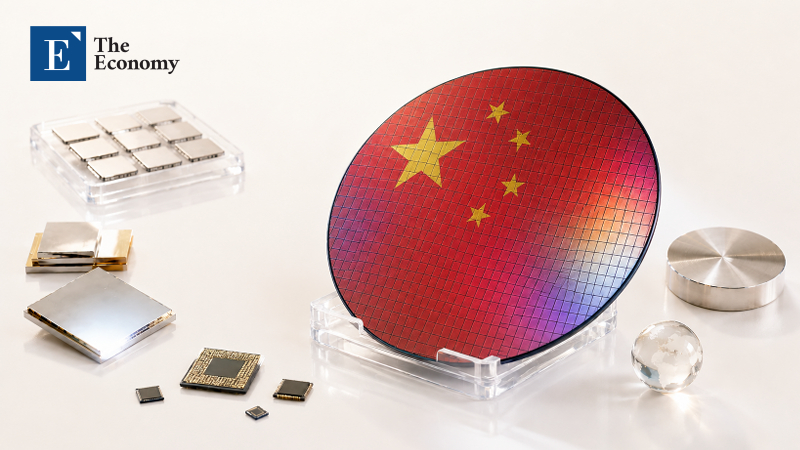
The price of Chinese-made 6-inch (150mm) silicon carbide (SiC) semiconductor wafers is falling rapidly. Downward pressure has intensified as equipment depreciation cycles reach completion, manufacturers transition toward 8-inch (200mm) wafers, and Beijing's wafer self-sufficiency policies gain momentum. Market observers argue that if the current pricing trend persists, it could trigger a significant shift in the global wafer supply chain, which has long been dominated by a handful of companies in South Korea, Japan, and Taiwan and has repeatedly suffered from supply shortages.
Declining Prices for Chinese SiC Wafers
According to a June 4 report by DigiTimes, the benchmark spot price of some Chinese-made 6-inch SiC wafers has recently fallen to approximately $200 to $300 per wafer. Considering that comparable products from Chinese suppliers have generally traded at around $400 to $500, the discount is substantial. In effect, suppliers have begun pushing volumes into the market at prices below manufacturing cost. The decline reflects increased pricing flexibility following the completion of equipment depreciation. Major Chinese wafer manufacturers, including Shandong Tianyue, Tianke Heda, Tankeblue, and Sanan Optoelectronics, have operated 6-inch production lines for roughly a decade, allowing a significant portion of their capital expenditure burden to be absorbed through accounting depreciation.
Pressure to transition toward next-generation 8-inch wafers has also accelerated the decline. Although 6-inch products still dominate the SiC wafer market, manufacturers are racing to establish mass-production capabilities for 8-inch wafers to improve production efficiency and cost competitiveness. Chinese wafer makers have likewise begun operating new 8-inch production lines or preparing for volume manufacturing. During this transitional period, aggressively expanded 6-inch production capacity in China has entered an oversupply phase. Companies are accepting short-term profitability deterioration while liquidating accumulated 6-inch inventories at discounted prices in an effort to preserve market share.
China's determination to achieve semiconductor self-sufficiency may also have contributed to the price decline. Beijing has recently intensified efforts to localize key semiconductor materials. Last month, Nikkei Asia, citing multiple anonymous sources, reported that China aims to source more than 70% of the silicon wafers used by its domestic semiconductor manufacturers from local suppliers this year. Chinese companies expanded capacity aggressively in line with government policy, but production growth outpaced actual demand, disrupting market equilibrium. Under such conditions, lowering prices became increasingly necessary to maintain utilization rates and expand market share.
Limitations of the Global Wafer Supply Chain
The market is closely watching how these developments could affect the global wafer supply chain. Historically, wafer supply has shown a tendency toward instability whenever industry conditions shift. One prominent example was the semiconductor shortage crisis of 2022. Following the COVID-19 pandemic, global demand for PC, server, and automotive semiconductors surged, while major chipmakers struggled to keep pace, resulting in a worldwide semiconductor shortage. Supply conditions for wafers, a core semiconductor material, tightened rapidly. At the time, industry forecasts suggested that shortages of 12-inch (300mm) silicon wafers could persist for years, while wafer prices rose sharply.
Similar challenges have resurfaced amid the ongoing artificial intelligence (AI) boom. Rapid growth in the production of graphics processing units (GPUs), high-bandwidth memory (HBM), and advanced logic semiconductors has caused wafer demand to increase dramatically. Bottlenecks are already emerging throughout the AI supply chain. TSMC Chairman C.C. Wei stated at an industry event last year that advanced process production capacity for AI chips amounted to only about one-third of customer demand, adding that wafer shortages remained severe. Intel likewise stated in a recent earnings announcement that it was prioritizing wafer production capacity for data center AI products and that some product lines were experiencing supply constraints.
SK Group Chairman Chey Tae-won has also attributed recent memory supply shortages to wafer supply limitations. Speaking with reporters at Nvidia's annual developer conference, GTC 2026, held in March at the San Jose Convention Center in California, Chey said, “HBM requires a large amount of wafers. Supply shortages stem from wafer shortages, but wafer capacity cannot be expanded suddenly in the short term.” He added, “Securing additional wafer capacity requires at least four to five years, meaning global wafer shortages could persist at more than 20% through 2030. Constraints involving power, construction capacity, water resources, and other inputs limit the pace of supply expansion.”
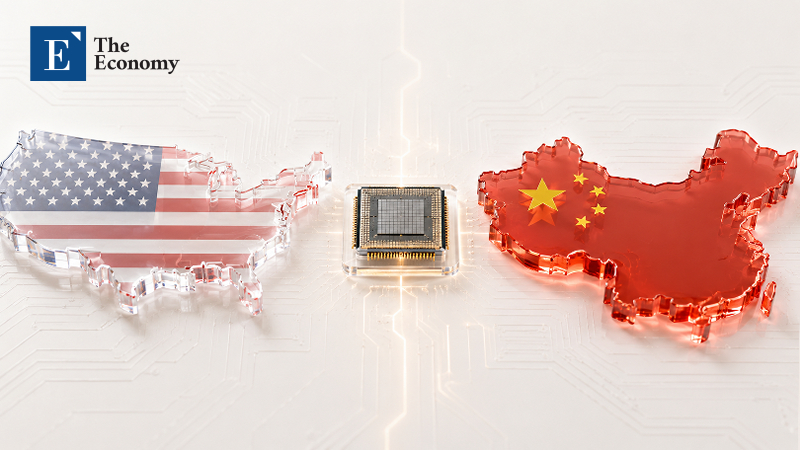
China's Entry Emerges as a Key Competitive Variable
Some experts argue that U.S. semiconductor restrictions on China have contributed to these supply limitations within the wafer ecosystem. Washington has concluded that China's semiconductor self-sufficiency efforts could threaten U.S. national security and industrial competitiveness, leading it to expand restrictions beyond advanced semiconductors into mature chips and key materials. Last year, the Office of the United States Trade Representative (USTR) launched a formal investigation into Chinese government support policies for the semiconductor sector, arguing that they distorted market conditions. The investigation included silicon wafers and SiC wafers among its targets.
Under these restrictions, the global wafer market has continued to operate under a concentrated supply structure dominated by a limited number of companies. According to Counterpoint Research, the majority of global wafer production capacity is currently controlled by Japan's Shin-Etsu Chemical and SUMCO, Taiwan's GlobalWafers, and South Korea's SK Siltron. An industry source noted, “The wafer industry requires years to expand production capacity, while barriers to entry remain high. As long as China's ability to flood the market with low-cost supply remains constrained, supply shortages will continue to recur whenever demand rises sharply.”
However, if Chinese wafer manufacturers continue pursuing aggressive price reductions, cracks could begin to emerge in the existing market structure. Wafer production is fundamentally an industry where quality verification and customer certification are critical, but widening price differentials inevitably influence procurement strategies. In South Korea, one of the semiconductor industry's most important markets, Chinese wafer penetration has already been evident for years. According to an analysis of Korea Customs Service trade statistics by electronics industry publication TheElec, South Korea's imports of Chinese wafers increased from approximately $424 million in 2020 to roughly $777 million in 2022. In January 2023, imports of Chinese wafers reached $74.88 million, nearly matching imports of Japanese wafers at $77.7 million. Most Chinese wafer shipments entering South Korea at the time consisted of low-cost 6-inch and 8-inch silicon wafers. As the price gap between Chinese products and wafers supplied by established producers widens, China's influence across the broader mature-wafer segment is likely to expand further.
Aoife Brennan is a contributing writer for The Economy, with a focus on education, youth, and societal change. Based in Limerick, she holds a degree in political communication from Queen’s University Belfast. Aoife’s work draws connections between cultural narratives and public discourse in Europe and Asia.
Similar Post