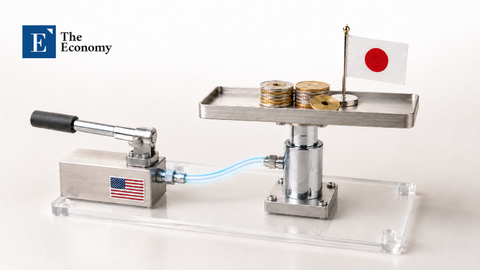
The Japanese Yen Sinks to a 40-Year Low Despite a $74 Billion Intervention, Leaving Tokyo With Few Policy Options Against Structural Weakness

Anne-Marie Nicholson is a fearless reporter covering international markets and global economic shifts. With a background in international relations, she provides a nuanced perspective on trade policies, foreign investments, and macroeconomic developments. Quick-witted and always on the move, she delivers hard-hitting stories that connect the dots in an ever-changing global economy.
Authored On
Modified
Lowest Level Since the December 1985 Plaza Accord
BOJ Rate Hike Fails to Halt Yen Weakness
Speculators Build Largest Bearish Bet in Nine Years
Structural Headwinds Fuel Concerns Over Further Yen Depreciation

The Japanese yen has continued to weaken sharply against the U.S. dollar, with the dollar-yen exchange rate climbing to its highest level in 40 years. Despite aggressive foreign-exchange intervention by the Japanese government and the Bank of Japan's decision to raise its policy rate to 1% for the first time in 31 years, the yen has shown little sign of stabilizing. As the U.S.-Japan interest-rate differential, currency competition stemming from China, and the yen carry trade continue to underpin the currency's decline, market participants increasingly believe that the effectiveness of Tokyo's interventions will remain limited.
Dollar-Yen Climbs Above 162 for the First Time Since 1986
According to Bloomberg on July 1 (local time), the dollar-yen exchange rate traded above ¥162 in New York at around 3 p.m., extending gains from the previous session. Just a day earlier, the pair had briefly reached ¥161.78 during intraday trading. The rally quickly spilled over into Japanese trading hours, where the exchange rate broke through the ¥162 threshold.
The current exchange-rate level is comparable to that seen immediately after the Plaza Accord in late 1985. The Plaza Accord was an agreement reached in 1985 between the United States and its major trading partners, including Japan and West Germany, to deliberately weaken the U.S. dollar in an effort to reduce America's trade deficit. During that period, the yen traded between ¥158 and ¥163 per dollar as the dollar weakened and the yen strengthened rapidly. While today's exchange rate is similar in nominal terms, the underlying dynamics are the exact opposite: this time, it reflects broad dollar strength and pronounced yen weakness.
The weak yen is also weighing on Japan's economy. Rising prices for imported crude oil, natural gas, food, and other essential goods have driven up import costs. Analysts note that, unlike in the past, the expansion of Japanese companies' overseas production has reduced the export benefits traditionally associated with a weaker yen, while amplifying the negative impact of higher import prices.
U.S. officials have also become increasingly sensitive to the excessive weakness of the yen. President Donald Trump has repeatedly accused Japan of deliberately keeping its currency weak to gain an unfair trade advantage, while the U.S. Treasury continues to include Japan on its foreign-exchange monitoring list. Treasury Secretary Scott Bessent recently stated that the Bank of Japan should allow the yen to return to an appropriate level by continuing to raise interest rates, effectively signaling that monetary policy normalization—not direct intervention—is the more fundamental solution.

Yen Purchases and Rate Hikes Fail to Reverse the Trend
Despite continued intervention by Japanese authorities, the yen remains under persistent downward pressure. Until recently, markets viewed the timing of Tokyo's intervention in the foreign-exchange market as the biggest uncertainty. Since 2022, Japan has repeatedly entered the market by selling dollars and buying yen whenever the currency weakened sharply. Those interventions typically pushed the exchange rate lower by several yen over a short period, demonstrating an immediate impact.
This time, however, the situation appears different. According to Japan's Ministry of Finance, the government spent a record ¥11.73 trillion—approximately $74 billion—over the month through May 27 to defend the yen. Ministry data indicate that the funds were raised by liquidating overseas securities holdings, including U.S. Treasuries. Authorities first intervened on April 30, when the dollar-yen exchange rate approached ¥161, while traders believe intermittent interventions also took place during Japan's Golden Week holiday in early May. Although the yen temporarily strengthened to around ¥155 per dollar following those operations, it gradually surrendered those gains even after the Bank of Japan raised its benchmark interest rate to the highest level in 31 years on June 16.
The primary driver of the yen's weakness remains the interest-rate gap between the United States and Japan. Although the Bank of Japan raised its benchmark rate to 1% last month—the highest level in 31 years—it remains low by international standards, allowing the yen carry trade to persist as investors continue borrowing in yen to invest in higher-yielding overseas assets. Expectations for higher U.S. interest rates have further strengthened the dollar, leaving the relatively low-yielding yen under sustained selling pressure. Japan's government debt, which exceeds 200% of gross domestic product (GDP), also remains a significant concern. Investors increasingly worry that the world's highest debt-to-GDP ratio among major economies, coupled with chronic fiscal deficits, is eroding confidence in Japanese assets.
Higher oil prices resulting from the conflict involving Iran have also intensified pressure on the yen. As Japan depends heavily on imported crude oil, higher oil prices settled in U.S. dollars increase demand for dollars while simultaneously adding selling pressure on the yen. Although the United States and Iran have reportedly reached a provisional agreement to reopen the Strait of Hormuz, analysts believe the impact on the yen's recovery will be minimal. Bloomberg noted that "structural factors such as the U.S.-Japan interest-rate differential remain the decisive driver of the yen's value." In particular, widening rate differentials between Japan and major economies, including the United States, continue to encourage investors to expand yen carry trades. According to the latest weekly data from the U.S. Commodity Futures Trading Commission (CFTC), speculative net short positions against the yen have surged to $11.3 billion, marking the largest bearish wager since November 2017, when global trade tensions were at their peak.
China's Yuan Policy Further Weakens Japan's Currency Defenses
China's exchange-rate policy has emerged as another factor contributing to the yen's weakness. As the Trump administration expanded high tariffs on Chinese products, Beijing has continued allowing the yuan to weaken to a certain extent in order to preserve the price competitiveness of its exports. A weaker yuan inevitably undermines the pricing competitiveness of Japanese companies that compete directly with Chinese manufacturers in global markets. Japan's economy remains heavily dependent on manufacturing industries—including automobiles, machinery, electronics, and steel—that compete head-to-head with Chinese firms. If yuan weakness persists over the long term, Japanese exporters could face worsening profitability, further limiting the scope for yen appreciation.
Yet Japan has few remaining policy options. Additional interest-rate increases by the Bank of Japan could provide some support for the yen, but aggressive monetary tightening remains difficult given the country's enormous public debt burden and still-fragile economic recovery. On the other hand, if rates do not rise sufficiently, the U.S.-Japan interest-rate differential will remain wide, allowing the yen carry trade to continue expanding. Either course presents significant costs. Long-term measures—including encouraging corporate capital repatriation, expanding domestic investment, and reducing public debt through fiscal reform—could eventually provide structural support for the yen, but such reforms would inevitably require considerable time before producing meaningful results.
Many analysts also argue that foreign-exchange intervention alone cannot serve as a fundamental solution. As of the end of May, Japan held $1.09 trillion in foreign-exchange reserves, providing ample financial firepower. Finance Minister Satsuki Katayama has repeatedly stressed that the government "stands ready to take appropriate action whenever necessary." The issue, however, is not the size of Japan's reserves but their effectiveness. Tsuyoshi Ueno, Chief Economist at NLI Research Institute, said, "The government has very few tools capable of immediately reversing the currency's decline. Markets understand that, and that is one reason the yen continues to weaken." Analysts warn that repeated intervention will lose effectiveness if it fails to alter the market's underlying structural dynamics. Policymakers must also consider that sharp currency fluctuations increase pricing and hedging risks for businesses while potentially inflicting heavy losses on traders positioned for the prevailing trend.
Anne-Marie Nicholson is a fearless reporter covering international markets and global economic shifts. With a background in international relations, she provides a nuanced perspective on trade policies, foreign investments, and macroeconomic developments. Quick-witted and always on the move, she delivers hard-hitting stories that connect the dots in an ever-changing global economy.
Similar Post