"Security Threat Concerns" Drive Parallel U.S.-EU Curbs on Chinese Inverters as China-West Trade Rift Deepens

Oliver Griffin is a policy and tech reporter at The Economy, focusing on the intersection of artificial intelligence, government regulation, and macroeconomic strategy. Based in Dublin, Oliver has reported extensively on European Union policy shifts and their ripple effects across global markets. Prior to joining The Economy, he covered technology policy for an international think tank, producing research cited by major institutions, including the OECD and IMF. Oliver studied political economy at Trinity College Dublin and later completed a master’s in data journalism at Columbia University. His reporting blends field interviews with rigorous statistical analysis, offering readers a nuanced understanding of how policy decisions shape industries and everyday lives. Beyond his newsroom work, Oliver contributes op-eds on ethics in AI and has been a guest commentator on BBC World and CNBC Europe.
Authored On
Modified
U.S. considers introducing de facto China-targeted inverter restrictions following EU's lead
Software- and remote communications-enabled advanced inverters heighten Western security concerns
EU-China trade dispute intensifies despite launch of formal consultations, with outcome uncertain
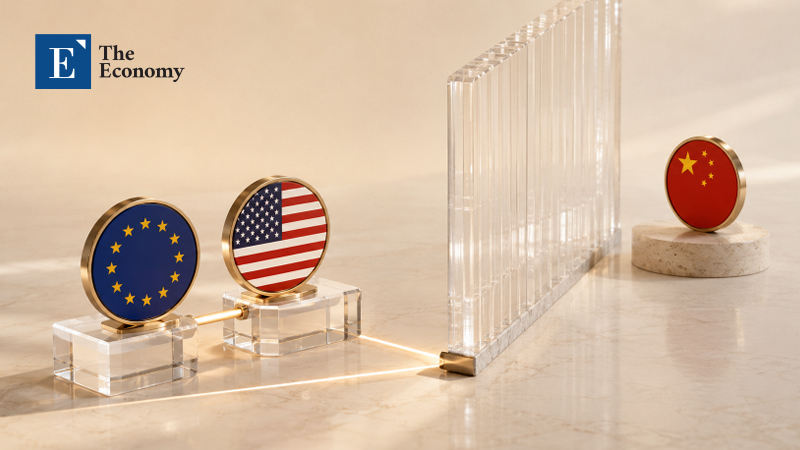
The United States is moving to tighten regulations on inverters, a critical component in solar energy systems and battery storage facilities. The move follows the European Union's decision last month to impose sweeping restrictions on Chinese-made inverters on national security grounds, signaling that Washington is likewise raising trade barriers in a measure widely viewed as targeting China. Market observers say the latest steps extend beyond conventional power equipment regulation, reflecting a broader coordinated Western effort to exclude Chinese products from strategic industries. In the EU's case in particular, analysts believe the bloc has expanded its hard-line stance into the realm of economic security as trade tensions with China continue to escalate.
U.S. and EU Move to Exclude Chinese Inverters
Reuters reported on July 1 (local time) that the United States is considering new restrictions on imports of foreign-made energy inverters. Inverters are essential components that connect renewable energy facilities and battery storage systems to the power grid by converting direct current (DC) generated by power facilities into alternating current (AC) suitable for grid distribution. They are widely used in solar panels, wind farms, energy storage systems (ESS), and electric vehicle charging infrastructure. In solar power installations in particular, inverters account for roughly 10% of total installation costs.
Reuters said the proposed U.S. measures would apply to newly introduced foreign-made inverter models requiring fresh certification in the United States and could be formally announced as early as this year. The report added that the Trump administration and members of Congress are increasingly concerned that Chinese-made inverters could be used to disrupt electricity supplies. Indeed, in a letter sent to the Department of Commerce in November last year, 52 Republican members of the House of Representatives warned that "growing dependence on Chinese-made inverters and critical grid equipment could expose U.S. national security to unnecessary risks."
Washington's latest move is reportedly influenced by the EU's recent decision. Last month, the European Commission announced that Chinese-made inverters would be prohibited from energy projects financed by EU funds, citing concerns that China's dominant share of the global inverter market could enable it to remotely interfere with Europe's electricity grids. According to Reuters, the regulation covers at least 14 gigawatts (GW) of new solar generation capacity, equivalent to nearly 20% of the EU's annual solar installations.
The Security Risks Embedded in Inverters
The United States and the European Union have raised concerns over the potential for Chinese-made inverters to disrupt power grids because of the technology's inherent architecture. Advanced smart inverters typically detect grid voltage and frequency conditions while using software to control power output, reactive power supply, and grid connection or disconnection. The problem arises when these capabilities are integrated with remote communication and software update systems, creating potential avenues for external intrusion. Inverters installed at large-scale solar, wind, and ESS facilities are commonly designed to allow operators to remotely monitor system status, update firmware, and issue output control commands when necessary. Should an unauthorized third party gain control of these communication channels, it could potentially disable specific power facilities or launch attacks capable of undermining grid stability.
These risks have become a central security concern among Western governments. Reuters previously reported that U.S. energy authorities had discovered undocumented communication devices in certain Chinese-made inverters and subsequently launched a renewed review of the associated cybersecurity risks. Although it remains unclear whether the devices were ever used in an actual attack, officials concluded that undisclosed communication channels not reported by manufacturers or operators could provide opportunities for unauthorized third-party access. The Federal Highway Administration under the U.S. Department of Transportation likewise advised local authorities to inspect equipment and conduct radio frequency analyses after undocumented wireless devices were reportedly identified in certain inverters and battery management systems used in roadside solar facilities, traffic cameras, and electric vehicle charging stations.
China, however, has strongly condemned these Western measures. Following the EU's announcement last month banning Chinese-made inverters from EU-funded projects, a spokesperson for China's Ministry of Commerce said in a statement that the move amounted to "stigmatization of China and unfair, discriminatory treatment of Chinese products," adding that "China cannot accept and firmly opposes such actions." The ministry argued that the EU's approach would undermine mutual trust and bilateral economic and trade cooperation while doing nothing to support the stability of global industrial and supply chains. It further warned that the measures risk accelerating decoupling and supply chain fragmentation, stressing that Beijing would take necessary countermeasures to safeguard the legitimate interests of Chinese companies if required.
EU-China Trade Conflict Poised for a Prolonged Standoff
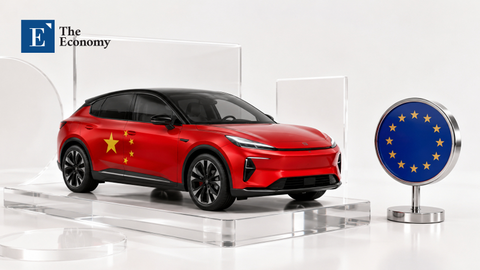
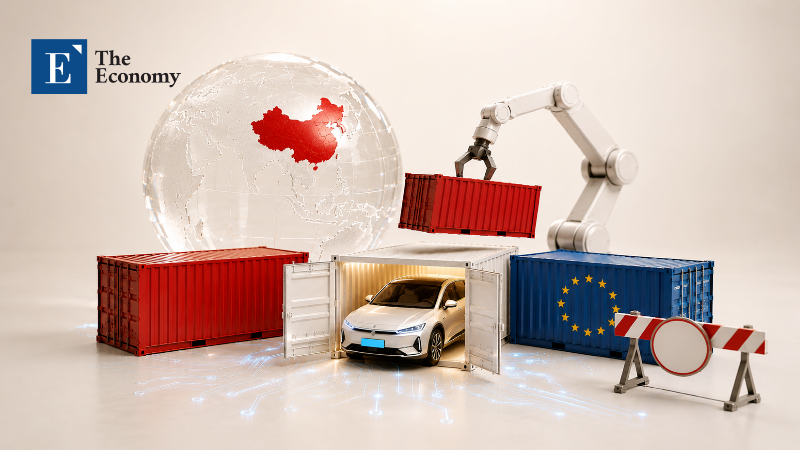
As trade tensions between the Western bloc and China continue to deepen, market attention is increasingly focused on the EU's longer-term trade strategy toward Beijing. The two sides have clashed across numerous industries for several years. Electric vehicles represent the most prominent example. The EU launched an anti-subsidy investigation into Chinese EVs in 2023 and imposed provisional countervailing duties in July 2024 after concluding that Chinese government subsidies had distorted competition within the European market. The move marked the bloc's first large-scale trade action against Chinese electric vehicles. In October of the same year, following approval from member states, the EU formally adopted additional tariffs of up to 35.3% on Chinese EV imports, with rates varying by manufacturer. The two sides are currently discussing a framework under which tariffs could be partially eased if Chinese automakers commit to minimum pricing requirements, although no substantive agreement has yet been reached.
Non-tariff trade barriers are also steadily increasing. One notable example is the Industrial Acceleration Act (IAA), proposed by the European Commission in March, which would give preferential treatment to domestically manufactured and low-carbon products in public procurement and subsidy programs covering strategic sectors including batteries, electric vehicles, solar energy, wind power, and nuclear energy. While officially aimed at restoring European manufacturing competitiveness and accelerating industrial decarbonization, the legislation would in practice help curb the market penetration of low-cost Chinese products through EU funding and public procurement. Earlier, in January, the Commission also proposed revisions to the Cybersecurity Act that effectively target Chinese companies such as Huawei and ZTE, establishing a legal framework allowing equipment supplied by high-risk third-country vendors to be gradually excluded from critical infrastructure, including telecommunications networks.
At present, the two sides have agreed to maintain formal consultations aimed at addressing trade imbalances even as their broader confrontation continues. On June 29, European Commissioner for Trade and Economic Security Maroš Šefčovič met with Chinese Commerce Minister Wang Wentao in Brussels for the inaugural EU-China Trade and Investment Dialogue. During the meeting, the two sides agreed to establish a formal EU-China trade and investment consultation mechanism focused on four key areas: trade and investment balance, export controls, intellectual property (IP), and reform of the World Trade Organization (WTO). They also agreed to establish a joint monitoring mechanism to track trade flows and review market access issues. Nevertheless, with the EU determined to strengthen protections for its domestic industries while China remains committed to expanding exports, it remains uncertain whether the negotiations will ultimately produce meaningful results.
Oliver Griffin is a policy and tech reporter at The Economy, focusing on the intersection of artificial intelligence, government regulation, and macroeconomic strategy. Based in Dublin, Oliver has reported extensively on European Union policy shifts and their ripple effects across global markets. Prior to joining The Economy, he covered technology policy for an international think tank, producing research cited by major institutions, including the OECD and IMF. Oliver studied political economy at Trinity College Dublin and later completed a master’s in data journalism at Columbia University. His reporting blends field interviews with rigorous statistical analysis, offering readers a nuanced understanding of how policy decisions shape industries and everyday lives. Beyond his newsroom work, Oliver contributes op-eds on ethics in AI and has been a guest commentator on BBC World and CNBC Europe.
Similar Post