Why Active Capital Allocation in Education Beats Passive Growth

Authored on
Modified
Passive logic suits stable markets, not education now
AI and uneven demand reward selective bets
Active allocators will adapt and win

Within two years, index funds will represent 51% of all US long-term mutual fund and ETF assets. In finance, this is generally a win. In education, it should be a warning flag. People are starting to behave as if dispersion is a strategy. Get some AI. Close a platform deal. Amp up with another credential. Increase your flexibility. And then pray that the wave carries the institution. This type of logic made more than a little sense when the demand for higher education was wide and the pace of change slow. Today, it is nonsensical when value is so evenly split between skills, formats, settings, and employers' needs. Active capital allocation matters now in education because the sector has entered a high dispersion phase. When demand in the labor market shifts swiftly, when the cost curves that are affected by technology move as quickly, and when enrollment roars in some locations and erodes in others, embracing the category as a whole is an outdated approach. It is a quick path to capsize the pricing, strategy, and, in the end, relevance.
A passive portfolio is being run that of the education sector
The true education gap isn't private versus state,funded versus off-campus, and top versus runoff. The true edu gap is between active and passive capital. Passive deploys capital when administrators, funders, and campus managers move cash between familiar risk bars. Between safety scores, reputations, headlines, and major brands. That doesn't look stupid. That might look solid. But it turns capital into a risk score. If the school is big enough, it will have more customers. If it is prestigious enough, it will do more research. If the product looks hot enough, it will attract more funding because it could always improve. That isn't good business. It's market power. And market power shapes opportunities because it affects who gets a second chance. Where a passive market lets an unsuccessful strategy linger for ages, an active one needs capital to keep asking everywhere I go: Is this school actually better at fixing problems than anyone else?
That intensity is already detectable. More than half of all US college students were enrolled in at least one distance education course in fall 2024. Coursera ended 2025 with 197 million users enrolled and more than 375 university and industry partners. Having negotiated bankruptcy proceedings in 2024, 2U continued to identify edX as a platform on which 89 million learners participated with 260+ partners. These numbers tell us two things. The craving for scaled online is real. Yet being scaled in delivery has become its own asset class. When a space values distribution over exploration, any programmed allocation will amplify. Capital tracks channels, not standards. Schools then confuse a platform's access to a channel as a dominant position within that channel.
This is where a finance analogy can help. Investments for passive strategies seem smart, as the game is narrowly grouped and has momentum intensity. 2024 65% of the University of England fund is unlikely to be in the index. By late 2025, the top 7 stocks will change the index by a third or so. But even passive advocates face the dilemma between two options: choosing to fight. It will cost more to reach the already focused target. Education draws on the same trend. It still invests more in the already well-known target. A certain name led the computer pilot. The biggest supplier can get the contract. The biggest advantage to adult students is the biggest market. The comprehensive degree program can get the largest company agreement. Maybe it saves costs in the short term. But it is not secure when the context changes faster than how the index can.
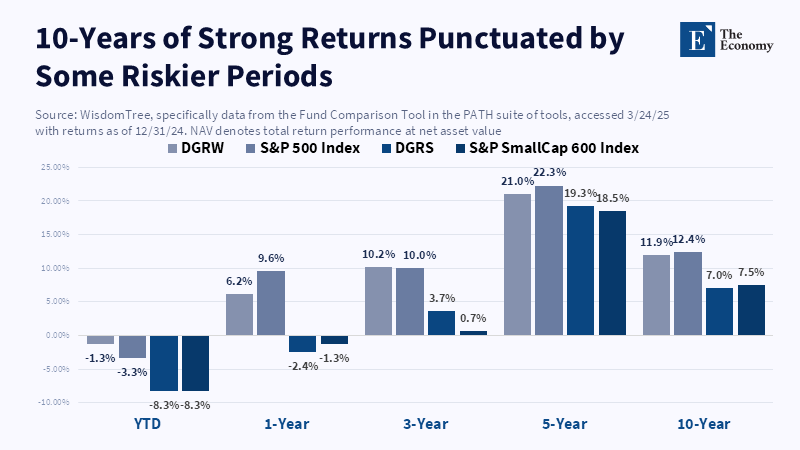
An explanation of why active capital allocation matters for education in a highly dispersed environment
The religion of education is no longer one meta-narrative; it is a constellation of varied and disconnected micro-markets with varied economic demands. In the US, the potential universe of college enrollees has actually grown by 1.0% in fall 2015. But that slight variation in actual potential enrollees masked a change in intra-market churn. Total Community College enrollment grew at a rate of 3.0%. Over a total of four years, public undergraduate enrollment grew at a rate of 1.4%. Total private nonprofit and for-profit college enrollment contracted. Credential and specialty associate degree programs grew at a rate of more than double that of the bachelor's degree programs. 752,000 enrolled in community college certificate programs, that's up 28.3% since fall 2010. And according to the Clearinghouse, computer and information sciences are contracted in every institutional type, program, and subtype. A passive allocator would conclude that "higher education" has grown; an active allocator would see distinctly different signals in each market for demand, profitability, risk, and opportunity.
That factor does make a difference in two respects. One, the labor market is no longer rewarding all the same. Across the OECD, 48% of the 25 34 cohorts are post-secondary educated, up from 45% just in 2019. But of course, the number of the employed goes up by each level, and the citizenship rate DoOF data already reflect that, with large variation across countries, and within the set of skills or fields of work by degrees. The rate of employment for those who received this short cycling is 83.3%, for the bachelor 86.7%, for the master 90.0%, and for the doctorate 93.4%. ICT-tailored products, as they all outperform mass products in their measurements. The mass productization (mass deployment) did not wipe out the shrinking supply; it repositioned the very position in which it takes place. As a resource, it is neither the "education" as a generic value, nor this or that specific school. The resource is the perfect product, in perfect style, with the right labor market, at the optimal moment. That is how summarizing active capital distribution now reigns in education.
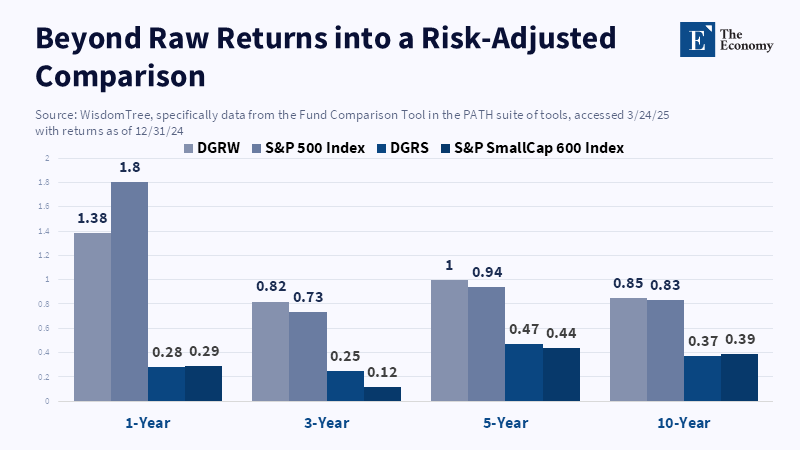
And here technology is widening the fissure even wider. Over 33% of OECD citizens are reported to have used generative AI already in 2025. Students, more so. Around 75% of students 16+ had been reported to have used it. Business use, too, is rushing forward. By 2025, 20.2% of worldwide companies will employ AI, up from 14.2% in 2024 and 8.7% in 2023. The World Economic Forum even notices AI and massive data analysis as the fastest-growing skills today, and predicts that 59% of every 100 U.S. workers will need retraining by 2030. Yet, institutions seem to want to lag behind less. UNESCO was able to find 66% of surveyed higher education institutions already had AI policies, or were in the process of designing them, by 2025. This leaves a third to think about how to prepare for the future. Widespread exposure can't shield students from this environment, other than exposing them to patchy adaptation.
Where value is flowing, and who gains
Once we are not compartmentalizing learning into one course, the new spectrum of opportunities is more apparent. Dominance resides in those who maintain control over APIs, flows of information, and employer relationships. That's the rationale for the continuing relevance of platform providers, even in the face of uncertain ROI. That's also the reason that firms in AI, driven chatbots, and cloud computing are able to provide wholesale value before the learning begins. It also explains why local attachment can beat prestige in certain credential competitions. It also explains why short-term, stackable credentials are more than a distraction. It is because they hasten the reaggregation. Active capital allocation in higher ed means preparing for where the margins will soon be: the shifting of pools away from credential design to skills validation, connections to the job market, collaboration, demonstrable capabilities, and tools that lower the costs of advanced support.
The job flows are the same. AI is not just threatening to pull teachers' jobs away. It's reorienting which jobs are going to be scarce and so valuable. EDUCAUSE discovered in 2026 that 94% of the survey participants reported using AI programs for work in the last 6 months, and, on the other hand, only 50% had policies established to monitor that activity. Over 50% used some form of product that their employer did not provide, and only 13% said their employer was calculating the return on investment of the labor used to build the AI. None of these is a minor issue. They signal a sector shift. Producing material, conversing, preparing slides, and constructing some forms of exams are going to get very cheap; complex judgment, governance, curriculum design, student coaching, industry partner relations management, assessment integrity, and quality assurance are going to get very costly. Schools that continue to scramble everything will beat themselves to death; those that adjust the pay scale to the new shell game will gain strength.
This uncovers one wrongdoer of conventional dissent. Dissenters typically argue that active investing appears inefficient, non-sequitur, and underperforming. For most finance investors, the downside is a sale. Educationalists, by contrast, it's not a comparison against financial indexes but a reflection on how it performed against the mission, realigned value in a time of fierce evolution. If we throw in diversification, we pay hidden costs, lethargic and lengthy dropout rates, irregular department positioning, overweighted tech teams, generic AI licenses, duplicated services, allocations on students that simply lead to more expansion, and lowered investor heat on edtech startups. The field has already seen the barrage of what passive capitalization can do. Following 89% drop in edtech startup investor capital in early 2025 against 2021 highs, the main frontrunners backed off from what was absolutely essential and began scanning for absolutely everything that remained. That agonizing correction can be equally thankworthy.
What providers need to consider and do before the index breaks
However, lead investors need to keep themselves from falling into the trap of treating their function as a banker, too. Instead, they need to be selective. A proactive funding strategy in education asks three intentional questions: What products produce lasting results in a discernible labor market? What parts of our cost structure are real producers of output, and what are added,cost, low,yield expenses? Where do we need to develop our own capacity rather than buy it from a vendor? For some, the answer is higher-end research and service jobs and a national focus on student assistance. For others, it is broadening the scope of credential programs associated with job entry and transfer pathways. In high schools, it may be spending less on sleek platforms and more on effective facilitators and a current curriculum. Selectivity is not austerity. It is a strategy.
Certainly, those in charge of the policy need to be thinking the same thing. Regulation should not be framed assuming slow adoption. Rather fast-paced flows of investment capital are more likely to increase in the already field-concentrated sector if all the higher education institutions are equipped simultaneously. Policy makers should be prepared to hot-spot projects which promise clear benefits and transferability, while ensuring the presence of new entries. Access to buying AI tools should be quick, not burdensome. The quality control should incorporate not just long-term degrees but shorter-term courses. Also, for preparation purposes, outcomes should be made clear, including the remaining scope or importance of the course or subject. To ensure the message gets out and is successful, signals such as reputation and size must matter more than a standard of comfort resulting from discounts.
The stat that made the opening to this column isn’t important because it’s a scary number. It matters because it reveals a truth we all recognize: once the markets start choosing index funds over real returns, dollars will stop flowing where they matter. The world’s education industry faces disaggregated enrollment, labor, market disturbances, swift expense, targeted improvements driven by AI, and mounting platform power, all simultaneously. Now the field is learning that doing the ordinary things blindly will yield the usual results. Only the strongest institutions dedicated to artful decisions will still stand. Those schools will focus on fields with unmet needs, delivery systems predicated on measurable results, staff whose expert session value grows as tools expand, and management processes resilient enough to keep technology from setting the agenda. The next one hundred years in education will not be so much digital and analog. It will be active and passive suppliers. One will view data, demand indicators, and aims before going on offense. The other will keep accounting resources on what’s most in demand today. The first label will say that’s smart until you can’t ignore the gap.
References
Dieperink, H. (2024) ‘The end capitalism through passive investing’, Financial Investigator, 5 April.
Gannatti, C. (2025) ‘Passive Wins Again—But the Smartest Passive Strategy May Be Quality Value’, WisdomTree, 27 March.
Ganti, A.R., Edwards, T., Di Gioia, D., Chapman, F. and Didio, N. (2025) SPIVA U.S. Scorecard Year-End 2024. New York: S&P Dow Jones Indices.
Investment Company Institute (2025) 2025 Investment Company Fact Book: A Review of Trends and Activities in the Investment Company Industry. Washington, DC: Investment Company Institute.
Park, G. (2025) ‘The passive boom and why it could be the next big risk’, W1M, 4 November.
Ryan, E. (2026) ‘Closing time: How passive investing is reshaping equity market microstructure’, State Street Global Advisors, 23 January.
Taylor, D., Cole, E. and Fang, E. (2024) ‘Passively Active: An Alternative to Cap-Weighted Passive Investing’, Man Group, 30 January.
Similar Post