WTO Reform After the Subsidy Shock

Working across research, policy, and data-driven analysis, the Editorial Board ensures that published pieces reflect a consistent institutional perspective grounded in quantitative reasoning and long-term structural assessment.
Authored On
Modified
WTO reform must manage state-backed competition
Subsidies expose the biggest gap in global trade rules
Governed coexistence is the best path between free trade and trade war

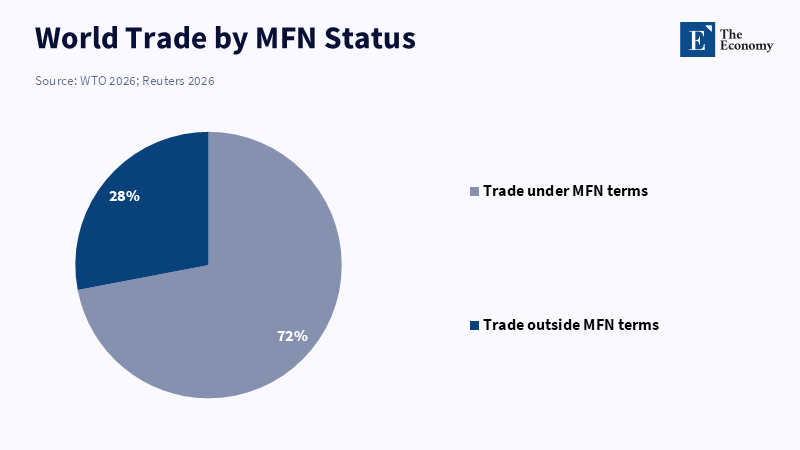
Only 72% of global goods trade moves under the WTO’s core most-favored-nation principle. This should unsettle anyone who still treats today’s trade fight as a normal tariff cycle. It suggests that the cornerstones of the growth of global trade are no longer as firmly in place as they were. Global trade still takes place. Ships still move across the world carrying cargo. Companies still trade in international markets. But the rules that once made those flows predictable are weaker than before. The revitalization of the World Trade Organization is therefore no minor matter for the world's trade attorneys (WHOIs). The real choice is no longer free trade versus protectionism. It is governed by coexistence between China, the United States and the European Union, all of which now use state support and treat economic dependence as a security risk.
WTO Reform Must Start from the Real Problem
The wrong lesson from today's trade crisis is that trade has failed. The more correct lesson is that the WTO's old rules were suited to an earlier era. They excelled in tariff reduction and dispute settlement. But they were weaker on the kind of state-backed industrial scale now visible in clean technology, electric vehicles, chips, steel and critical raw materials. Today, in clean tech, electric cars, chips, steel and raw materials, that is the difference. WTO reform must overcome this weak point. The difficulty is not just that China subsidizes, America raises tariffs, or Europe responds with protectionism. All three now regard capacity as a political weapon shaping trade. Cheap imports are no longer an advantage for consumers. In some sectors, they are also seen as a risk to jobs, skills, national competitiveness and global influence.
Not all trade defense measures are valid, but the politics of those measures is relevant. World merchandise trade grew by 4.6% in 2025, showing that trade is still resilient even as trust in trade rules weakens. Total trade in goods and services stood at around US$34.65 trillion. At first glance, it may look healthy. However, imports directed against new trade barriers and measures increased substantially. The WTO established that trade affected by import measures valued at US$2.64 trillion increased by four times between October 2024 and October 2025 relative to the previous year. WTO reform has to confront the apparent paradox. Growing trade coincides with the erosion of confidence in rules. This gap lets governments delay reform while firms quietly price in disorder.
WTO Reform Needs Tougher Subsidy Rules
Subsidies are now the central test for WTO reform because they sit where growth, climate policy and security meet. Massively energy-intensive green energy investments take public money. Chip security is a state-driven effort. Poorer countries still need some ability to develop industries. But all of those uses become market-distorting if they are large enough, ambiguous enough, persistent enough and tied to firms that already have market power in global sectors. This is the line current that the current rules fail to draw precisely. Supporting an emerging industry is not the same as subsidizing a mature export giant that keeps expanding after market signals say it should slow down. The WTO should not ban state intervention; it should strengthen demands for transparency, tighten quantitative caps and strengthen legal arguments for intervention that ripples across the system. The time to ratchet those standards is now-the time when WTO members need to get serious about the bolder, clearer, subsidy rules-a direct WTO mandate that members now need.
OECD data sheds light on why negotiations need to pay more than lip service. The OECD’s MAGIC subsidy database found about US$108 billion in support across 15 major sectors in 2024. Chinese companies received three to eight times more state aid during 2005-2024 than comparable OECD firms. This support was concentrated in solar modules, chips, aluminum, steel and ships. All are central to energy, defense, transport and industrial production. Global trading rules should require full openness on grants, tax reductions, subsidized cheap loans, direct state ownership and support from national banks. They should concentrate on enduring support for exporters. This is an obvious systemic problem.
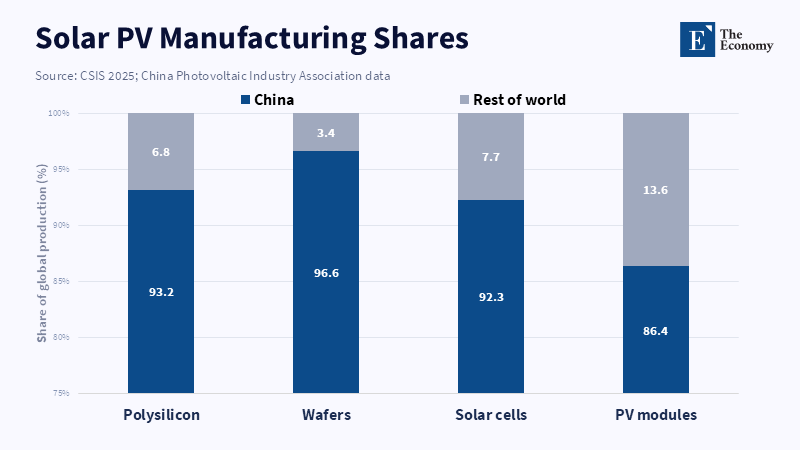
China's solar dominance clearly shows the dilemma. In 2024, China accounted for 93.2% of the world's polysilicon, 96.6% of wafers, 92.3% of solar cells and 86.4% of modules. According to REN21, Chinese businesses have an 80% share of solar supply chain capacity. By 2024, Chinese factories will have generated roughly 630 GW of modules, lowering costs and accelerating the clean energy transition. Low prices are a good thing for the climate. But vertically integrated supply chains entail risk. On the current course, importers risk high dependency; if they respond with restrictions, they increase costs and slow the switch to clean power. WTO reform can strike a compromise: transparent subsidies, phased-in capacity limits and sector pacts to rebalance prices and ensure affordability. The stakeholders must quickly work together to bring about a significant WTO reform.
WTO Reform Cannot Be a Western Lecture
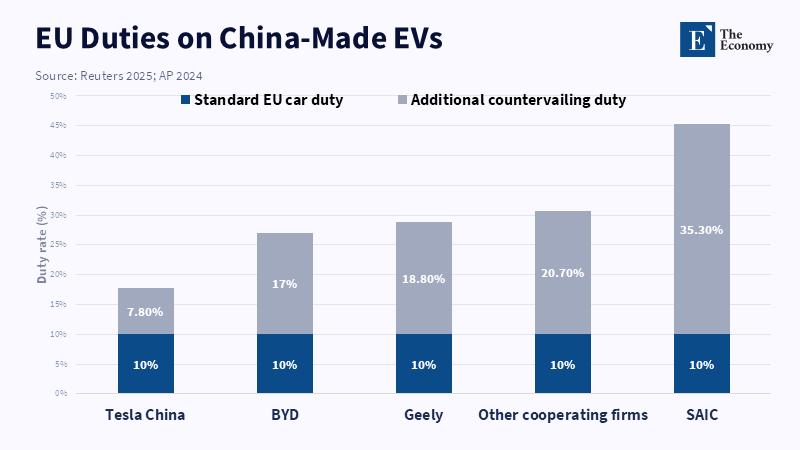
A meaningful overhaul of the WTO must also confront Western double standards. Their action cannot restrict Chinese state aid while broadening subsidies and trade restrictions through non-transparent mechanisms. The EU retaliated against Chinese EVs following the discovery of similar subsidization along the BEV value chain. The US applied tariffs, anti-dumping, export restrictions and investment screening. The EU loosened state aid limits during recent energy shocks amid green competitiveness. While these measures may be justified, they show that state support now guides industry policy, leaving aside the past market neutrality. Government intervention is the new normal in industry policy. The tenet of market neutrality simply no longer applies.
This is precisely where WTO reform needs to be reciprocal, not patronizing. China must accept the burden of the unabsorbed excess of stimulus and the global costs that come with it. It can hardly be called a free trader when it is providing a back office veneer to supra-national corporations sustained by subsidies. Meanwhile, the U.S., Europe and the rest must realize that while China will be a major player in vital sectors, avoiding them will merely spur China to push harder elsewhere, accept JIT standard setting and develop its own communal systems. WTO advancements are only feasible when, to an extent, both notions say goodbye. Now is the moment to rebuild rules that require each major actor to accept real responsibility for reform.
The highest tag is that China's achievement is not so much about subsidies. Chinese companies, in many aspects, are quite efficient. Due to their various size and the speed of learning, since topologies, the interdependence with numerous local suppliers, design strength and the huge domestic market as a launching pad, they hold most of the lower costs. This counterclaim is right. These issues have some importance. It would be dangerous if a progressive approach to WTO reform were based on abandoning the false assumption that the whole of China's export competitiveness is phony. A country that wishes to develop good policies would run the risk, if it confounds genuine expertise with deviance, of wasting public funds trying to recreate its entire supply chains domestically. A better case is more specific. When success occurs because of effective efficiency, indeed, price improvement should be low enough to improve consumer welfare. If subsidization allows unprofitable capacity to survive, or maintains barriers to entry by means of the rule, then these cases are to be addressed. This is a normative threshold to be judged. Without that distinction, policy will drift toward blunt and ineffective protection.
WTO Reform Must Repair the Legal Core
Rules matter only when they can be enforced. The appellate function of the WTO disintegrated before anyone realized it after the appellate body was suspended in late 2019. MPIA provides a momentary solution that can temporarily answer members who prefer that appellate mechanisms be preserved. Though limited to specific respondents, it does, by creating a reserve approach to the appellate system, make up for its absence in a partial fashion. It does not offer the appellate system that development needs so as to guarantee confidence for active members and subsequently small members also. Any improvement to the rules must indicate a dispute-settlement pact that can remove their concerns about oversteps toward legality, keeping the appellate system from remaining in uncertainty. Without legal repair, even stronger subsidy rules will remain fragile. Traders will keep using invoked domestic remedies by dislocating deadlines on transportation and treating legislative frustrations as the verification cost of compliance to ignore. This is how weak substations turn into places of elevated composition and lower reliability. Shows action is hastening to ensure an effective, autonomous appellate system for the WTO and to ensure long-term stability in the circulation framework.
This cannot be postponed until a breakthrough consensus is achieved. The WTO consensus rule may be a good thing: it prevents small countries from having to do the same thing as superpowers. But it can also serve as yet another veto player. A pragmatic way forward is not to abandon the WTO, but to make sure coalitions take precedent when announcing agreements, make agreements binding and make it backward compatible for later expansion. Harmonization agreements on subsidies, green-tech supply chains, digital trade, critical minerals and climate change are likely to create a new standard, without asking all of its signatories to join at once. Because of the scale of its market, breadth of its trade network and necessity to secure the openness of the system by avoiding a US-China bifurcation, the EU is best placed to mobilize middle powers for WTO reform. This coalition of middle powers is what the WTO needs.
And yes, the design does count. Coalition action cannot be a club system that closes out poorer states. It must provide support, transition periods and a very transparent entry path. Developing countries must not be forced to accept rules that would freeze their own advancement. They have far too much to risk in a world in which, by the dictates of the biggest economies, only their largest may be even allowed to settle its trade, leaving smaller exporters needing secure markets and importers affordable access to food, energy and technology. New producers, meanwhile, must find a way to participate in global supply chains without being caught in the crossfire of a battle between two rival blocs. Any reform of the WTO must bring them into the game of rule-writing rather than simply enforcing rules in their name. A just agenda of reform would lead to the application of new tariffs and fees on trade by aid, skills and market access.
WTO Reform Should Aim for Governed Coexistence
Governed coexistence is not a soft choice. It is a tough set of policy choices for a world where complete trust has been lost, but where the costs of a full unraveling of economic integration are too high to entertain. It would involve more transparent subsidies reporting, stronger disciplines on cheap state finance, sector negotiations in high-capacity industries, a redesigned dispute settlement system and coalition agreements that later turn into WTO commitments. It would involve self-restraint from the most advanced economies of today. Tariffs should be appropriate, driven by evidence and subject to frequent review. Subsidies should be grounded on actual market deficits and not on limitless political expectations. The supply chain resilience should be constrained by appropriate bottlenecks and not by the myth of national self-sufficiency in everything. It is not about eliminating competition. It is about preventing international competition from shattering the ground underneath trade.
The key lesson today for trade officials, business leaders and policy analysts is this: the historic trade-off between free trade and protection is too thin. Firms have to know if the constructor of a factory will be hit with a 'naked' subsidy or antidumping implementation, if legal enforcement will not turn into a lengthy and expensive dispute settlement process and if the rent they will get from using a cheaper input is less unstable, or d) liberalized services markets come with outsize benefits. Officials should prioritize the handful of true global supply chain blockades that stick out above the rest instead of subsidizing visible industries. They must treat defensive actions on the one hand not as a short-term dead-end each time, but as the beginning of a long journey. WTO reform has to become a local, tangible art of responsibility, respect and subtlety right now, not part of a didactic slick slogan on how to make free trade work better in the last century.
But the opening signals are still the warning. If only 73 percent of world merchandise trade now moves under MFN terms, the rules-based system is not dead, but its floor is weaker than it should be. That ceiling is still redeemable. The world cannot afford to go back to headlong free trade, nor can it afford to fall into a permanent trade war and so it needs reform of the WTO that recognizes the state provision era and continues to improve it and the cry for immediate action is Sort out subsidy rules before subsidy races get entrenched; bring dispute settlement back before the rule of law becomes voluntary; build middle power coalitions before the dominant countries turn fragmentation into their new north'. Delay would not protect openness. It would make disorder the new normal.
This article is based on an original research article published by The Economy Research. For the original version, please refer to From Liberalization to Governed Coexistence: China, Subsidies, and the Reordering of the World Trade System.
The views expressed in this article are those of the author(s) and do not necessarily reflect the official position of The Economy or its affiliates.
References
Associated Press (2024) ‘The EU is imposing duties on electric vehicles from China after trade talks fail’. AP News, 30 October.
Blenkinsop, P. and Van Campenhout, C. (2024) ‘China-built EVs hit with duties in biggest EU trade case yet’. Reuters, 4 July.
Cook, L. (2024) ‘The EU is imposing duties on electric vehicles from China after trade talks fail’. Associated Press, 30 October.
Davidson, M. and Qian, S. (2026) ‘China’s Solar Industry Is in Upheaval—The Effects Will Be Global’. Center for Strategic and International Studies, 12 March.
European Commission (2024) ‘EU Imposes Duties on Unfairly Subsidised Electric Vehicles from China While Discussions on Price Undertakings Continue’. Brussels: European Commission.
García Bercero, I. (2026) ‘A Plan to Revitalise the World Trade Organization’. Bruegel Policy Brief, 26 May.
Le Poidevin, O. and Farge, E. (2025) ‘Tariffs cause “unprecedented” disruption to global trade rules, WTO chief says’. Reuters, 2 September.
OECD (2025) The State of Play of Industrial Subsidies as of 2023. Paris: OECD Publishing.
OECD (2026) OECD MAGIC Database of Industrial Subsidies. Paris: OECD Publishing.
REN21 (2025) Renewables 2025 Global Status Report. Paris: REN21 Secretariat.
The Economy Research Editorial (2026) ‘From Liberalization to Governed Coexistence: China, Subsidies, and the Reordering of the World Trade System’. The Economy Research, 31 May.
World Trade Organization (2025) Overview of Developments in the International Trading Environment: Annual Report by the Director-General. Geneva: WTO.
World Trade Organization (2025) Report on G20 Trade Measures: Mid-October 2024 to Mid-October 2025. Geneva: WTO.
Working across research, policy, and data-driven analysis, the Editorial Board ensures that published pieces reflect a consistent institutional perspective grounded in quantitative reasoning and long-term structural assessment.