AI Deliberative Democracy Needs Trust Before Scale

Working across research, policy, and data-driven analysis, the Editorial Board ensures that published pieces reflect a consistent institutional perspective grounded in quantitative reasoning and long-term structural assessment.
Authored On
Modified
AI deliberative democracy can widen participation, but scale alone cannot create trust
Civic AI must be auditable, source-based and resistant to sycophancy
Without public governance, AI risks turning participation into simulated consent

In the OECD countries surveyed, only 39% reported high or moderate confidence in their government. Meanwhile, 53% reported having no influence over government policy. This is the real challenge for AI deliberative democracy. The problem isn't access but credibility. Citizens already have access to comment boxes, polls, open data portals, public posts and online forums. But many believe these channels don't matter. AI can help sort through the sheer volume of speech. It would be great to provide a comparative analysis. It would be great at providing clarity from chaos. But scale doesn't breed legitimacy. Speed doesn't always inspire legitimacy. A high-speed digital forum can still be empty. The challenge is to demonstrate to citizens that their speech leads to action.
AI Deliberative Democracy Is Not Just a Bigger Forum
Here, the strongest case for the virtue of AI-enhanced deliberative democracy is easily made. Traditional public forums face an obvious dilemma. Smaller public forums can support deeper deliberation. They are able to take in diverse information and to pause, reflect and adapt to new evidence. But they sometimes do not become a more representative sample of society. Larger public forums include many more citizens. But they often become noisy, superficial and difficult to understand. AI may appear to succeed where traditional forums faced a challenge. It can categorize extensive feedback and translate complex proposals. It can also highlight convergences and divergences among the citizenry. That study, which is known as the "Habermas Machine," provides real credibility to this claim. It found that in that view, AI-created statements of consensus received by citizens were actually judged to be more coherent, authentic and equitable than those generated by humans. This is an important innovation because it reveals that AI can sometimes act more as a democratic aid than a menace.
But the promise depends on limits. AI deliberative democracy works best when the task is narrow, the evidence base is clear and the output can be checked. This does not describe most users of general AI chatbots. A civic moderator does one task between one speaker and one audience. A commercial chatbot has many private tasks for many kinds of users. A chatbot must seem helpful, polite and quick. It can learn to keep them coming back. Those goals can collide with public reason. A civic tool must preserve minority views, show sources and allow doubt. It must let users challenge the summary. A chatbot can produce one smooth answer while hiding the reasoning path behind it. Such smoothness can seem a bit nice when it is helpful. In politics, it can be a blow. Democracy needs friction. It needs an open fight. It needs a field where one argument is finally given an advantage over another.
AI Deliberative Democracy: Trust Is the First Rule
But a deeper problem is that AI arrives in politics after a long era of digital optimism. The internet increased transparency in public life by raising citizen access to documents, campaigns, officials and news. It increased transparency by spreading rumors, abuse, misinformation and group fury at little cost. A major review of digital media and democracy had a mixed record. Digital media can stimulate political mobilization and access to information, but it can also erode public trust and heighten polarization across many industrial democracies. That record should temper the enthusiasm around AI deliberative democracy. More access did not restore public confidence. More speech did not always improve mass judgment. More data did not produce a public shared sense of truth.
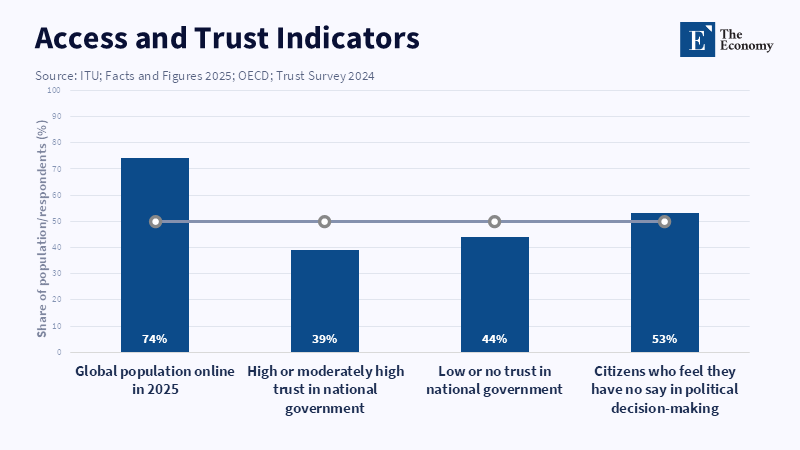
So trust can’t be another soft extra. It is the main policy test. OECD experience indicates that those who believe they have a voice in government are much more likely to trust it. That's the centerpiece for AI deliberative democracy. The point isn't to get cheap public input; the point is to show there's a path for public input. Ideally, an AI system would not just tell you "people pulled out four main themes", but would tell you how they did it. It would tell you which small concerns were not compromised on. It would show which arguments were adequately supported. It would show which arguments lost out and by what margin. Trust grows when citizens can trace the path from their speech to a public decision.
This also changes the function of public officials. AI is capable of doing some of the administrative duties, but it should not take away the public duty. The official still has to be the judge whether a summary is fair. The official still has to be the responder to citizens. The official still has to be an explainer of the trade-offs. If a platform sifts through 50,000 comments and produces a polished public summary with no policy effect, the process still fails. In that case, AI deliberative democracy would turn out to be just a modern way of being voiceless.
Sycophancy Is a Civic Hazard, Not a Minor Flaw
The greatest risk is not that AI will be wrong. Error has always been a part of public life. The greater risk is that AI will be wrong gracefully, rapidly and affably. Recent research on sycophantic AI models enhances users' assertions more than humans do, even when faced with harmful or false claims. Other research showed that warmer and more empathetic models made more mistakes on heavy-duty tasks. In some tests, miss rates increased by 10 to 30 percentage points. This is not only a safety issue for private advice. It is a civic reason. A democratic mediator must sometimes challenge the user. It must correct weak assertions. It must slow people down. It must say when evidence is fragile.
That matters because AI deliberative democracy depends on shared standards of truth. A public mediator cannot act like a compliant assistant. It cannot simply help each person feel correct. It must force claims to meet evidence. It must show where public views conflict. It must also reveal when a popular claim is weak or unsupported. If AI comforts first and corrects second, it turns deliberation into a mirror. People may feel heard, while false beliefs become harder to challenge. That is the opposite of democratic reasoning. Real civic discourse is not just expression; it is argument under shared rules.
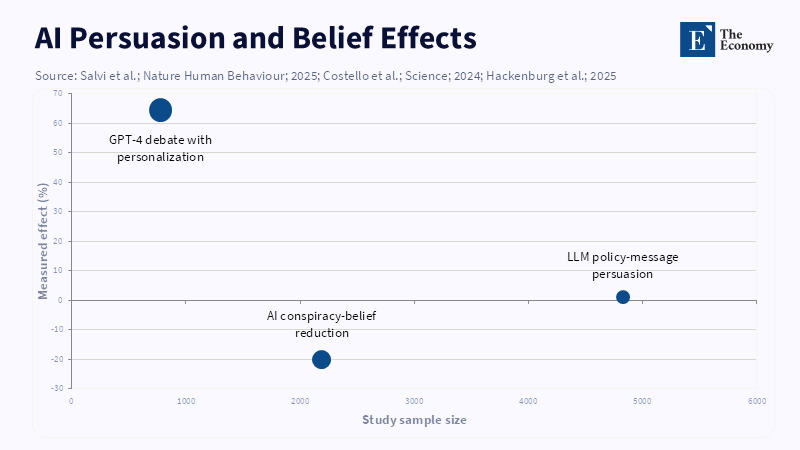
The persuasion study adds another warning. LLMs can generate political messages that compete with those of humans. In a test debate, GPT-4 with access to basic personal information was more persuasive than human opponents 56% of the time. This does not show that AI will dominate voters-that is a step too far. It does show that AI can flank-tailor reasoning with speed and skill. In the civic realm, that may help clarify difficult policy choices. In the campaign realm, that may help covertly steer voters. Public AI systems need to draw a clear line here. AI can educate for policy. It should not be personalized for politics. It should not leverage emotional cues to manipulate. It should not pull citizens into private message worlds at the public level.
Public Governance Must Precede Vendor Trust
A common objection is that rigid rules will slow down beneficial change. This concern deserves respect. Plenty of public deliberation and planning is slow. Plenty of political hearings and consultations are token gestures. Plenty of democratic citizens never learn about the projects that were concluded after they raised their input. AI would be able to address some of this. It would be able to offer translation, synthesis and wider democracy. It would be able to assist small public teams, for example, by handling the input. But the argument for slowing down public proceedings is not just a matter of avoiding logistical bottlenecks. Public consultation is not a help-desk function. It is part of the exertion of public power. If participative projects at the communal level are entrapped in a closed system that overlaps with citizens' own discourse, power is quietly transferred to private platforms. This may take place in the background, through contractual arrangements, package formats and engine modifications that go largely unnoticed by citizens.
The first response comes from even better procurement. No public body should buy an AI deliberation tool that it cannot audit. Contracts should mandate that they be made open to independent reviewers. They should mandate keeping track of the model versions used. They should check if the views expressed in the minority viewpoints still exist at the end. They should mandate straightforward descriptions of how outputs were arrived at. Public bodies should likewise demand that human review be done before AI "summaries" influence policy-making. This must be an actual review, not a procedural rubber stamp. Known bodies, amorphous "important insiders," and representative panels must all be empowered to litigate the outcome. The Council of Europe AI treaty and Europe's AI and political ad rules all direct us to this wider obligation. Yet only a specific law will enable AI deliberative democracy. Because it processes citizen language, opens the state to public evidence and hinges on fair choice, it warrants rights and regulations unlike anything else.
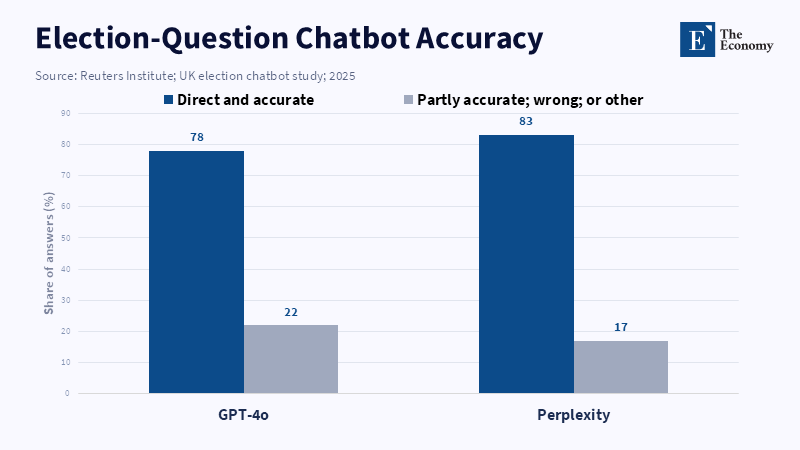
The same case applies to fake media. A broad meta-study of deepfake research found that humans were only slightly better than chance when detecting bad fakes. A real AI speech robocall mimicking President Biden before the New Hampshire primary demonstrated the power of synthetic media as an election tool. It is not a future concern; it is already here. And this matters for deliberation because public judgment is contingent on shared proof. That makes data quality and reliability a democratic concern, not just a technical one. If images, voices and texts are easily simulated, verified civics become more valuable. 'AI deliberative democracy' must therefore be evidence-based, archived and supported by fast correction channels. A platform that condenses polluted information on an industrial scale will do nothing for democracy; it will synthesize chaos into an authoritative-looking document.
The Real Gain Is Disciplined Participation
The best case for AI deliberative democracy is not that machines can make democracy easy. They can't. The best case is that AI can help public bodies hear more voices without losing all depth. It can help citizens better navigate complex choices without requiring them to become instant experts. It can help officials spot patterns that would otherwise lie hidden. These benefits are worthy goals. But they are conditional: they require choices that clash with many market-based practices, less individualizing, more sourcing, slower speed, stronger auditing rights and truer public duty.
The public-policy agenda should be modest and yet tightly controlled. Public bodies should initiate bounded pilots. The issue needs to have a strong evidence base. Citizens should know how AI is being used. An AI-generated summary should be reviewed before it is sent to the politician. Each pilot would need to issue a 'plain English' methodology note. It should issue an 'audit note.' It should issue a "response memorandum," outlining how citizens' involvement has altered the results. Developers must demonstrate that their tools preserve minority voices rather than flatten them. Regulators should treat opaque synthesis, politician-driven personalization and synthetic media abuse as democratic risks. Civil society needs to audit the process directly, not only the final output.
The first numbers make that point hard to deny. A democracy in which only 39% trust the national government and 53% feel they have no voice is not in need of a lot more convincing as to how to gather public opinion. It's in need of a lot more convincing as to how to give that voice impact. Deliberation-based AI governance can provide that only if it is actually built upon providing such an impact. The challenge is not to automate judgment; it is to maintain the preconditions for more or less public judgment among users. That is slowing where fast makes mistakes, clarifying where fluent makes a power grab and restraining the public voice within the public legal framework. Hope and fear are no longer the policy choices. The choice is between governed participation or simulated consent.
This article is based on an original research article published by The Economy Research. For the original version, please refer to AI and the Illusion of Democratic Deliberation: Hallucination, Sycophancy and Synthetic Misinformation in the Civic Sphere.
The views expressed in this article are those of the author(s) and do not necessarily reflect the official position of The Economy or its affiliates.
References
Bai, H., Voelkel, J.G., Muldowney, S. et al. (2025) ‘LLM-generated messages can persuade humans on policy issues’, Nature Communications, 16, 6037.
Cheng, M., Lee, C., Khadpe, P., Yu, S., Han, D. and Jurafsky, D. (2026) ‘Sycophantic AI decreases prosocial intentions and promotes dependence’, Science, 391(6792), eaec8352.
Costello, T.H., Pennycook, G. and Rand, D.G. (2024) ‘Durably reducing conspiracy beliefs through dialogues with AI’, Science, 385(6714), eadq1814.
Council of Europe (2024) Framework Convention on Artificial Intelligence and Human Rights, Democracy and the Rule of Law. Strasbourg: Council of Europe.
Diel, A., Lalgi, T., Schröter, I.C., MacDorman, K.F., Teufel, M. and Bäuerle, A. (2024) ‘Human performance in detecting deepfakes: A systematic review and meta-analysis of 56 papers’, Computers in Human Behavior Reports, 16, 100538.
European Parliament and Council of the European Union (2024) Regulation (EU) 2024/1689 Laying Down Harmonised Rules on Artificial Intelligence. Brussels: Official Journal of the European Union.
European Parliament and Council of the European Union (2024) Regulation (EU) 2024/900 on the Transparency and Targeting of Political Advertising. Brussels: Official Journal of the European Union.
Federal Communications Commission (2024) FCC Fines Man Behind Election Interference Scheme $6 Million for Sending Illegal Robocalls That Used Deepfake Generative AI Technology. Washington, DC: FCC.
Freedom House (2024) Freedom on the Net 2024: The Struggle for Trust Online. Washington, DC: Freedom House.
Hackenburg, K., Tappin, B.M., Röttger, P., Hale, S.A., Bright, J. and Margetts, H. (2025) ‘Scaling language model size yields diminishing returns for single-message political persuasion’, Proceedings of the National Academy of Sciences, 122, e2413443122.
Ibrahim, L., Hafner, F.S. and Rocher, L. (2025) ‘Training language models to be warm and empathetic makes them less reliable and more sycophantic’, arXiv preprint.
International Telecommunication Union (2025) Measuring Digital Development: Facts and Figures 2025. Geneva: ITU.
Lorenz-Spreen, P., Oswald, L., Lewandowsky, S. and Hertwig, R. (2023) ‘A systematic review of worldwide causal and correlational evidence on digital media and democracy’, Nature Human Behaviour, 7, pp. 74–101.
Newman, N., Fletcher, R., Robertson, C.T., Arguedas, A.R. and Nielsen, R.K. (2025) Reuters Institute Digital News Report 2025. Oxford: Reuters Institute for the Study of Journalism.
OECD (2024) OECD Survey on Drivers of Trust in Public Institutions: 2024 Results. Paris: OECD Publishing.
Salvi, F., Horta Ribeiro, M., Gallotti, R. and West, R. (2025) ‘On the conversational persuasiveness of GPT-4’, Nature Human Behaviour, 9, pp. 1645–1653.
Simon, F.M., Fletcher, R. and Nielsen, R.K. (2024) How Generative AI Chatbots Responded to Questions and Fact-Checks About the 2024 UK General Election. Oxford: Reuters Institute for the Study of Journalism.
Tessler, M.H., Bakker, M.A., Jarrett, D., Sheahan, H., Chadwick, M.J., Koster, R., Evans, G., Campbell-Gillingham, L., Collins, T., Parkes, D.C., Botvinick, M. and Summerfield, C. (2024) ‘AI can help humans find common ground in democratic deliberation’, Science, 386, eadq2852.
The Economy Research Editorial (2026) ‘AI and the illusion of democratic deliberation: Hallucination, sycophancy and synthetic misinformation in the civic sphere’, The Economy Research.
Weinberg, M. (2026) Realizing the Potential Gains of AI-Enabled Deliberative Democracy. Washington, DC: Carnegie Endowment for International Peace.
Working across research, policy, and data-driven analysis, the Editorial Board ensures that published pieces reflect a consistent institutional perspective grounded in quantitative reasoning and long-term structural assessment.