Middle Power Collective Security: Europe’s Only Real Seat at the Table

Working across research, policy, and data-driven analysis, the Editorial Board ensures that published pieces reflect a consistent institutional perspective grounded in quantitative reasoning and long-term structural assessment.
Authored On
Modified
Europe’s largest powers are economically strong but strategically exposed.
Middle power collective security is stronger than neutrality or rule-based rhetoric alone
Europe needs shared defence, trade protection and infrastructure resilience to avoid being divided
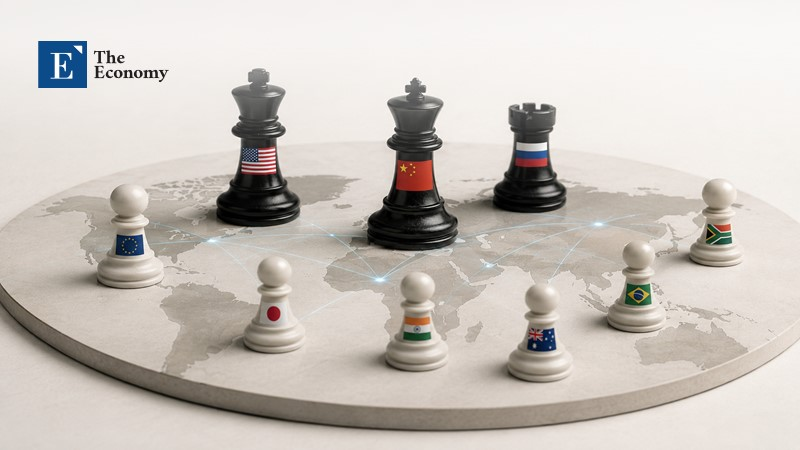
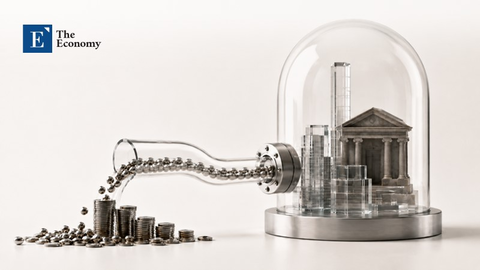
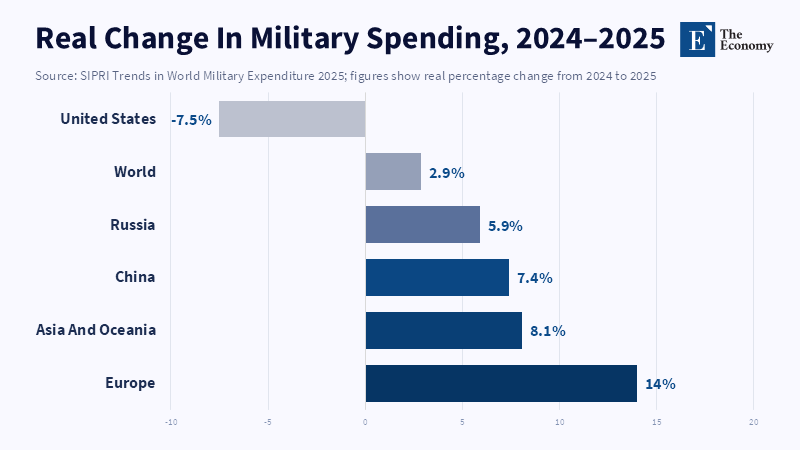
In 2025, three states alone, the United States, China and Russia, accounted for 51 percent of global military expenditure in the world. Germany, Britain and France together - the three old pillars of Western European power made up less than 10 percent. This hard fact is what lies behind the new middle power dilemma. It is not that Europe is poor, nor that it has no armies, firms, banks, or diplomats. The point is about scale; in one area, you may have nothing to say. Even a large economy can be strategically exposed if energy, defense, technology, trade routes and markets are vulnerable to decisions made elsewhere. And that's why middle powers and collective security are significant now. The goal isn't to be more principled than the great powers, but to make coercion more costly than cooperation.
The Middle Power Label Now Fits Europe
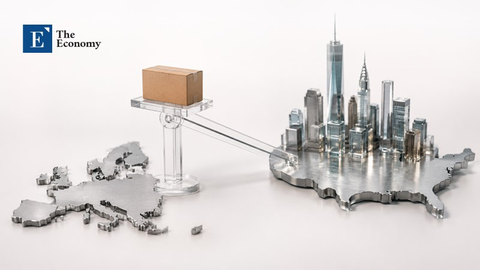
“Middle power” can sound too small for Germany, France, or the United Kingdom. All three have large economies, deep state capacity, important firms and a long diplomatic history. France and the UK also have nuclear weapons and seats on the UN Security Council. Yet this term seems closer to reflecting our contemporary state of affairs than the older concept of power. International politics under US-China rivalry would show that a country can have wealth and still be pushed and pulled when the amount of trade, security, or technological access it gets changes. And that is what Europe appears to be presenting today's power order: a crowded group of exposed powers.
The numbers also sharpen the points. IMF 2026 figures show the EU just behind China in terms of nominal output, with Germany, France and Britain still among the major economies in the world. But output does not equal effective strength. Europe's military platform, defense industry and digital infrastructure remain too reliant on outside systems. America is still central to NATO command arrangements, the majority of high-end enablers and the nuclear umbrella. China still dominates many clean tech and critical mineral supply chains. Russia still has the potential to impose high costs through warfare, cyber warfare and energy blackmail. Europe is not weak; it has capital, law, companies and know-how. It is not sufficiently sovereign to act as a full pole unless it brings those resources together with a view to treating them as strategic assets.
This moment is where it departs from the nostalgic framework. The traditional language of the rules-based order was that law and institutions would do much of the protecting. That was never always true, but it was a comforting story when the most powerful state carried most of the burden of the system. That contract is broken. The U.S. readily resorts to tariffs and security reliance, China leans on market weight, industrial maneuverability and maritime strength to influence decisions and Russia leans on military, economic and political violence. Middle powers can't win by relying on urging the system to go back to the old order; they should think harder and build something more resilient to the next shock: middle power collective security, the common capacity and concert of action that will either get the system back on track or transcend it. The time to start that construction is now.
Middle Power Collective Security Beats Neutrality
Neutrality can serve a small state under certain circumstances. Switzerland demonstrates that a state can withstand long-term pressure by bloc avoidance (none of the great powers ever attempted to invade or coerce) while staying secure with domestic strength and making its invasion or coercion less attractive. However, neutrality is not influence. It is an approach to reduce the state’s demonstration of resilience, not an approach to shape the system. For France, Germany and the United Kingdom, neutrality is no serious model. Their security is anchored in NATO. Their economies are committed to open sea lanes. Their industries are driven by stable flows of energy, chips, data and raw materials. They cannot leave their neighbors in the paradoxical situation of having to coerce their neighbors whom they cannot coerce without driving the pressure inward. A neutral Europe would not become safer. It would become more chaotic to price, delay and divide.
The better structure is collective security, not passive neutrality. The UN Charter still bears emphasis because it creates the link between sovereignty and the proposition that aggression is not merely a private matter to each victim. But UN-based collective security often gets nowhere when the major powers block action. That does not render collective security a dead letter. It places a heavier responsibility on the consciousness of smaller and intermediate powers for rigorous effort to build workable coalitions inside and outside formal agencies. The message should be transparent. A rule without a coalition is a sermon. Giving a coalition a pool of shared capacity makes an incomplete picture. Giving a coalition a common pool of force makes it a factor of change in the value of aggression and coercion. It also makes possible an effective shield around law where sometimes rule-or-norm language may be relatively naked. This shield has to be prepared in advance.
This also means middle powers must stop confusing moral distance and strategy. The Quad demonstrates the tenets of strategy in the Asia-Pacific. The United States has selected Japan, India and Australia to build a platform transcending maritime security into critical minerals, energy, ports and technology. South Korea and Indonesia remain in a cautious middle, not because they are emulators of rules, but because their associations with China and their domestic choices drive them toward equilibrium. ASEAN has importance as a group, but most of its members are too minuscule alone to force results. The fact is not that all nations must choose the same side at every turn. The fact is that no middle power has any influence without joining a long-lasting course of action where its assets are valued.
The Tariff Lesson Is That Power Works When It Is Pooled
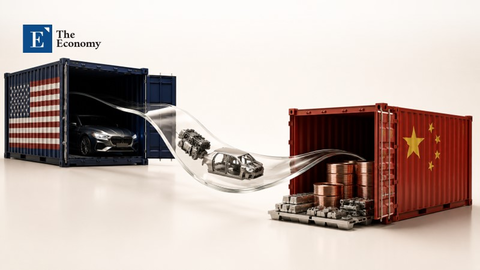
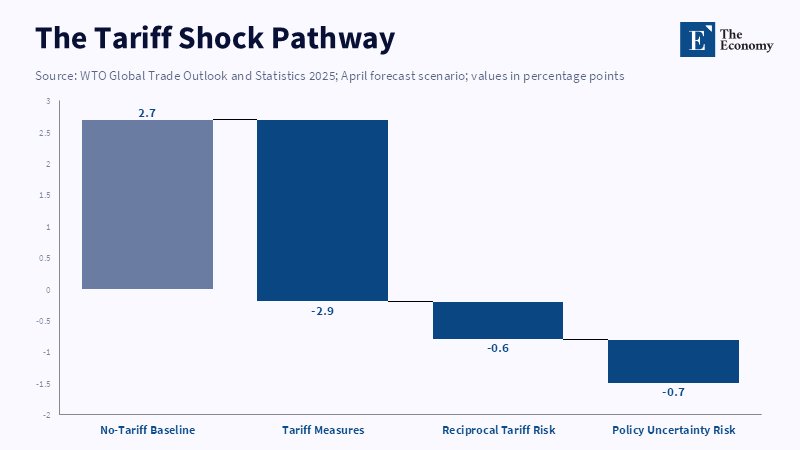
The 2025 tariff shock demonstrated the frailty of dispersed middle power diplomacy. The baseline US tariff, under which individual country rates for a number of major partners were deliberately higher, did more than wreck trade projections. It revealed that middle powers could be individually targeted, even close allies. The WTO concluded that fears over retaliatory tariffs and trade policy uncertainty would weigh on world merchandise trade growth. But fundamentally, the problem was political: 'when each government tries to secure its own exemption, the largest partner controls the pace. The smaller side becomes an anteroom of pleaders.' That was not negotiation among equals. It was a managed dependence. And the learning must have been sharp as its effects were felt immediately. Small powers had simultaneous vulnerability but no common trigger. And it increased the penalty for delay.
Any typical middle power response would not require a reckless economic war. It would only require agreed rules for joint defiance in the event of a coercive tariff lockout. Canada, the EU, Japan, South Korea, Australia, New Zealand and cooperative ASEAN economies could establish a permanent commission on tariff shocks. Its use would be very precise but impeccable: joint legal action, coordinated retaliation design, shared customs information, joint inventories for vulnerable sectors and expedited substitutes for targeted products. Even the threat of such action would be effective. A punitive tariff against one country alone can be easily circumvented. A punitive tariff against many developed economies can be easily undermined. It is not about making shocking statements. It is about reducing the lure of separate intimidation.
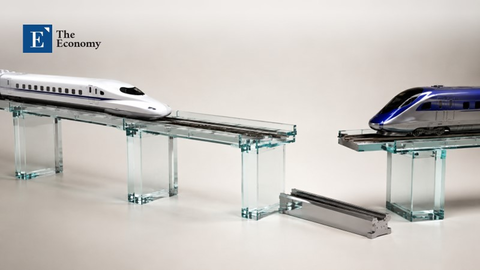
It makes sense for Europe to be the starting point because it already has the institutional building blocks for this to work. It has some of the trade powers, competition instruments, public procurement rules and single markets. But it has also put the Readiness 2030 initiative in place to strengthen defense capacity and incentivize shared investments. Yet these instruments still sit in separate silos. The defense officer talks only of munitions and air defense. The trade officer only talks of market access. The energy official only talks of strategic reserves and grids. The technology official only talks of chips and cloud. Middle power collective security cannot happen unless these silos are joined. Europe cannot address pressure on ports without addressing the mineral position. You cannot be defending internet data while leaving the energy supply vulnerable. You cannot be safeguarding manufacturing industries while viewing trade, defense and infrastructure files as separate.
From Rules Talk To Joint Action
The overarching rebuff is also clear: the middle powers are simply too fractured to act in cohesion. Europe remains politically divided. Japan and South Korea are burdened by the past. India is unabashed in insisting on its independence. ASEAN refuses hard alignment. Canada and the US are locked in the same open market trade arena. Australia is finding a way to downsize its reliance on Chinese trade without jeopardizing its equally vital security dependency on the US. These dissonances are real. But they do not settle the question. They imply that grand coalitions are wrong in the first place. The right approach is issue-based coalition building, maintained by disciplined rules, clear benchmarks and pragmatic mechanisms. Not all states are in everything, but a critical mass is enough to make callous coercion hard to employ. This is a pragmatic middle space that can help provide solutions that support, even embrace, the old balancing drill, without resorting to imperial-driven ransacking of decision-making.
Western Europe must change here. It has long seen strategy as between off-the-shelf options of Atlantic loyalty and European independence. That was always too simple. The US is still pivotal to European security, but subordination without influence is not partnership. European independence can also not be a passive pursuit of sovereignty beside hedging themselves in bought-in, fragmented weapons, postponed integrated manufacturing and vulnerable energy corridors. Germany, France and the UK should think of themselves as middle powers, not as flagging great powers gaining by regained status. Their job should be to turn existing weight, which is at present stuck within the framework of nation-state habits, into something. Status won't do it. Systems might. That needs agreements, plants and habit patterns.
The policy agenda must be realistic. Conjoint defense procurement must be the norm for the biggest shortages: air defense, drones, shells, cyber resilience and sealift. Trade policy should include rapid anti-coercion consultations with other middle powers in the event the big one erects tariffs as a weapon and link critical mineral deals to processing, recycling and defense needs not only extraction. Port- and satellite- and cable-security should be public goods. Lead public officials should run exercises asking a single, devastating question: if a superpower denied us access tomorrow, which others could substitute within weeks, not years? That should determine budgets, options and contingency plans. And those exercises should be open enough to require swift action.
The same reasoning applies outside of Europe. In Asia-Pacific, noting how the Quad's new focus on mineral resources, energy security and maritime data demonstrates that middle power geopolitics is no longer exclusively defined by ships, but by those systems enabling states to persist in their behaviors under heavier pressures, South Korea and Indonesia should not be written off, for their location between Washington and Beijing has a strategic utility in situations where coalitions are constructed on operational, not ideological lines. Likewise, ASEAN's aggregate strategic presence must be regarded similarly, as the group's constituent members will not agree on every security matter, but they can matter at ports, on food security, energy, finance, disaster relief and supply chains. The new map of power will be operational and not purely bureaucratic, affording the cautious states space to exist without undue coercion.
A Seat At The Table Requires Leverage
The danger is that middle powers are constantly confusing access with influence. Going to summits, sending consensus statements and citing resolutions are not enough. A seat at the table only means something when others understand that to be excluded is costly. That cost can be military, economic, legal, or logistical. It works best in combination. Thus, the collective security of middle powers cannot be a slogan. It is the only real alternative to capitulation and utopias. Europe cannot be the US. It cannot will China to restrain. It cannot neutralize Russia with vows. But it can become harder to divide and the first step towards influence. It also turns their gatherings into a deterrent rather than a stage show.
The initial statistic should rest this argument. When three hold more than half of the world's military spending, the others cannot fall back on etiquette; they must fall back on organized strength. For Western Europe, the alternative is not between the old glory and superficial decline. It is between the pooled agency and superficial weakness. Germany, France and Britain still have the money, the skill and the diplomatic clout to matter in the coming era. But only if they cease to behave as if national weight is enough. Middle-power collective security must be the centerpiece of policy in the next ten years: shared defense, shared trade protection, shared infrastructure, shared risk. Otherwise, Europe keeps arriving late at the polite and late only to find that the terms have already been set by someone else. That is a political decision.
The views expressed in this article are those of the author(s) and do not necessarily reflect the official position of The Economy or its affiliates.
References
Advisory - Risk Desk (2026) ‘Top 20 Geopolitical & Political Risk Advisory 2026’, Advisory Ranking, 1 April.
Australian Minister for Foreign Affairs (2025) ‘Joint statement from the Quad Foreign Ministers’ Meeting in Washington’, Minister for Foreign Affairs, 1 July.
EAF editors (2026) ‘How middle powers can stay off the great power politics menu’, East Asia Forum, 25 May.
European Commission and High Representative of the Union for Foreign Affairs and Security Policy (2025) White Paper for European Defence – Readiness 2030. Brussels: European Commission.
International Monetary Fund (2026) World Economic Outlook: Global Economy in the Shadow of War. Washington, DC: International Monetary Fund.
Liang, X., Tian, N., Lopes da Silva, D., Scarazzato, L., Karim, Z.A. and Guiberteau Ricard, J. (2026) Trends in World Military Expenditure, 2025. Stockholm: Stockholm International Peace Research Institute.
Nicholson, A.-M. (2026) ‘Quad Activates Four-Pronged Strategy to Contain China, Expanding U.S. Indo-Pacific Strategy From Security Alliance to Economic and Technological Bloc’, The Economy, 27 May.
North Atlantic Treaty Organization (2026) Funding NATO. Brussels: NATO.
Ranking News Editor (2026) ‘The Emergence of Competitiveness Rankings in International Economics’, The Ranking News, 16 March.
Soeya, Y. (2026) ‘Middle powers in a divided world’, East Asia Forum, 24 May.
United Nations (1945) Charter of the United Nations. San Francisco: United Nations.
White House (2025) Regulating Imports With a Reciprocal Tariff To Rectify Trade Practices That Contribute to Large and Persistent Annual United States Goods Trade Deficits. Washington, DC: The White House.
World Trade Organization (2025) Global Trade Outlook and Statistics 2025. Geneva: World Trade Organization.
Working across research, policy, and data-driven analysis, the Editorial Board ensures that published pieces reflect a consistent institutional perspective grounded in quantitative reasoning and long-term structural assessment.