Europe’s Energy Crisis Was Not Solved, Only Moved

Working across research, policy, and data-driven analysis, the Editorial Board ensures that published pieces reflect a consistent institutional perspective grounded in quantitative reasoning and long-term structural assessment.
Authored On
Modified
Europe managed the energy crisis, but did not solve it
Relief payments protected households, but did not build security
The next shock requires more power, storage, and domestic capacity
In 2024, the EU is still importing 57% of the energy it uses. That is the number that should kill the comfort story. The European energy crisis did not end when gas prices fell from their 2022 peak. It shifted from Russian pipelines into global LNG cargoes, oil corridors, overloaded grids and national balance sheets. A bloc which continues to feed on just under two-thirds of its energy imports is not a secure one, not even if it has bought in store supplies, bought insurance for the future, and spent the cash. It is more secure than it was in 2021. It is not secure. The central policy error was treating the household bill crisis first and the physical supply crisis second. Crisis relief was needed, but that was not a scheme. Europe needs to turn the European energy crisis into a building program.
The European Energy Crisis Was a Supply Failure
The main mistake of the Europe 2021-2023 energy crisis was not compassion but sequencing. Policymakers had to protect citizens and businesses from a fierce price shock. No insightful policy thinking can overlook this. However, post-emergency, temporary solutions dominated the policy action while new supply, firm capacities, storage, and electricity grid capacity expanded far too slowly. Europe financed like a country at war, but reconstructed like a country expecting its market to return to normal. The distinction matters. A subsidy lowers the bill for one month. A power plant, grid link, storage facility, heat pump or nuclear life-extension lowers risk for years. The crisis proved that energy security is not a simple economic parameter. It is steel, copper, contracts, licenses, ships, pipeline leases, fuel alternatives, and backup capacity. Europe tackled it as if it were a price-management issue.
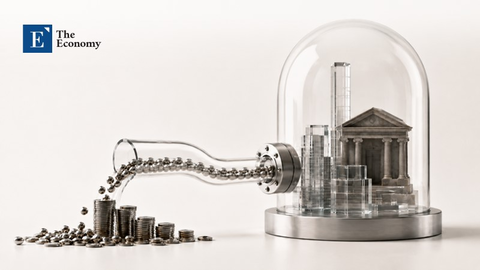
The size of the support tells the story. In September 2024, the European Commission said the Union had spent 213 bn./EUR on energy subsidies in 2021, but the amount jumped to 397 bn./EUR in 2022 and only shrank back a bit to 354 bn./EUR in 2023. Bruegel's country tracker found that between September 2021 and September 2022, European governments allocated hundreds of billions of euros to shield consumers from soaring energy prices. Now this doesn't prove the support was a wrong move, but it hints it was politically much easier and, as such, a wrong move. Much of that spending softened the pain but it did not fix the deeper problem: Europe had too little spare supply, too little storage and too little grid flexibility. Even a small share of this fiscal effort, redirected toward permitting, strategic LNG contracts, grid infrastructure, storage, demand response and firm low-carbon capacity, would have left Europe better prepared for the next shock.
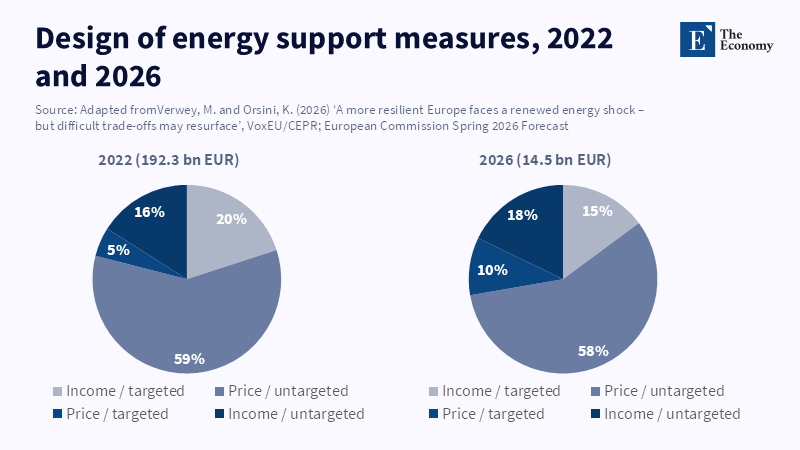
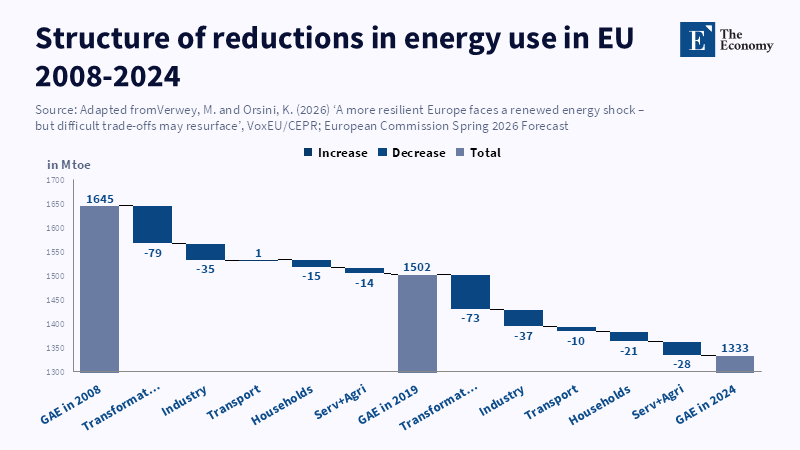
But the hardest lesson was that demand reduction could not replace actual supply. Energy saving helped Europe survive the shock. So did mild weather, lower industrial output and painful cuts in household use. But that is not the same as resilience. A factory that uses less gas because it has reduced production is not stronger. A household that lowers its heating because production has declined is not stronger. A household that lowers heating because bills are unbearable is not proof of good policy. The real test is whether Europe can preserve living standards and industrial capacity on safer energy sources. The crisis exposed a hard truth: Europe can preserve living standards and industrial capacity on safer energy sources. The crisis exposed a hard truth: Europe wanted low emissions, low prices, high output and low geopolitical risk but it had not built enough physical capacity to make those goals fit together.
Diversification Without Domestic Capacity Is Still Dependence
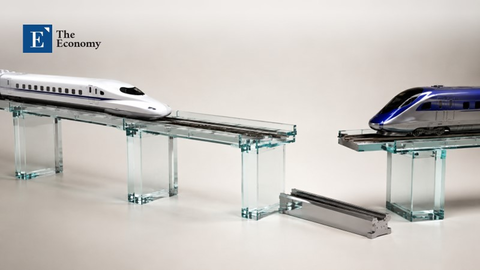
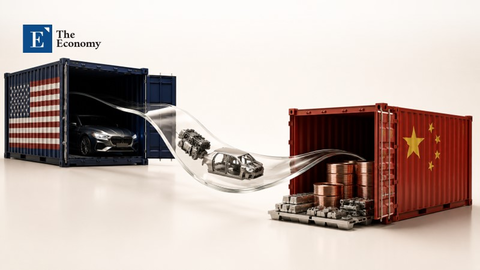
Europe did have one major success. It managed almost overnight to remove itself from its dangerous dependence on Russian pipeline gas. According to the EU Council, 40% of Russian pipeline gas imports had by 2025 fallen to 6%. When LNG imports were included, this amounted to about 12% of EU gas imports by 2025. This has a consequence. It removed something from under Moscow's nose. It removed the role of Europe's winter in Moscow quite directly. It also proved that the EU can indeed adapt very quickly when faced with truly unavoidable peril. However, the action also created a less apparent weakness. It did not do away entirely with dependence at the cost of freedom. It replaced one unyielding dependence with increased dependence on the international LNG market, voyage distances, spot prices, and the totality of other suppliers. This is undoubtedly progress. Yet it is not freedom from energy.
The 2026 shock elucidates this. The European Commission's Spring 2026 forecast notes that the virtual closure of the Strait of Hormuz 'skews' about 15 percent of the flows of seaborne oil, and 20 percent of the flows of LNG. Gas prices rose 50 percent between 27 February and 29 April in the United States, and crude oil prices rose by 65 percent. The EU's envisaged growth rate by 2026 is 1.1 percent, and inflation is expected to be 3.1 percent. That's certainly not the picture of an EU that has eluded the European energy crisis. That's the picture of an EU that is still vulnerable to each and every big blow to traded fossil fuel markets. LNG is a convenient commodity, as it is indeed mobile. Just as this is a positive, it is also a negative. When this shock hits the whole world, every consumer is in the same rush.
And that is also what the German energy lesson is too focused on. The problem was not that Germany went away from nuclear. The problem was that the decarbonized "firm " supply was abolished far too early, after using up a system that was not quite there yet. Renewables can carry a large share of electricity, but that requires grids, storage, backup, flex demand, and rapid electrification of industry and home heating. Without that system, wind and solar flatten out fuel use at sunny times, but on bad days, gas still sets the price. A transition that kills off old capacity a day too soon and leaves enough new firm capacity to build will get sent back into the political wilderness in much the same way as the UK did. And it leaves governments in a position in which they have to choose between the climate targets, household bills, and the survival of the country's industries every time the next shock comes. For Europe's sake, it can't be allowed to do so again.
China Treated Energy Security as a Building Program
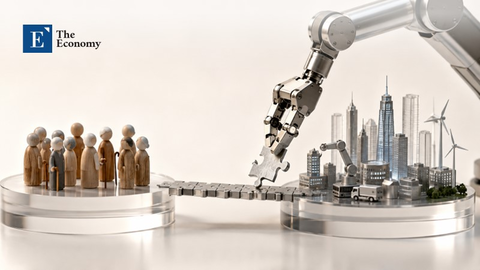
China's response points to the uncomfortable contrast. It did not address energy insecurity mainly by compensating consumers. It built. According to the EIA, China's utility-scale solar capacity reached more than 880GW in 2024. In 2024, China had installed 277 GW of utility-scale solar, more than all the U.S. utility-scale solar capacity at the end of 2024. In 2024-30, the IEA predicts, China will install 3,207 GW of new renewable electricity capacity. That is not, after all, a speech about resilience. It is one nation built out that alters the leverage in negotiations. Europe could still claim to be the undisputed pioneer in renewable energy before COVID. Today, that seems a little outdated.
What is not meant is that China is some clean energy utopia. Not by a long shot. Today, China is still coal-dependent, and its energy system places a high emissions burden. What is meant is that there is one key aspect of China's energy approach absent in much of Europe's: supply as strategic infrastructure. Solar, wind, coal, nuclear, hydro, batteries, ultra-high-voltage transmission network, and basic-industrial suppliers are all now fed into this security grid. When the latest Middle East Sudden Shock occurred, Asian analysts cited these same guidelines in an emergency policy response. As gas supplies grew scarce, Taiwan shifted to coal thermal. South Korea temporarily suspended seasonal restrictions on some coal plants and expanded nuclear output. Japan drafted emergency action plans for thermal power. There are no paragon models for emissions reduction. They illustrate that all crisis strategies ever have are the means of financing strategic assets already in place.
Europe should not copy China's coal dependence. That would be a strategic and climate failure. But Europe should copy the seriousness of China's built-out. The green switch-over cannot be a mere moral choice that conveniently halts, depending on fuel prices. It has to be at the heart of energy security. That means more renewables, but also more of the infrastructure that makes renewables reliable: like grid interconnections, as much generation in reserve and backup capacity as possible, so as to keep demand switchable and a more electrified economy to access brown hydrocarbons sparingly. Parking of batteries at a system-wide level as insurance should become standard and transmission lines should be classified not as a local nuisance but as essential security infrastructure; nuclear power plants demonstrably upgradable should not be sacrificed symbolically in a supply crunch. The point is simple: the cheapest crisis is one made physically harder to engineer.
Readiness Means Replacing Imported Fuel, Not Repricing It
Europe has made visible progress and cannot be ignored. Ember found that, in 2025, wind and solar supplied a third of EU electricity – beating fossil fuels on 29%. All renewables approached half of the EU electricity supply, and coal hit a record low. That's impressive. The result is that the next energy crisis in Europe will not exactly be the same as the last one. But the same figures also serve as a warning. Gas generation in 2025 grew as hydro was weak, and for the first time worldwide, our power sector importing fossil gas got more expensive, adding 16% to its £40bn import bill, and causing wholesale prices to rise during gas-guzzling hours. A cleaner power mix is inherently vulnerable if any new molecular unit has remained imported gas.
Readiness, therefore, has to be measured by Europe's ability to replace imported fuels, not just to reprice them. The test is crude. Can Europe keep itself warm without gas? Keep its factories operational without cheap electricity? Keep its freight moving-or hold down its electricity prices-when the weather knocks out the hydro, the wind blows lazily, or the Persian Gulf holds back its freight. If the answer is no, then the European energy crisis is still with us. It is simply lying dormant. The Iranian dislocation has shown that energy security cannot be outsourced to shipping lanes, friendly exporters, or futures exchanges. They can support Europe's needs. They cannot replace domestic capacity.
The choices in the next policy package must be measured against the physical resilience they produce. Short-term bills should be limited in scale, deployed quickly, and directed efficiently to vulnerable households and viable firms. Wide subsidies everywhere trap perception in an unfounded illusion of abundance, and short-lived resources in shrinking budgets, with a strong arrow pointing to their phaseout. Public money should be targeted at those investments that bend the import curve in the future, such as grid upgrades, interconnectors, storage, heat pumps, decarbonized industrial electricity, a faster pace of permitting renewables, and dependable firm capacity. Liquefied natural gas from the US, Qatar, Canada, or anywhere else can buy time. Europe's energy policy must be concrete: buildable, financeable, repairable and scalable.
But perhaps the most likely would be that this demands too much in a time of fragile growth and elevated indebtedness. That critique sounds practical but it is incomplete. The costly choice is to shoehorn our existing crisis, not job one, until there is no job to do. The EU already has a new energy shock, crises in inflation, and deficit targets. Every hour of delay on a grid project or a stranded power asset pushes a potentially more disastrous emergency budget a little closer. A second argument is that expanding too quickly would hamper climate action. It would only do so if this expansion were to imagine itself primarily through the development of fossil fuel resources. But a dynamo approach to supply would be the most rapid climate policy Europe has yet known, simply surpassing imports with dependable, cost-conscious, decarbonized power. In Europe, energy abundance and decarbonization must become the same project.
With 57% import-dependence, this should be on the agenda of every single European cabinet meeting. It means that the European energy crisis has not been solved. It was managed. Europe has learned how to handle a shock better than before. It has not yet learned how to make the next shock smaller before it hits. That is the threshold between resilience and preparedness. Resilience mitigates harm. Preparedness avoids it. The next phase of policy cannot be another frantic race to subsidize bills after the prices have jumped. Instead, it must be a frantic race to build the capacity that will make those bills less vulnerable in the first place. Europe does not need a softer narrative on trade-offs, but a more robust energy statecraft: produce more, import less, electrify more rapidly, sustain firm power, and desist from confusing relief with security.
The views expressed in this article are those of the author(s) and do not necessarily reflect the official position of The Economy or its affiliates.
References
Antonio, K. (2025) ‘China’s solar capacity installations grew rapidly in 2024’, Today in Energy, U.S. Energy Information Administration, 22 April.
Brennan, A. (2026) ‘“Global Stagflation Looms” Middle East-Driven Energy Shock Intensifies Low-Growth, High-Inflation Pressures as Governments Scramble for Countermeasures’, The Economy, 27 May.
Council of the European Union (2026) ‘Where does the EU’s gas come from?’, Council of the European Union.
Directorate-General for Economic and Financial Affairs (2026) Spring 2026 Economic Forecast: Slowdown in Growth as Energy Shock Drives Up Inflation. Brussels: European Commission.
Directorate-General for Energy (2025) ‘Energy subsidies report shows progress in 2023’, European Commission, 29 January.
Ember (2026) European Electricity Review 2026. London: Ember.
Eurostat (2026) Energy in Europe – 2026 Edition. Luxembourg: Publications Office of the European Union.
International Energy Agency (2024) Renewables 2024: Analysis and Forecast to 2030. Paris: IEA.
Reuter, M. (2026) ‘Asia’s Coal Phaseout Clock Rewinds as Energy Supplies Falter, Long-Term Energy Strategies Recast Amid Rising Coal Dependence’, The Economy, 27 May.
Sgaravatti, G., Tagliapietra, S., Trasi, C. and Zachmann, G. (2023) ‘National fiscal policy responses to the energy crisis’, Bruegel Dataset, 26 June.
Verwey, M. and Orsini, K. (2026) ‘A more resilient Europe faces a renewed energy shock – but difficult trade-offs may resurface’, VoxEU/CEPR, 26 May.
Working across research, policy, and data-driven analysis, the Editorial Board ensures that published pieces reflect a consistent institutional perspective grounded in quantitative reasoning and long-term structural assessment.