“The Paradox of Taxing the Rich” Silicon Valley Titans Eyeing an Exodus as Switzerland Takes a Different Path

Authored on
Modified
Backlash Against the Billionaire Tax Emerges in California
Signs of Wealth Migration Accelerate as Tax Base Erosion Looms
Switzerland Prioritizes Growth Over Redistribution Amid Fears of Capital Flight

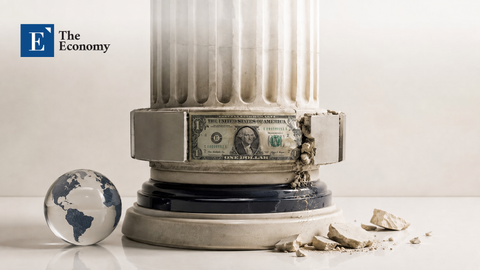
As California moves forward with plans to introduce a billionaire tax, Silicon Valley founders and wealthy individuals are increasingly exploring relocation strategies and asset diversification. While higher taxes aimed at boosting government revenue have gained political support, critics argue that the policy's effectiveness could be undermined if the targeted taxpayers simply move elsewhere. The reasoning behind Swiss voters’ recent rejection of a wealth tax proposal reflects a similar concern.
Palantir Co-Founder Peter Thiel Considers Relocation to Argentina
According to the Financial Times (FT) on May 31, Palantir co-founder Peter Thiel has recently relocated to a $12 million mansion in Buenos Aires, Argentina, and enrolled his children in local schools. The Thiel family residence is located in Barrio Parque within Palermo Chico, one of Buenos Aires’ most exclusive residential districts. The neighborhood, home to embassies, business magnates, and political elites, is regarded as one of the city’s most secure and secluded areas. Locals often refer to it as the “Argentine Billionaires’ Row.”
Thiel has reportedly expanded his holdings beyond the mansion purchase, acquiring land near neighboring Uruguay. He has also become increasingly visible in Buenos Aires society over recent months. Thiel attended the Superclásico match between Boca Juniors and River Plate, Argentina’s most famous football rivalry, and reportedly finished third in a local chess club tournament.
His political engagement has also been notable. In April, Thiel met with Argentine President Javier Milei at the Casa Rosada presidential palace and subsequently held discussions with key government officials involved in economic and regulatory reform. However, Thiel’s move to Argentina has not yet been classified as permanent emigration. According to The New York Times (NYT), the Thiel family is currently residing in Argentina while retaining U.S. citizenship, and there is no indication that they have applied for Argentine citizenship. The FT likewise described the relocation as a “temporary move.”
Nevertheless, many observers believe the simultaneous relocation of residence, education, and investment interests goes well beyond a simple overseas stay. Thiel’s decision also aligns closely with President Milei’s free-market economic experiment. Milei’s administration has embraced aggressive fiscal austerity, deregulation, and a small-government agenda, challenging long-standing economic orthodoxies in South America. Thiel has long criticized the expansion of state power and rising tax burdens. His growing interest in Argentina appears to reflect both ideological alignment and the risk diversification strategies commonly employed by high-net-worth individuals seeking to avoid high-tax jurisdictions.
Growing Momentum Behind Leaving California
One of the most direct catalysts behind Thiel’s relocation appears to be political developments in California. A ballot initiative aimed at introducing a so-called “Billionaire Tax” has recently gained traction after the Service Employees International Union–United Healthcare Workers West (SEIU-UHW), which supports the measure, collected approximately 1.5 million signatures. The proposal requires 875,000 signatures to qualify for a statewide ballot, a threshold that organizers comfortably exceeded.
Under the proposal, California residents with net assets exceeding $1 billion would pay a one-time tax equal to 5% of their wealth. If enacted as planned, the tax would apply to California residents as of January 1 of this year. SEIU-UHW argues that the measure could generate roughly $100 billion in revenue, with 90% allocated to healthcare services and the remaining 10% directed toward public education and food assistance programs. Supporters contend that wealth is not solely the result of individual achievement but is also built upon public infrastructure, institutions, and labor. They further argue that wealthy individuals should shoulder a larger tax burden at a time when the Trump administration is reducing funding for Medicaid and fiscal pressures are intensifying.
Opponents, however, warn that creating a special tax aimed exclusively at the wealthy would undermine the predictability of the tax system and weaken legal stability. They argue that taxing wealth rather than income exceeds the definition of “income” established under the Sixteenth Amendment to the U.S. Constitution. The central question, critics say, is whether unrealized assets such as stocks can be taxed before any gains have actually been realized.
California, home to Silicon Valley, has more billionaires than any other U.S. state. The number of billionaire residents is estimated at more than 200. Unsurprisingly, resistance from major technology founders has intensified. The Wall Street Journal (WSJ) reported in January that Thiel, along with Palmer Luckey, co-founder of Anduril, and Chris Larsen, co-founder of Ripple, created a private Signal group chat called “Save California” to coordinate efforts against the billionaire tax proposal. According to the report, “the billionaire tax has united Silicon Valley’s elite.” Participants warned that many innovative companies would leave California if the tax were implemented and argued that such departures could ultimately result in annual tax revenue losses exceeding $100 million rather than increasing government receipts.
Signs of an exodus are already emerging. According to The Guardian, Google co-founder Larry Page shut down or relocated 45 California-based companies last year and moved his primary residence to Miami, Florida. Meta CEO Mark Zuckerberg has also purchased a home in Florida, while Google co-founder Sergey Brin donated $45 million to a civic organization opposing the billionaire tax. Former Uber CEO Travis Kalanick and Oracle founder Larry Ellison have likewise discussed plans to dispose of California real estate holdings and relocate elsewhere.
California’s top state income tax rate currently stands at 13.3%, while its corporate tax rate is 8.8%. By contrast, Florida and Texas—two states increasingly favored by major technology executives—do not impose state income taxes. Tesla CEO Elon Musk, a vocal critic of the billionaire tax concept, moved the company’s headquarters from California to Austin, Texas, in 2024. The California Tax Foundation estimates that billionaire departures and their associated economic effects could reduce annual state tax revenue by between $3.53 billion and $4.49 billion.

Eighty Percent of Swiss Voters Reject a Tax on the Super-Rich
The debate unfolding in California highlights a fundamental dilemma surrounding wealth taxation. Efforts to increase tax revenue through higher taxes can ultimately weaken the tax base itself if those subject to the taxes move beyond the jurisdiction. Countries with highly mobile capital increasingly treat this risk as a key factor in policy formulation.
Switzerland provides one of the clearest examples. For decades, the country has served as a premier destination for high-net-worth individuals (HNWIs) and family offices (FOs). Given the direct impact that wealthy residents have on tax revenues, investment flows, and the financial sector, Swiss society does not view taxation of the wealthy solely through the lens of redistribution. Policymakers often emphasize that tax hikes capable of triggering capital flight may inflict greater long-term damage on the tax base than the short-term benefits generated through additional revenue.
That perspective was clearly reflected in a recent referendum on a proposed “super-rich tax.” The measure was rejected with 78.3% voting against and only 21.7% in favor. All 23 Swiss cantons recorded majority opposition, while some regions reported rejection rates exceeding 90%. The proposal, introduced by the left-leaning Young Socialists (JUSO), sought to impose a 50% tax on inheritances and gifts exceeding approximately $61 million. Switzerland currently has no federal inheritance tax, with such taxes administered at the cantonal level.
Supporters argued that the proposal could raise approximately $7.3 billion annually to reduce wealth inequality and finance climate-related initiatives. They contended that wealthy individuals should contribute more because they generate disproportionately high levels of pollution. Advocates also noted that the wealth of Switzerland’s 300 richest individuals totals roughly $1 trillion and claimed that approximately 80% of that wealth stems from inherited assets rather than labor income. According to supporters, such concentrations of wealth fund environmentally harmful investments, private jets, yachts, and even political influence.
The Swiss federal government and parliament opposed the measure, arguing that higher taxes would encourage wealthy individuals and businesses to leave the country. Such an outcome, they warned, would threaten jobs and ultimately reduce tax revenues. Policymakers also emphasized that the top 1% of taxpayers already contribute approximately 40% of all income and wealth tax revenues.
Often described as a “billionaires’ paradise,” Switzerland has more than nine billionaires per one million residents—over five times the Western European average. Its longstanding military and political neutrality, combined with a decentralized tax system that allows cantons to compete on tax rates, has made the country an attractive destination for wealthy individuals and corporations. Yet Switzerland now faces growing competition from Dubai, Abu Dhabi, Hong Kong, and Singapore, all of which are aggressively pursuing global billionaire inflows through favorable tax regimes. Against this backdrop, Swiss voters ultimately prioritized what they viewed as the long-term interests of the national economy over broader appeals to redistribution and equality. Similar wealth tax proposals were also rejected in nationwide referendums in 2015 and 2023.
- Previous "Family Offices Expand Direct Investments" As Family Offices Gain Influence in Private Capital Markets, Concerns Rise Over a Potential Repeat of the Archegos Collapse
- Next “Hong Kong Overtakes Switzerland as a ‘Safe Haven for Wealth,’ as Middle East Conflict, Chinese Capital and the AI Boom Redraw Global Money Flows”
Similar Post