Healthcare Market Structure Is Opening a New Lane for Specialist Providers

Authored on
Modified
Specialist providers have a new opening in healthcare markets
AI, reviews, and rankings make niche expertise easier to see
The next winners will be easier to find, compare, and trust

Today, before patients ever speak with a clinician, 84% of recent patient choice research respondents reported checking online reviews before selecting a new provider, 85% said they would already use generative AI tools to learn about or compare providers. Indeed, this is how the old large hospital brands' advantage worked; it was never rooted solely in clinical scope or in physical size. It was information dominance: big systems were more discoverable, easier to recognize, and more easily trusted, when most patients entered the market via a referral culture, a regional reputation, and with no real idea of the available specialists. Now, when search is digital, comparative, and being mediated increasingly by AI, that advantage begins to erode. The more interesting question now is what happens to competition when size alone is no longer enough to keep rivals out of the consideration set. The answer is that specialist health providers have a new window to compete on clarity, speed, expertise, and fit that they could in the past.
The healthcare market structure shifts from a referral monopoly to discovery competition
For much of the last century, healthcare markets relied on the incumbent advantages rather than the alternatives others could offer. Large systems dominated the referral streams, the broad service maps, the institutional stature, and – in the US, where many local markets were still highly concentrated in 2024 – even the advertising budgets. Nearly half of all metro areas in the US had a dominant health system in 2024 for inpatient hospital care, and this dominance reinforced a mental shortcut in patients' minds: big meant proven, proven meant safe, and safe meant easy. Today, however, buyer behavior is also being shaped by discovery. Consumers are conducting their own online searches into pricing, availability, reviews, and ratings and asking AI assistants to compile summaries before anyone has even had the chance to put them into a provider's waiting room. In McKinsey's most recent consumer research, 57% of those consumers who found information on prices, of note, said that this information was the factor that determined where they chose to get the care, and when they faced scheduling constraints of some kind, they opted not to wait for the incumbent, but simply sought care elsewhere. In this way, the consumer is no longer only local or clinically referred; he or she has become comparative.
This requires smaller providers to think of today's moment less as a branding opportunity and more as a structural shift in demand. That, again, is where the classic supply push is replaced by a demand pull in discovery that can change market share without a commensurate improvement in clinical quality across the sector. There is no need for the nimblest private hospital, ambulatory center, narrowly focused clinic, or narrow-service operator to outscale the large systems to win. It is enough to be findable, comparable, and credible at the precise moment a buyer is looking. In healthcare, entry barriers have consisted of more than capital and regulation. They have also consisted of becoming legible among a field of competitors. Weakening of the referral monopoly and the rise of AI-powered, search-driven, per-click pricing lowers the migration cost. It does not in itself mean a win for the specialists, but it definitely creates the arena in which where specialists can win.
Healthcare specialists must make expertise visible
The advantage for specialist providers is not that they are smaller, but that they are sharper. Large systems sell breadth, specialists sell relevance. That detail will only become more important as healthcare buyers behave more and more like category shoppers. A knee patient isn't looking for a hospital. A fertility patient isn't simply looking at hospitals' reputations. A cancer patient, a spine patient, a behavioral health patient, and a parent looking for pediatric developmental services are trying to answer a different question: of all the options, who's best at this, for someone like me, in circumstances I really face? The winners won't be the hospitals that house the most service lines, no matter how broad the service the map is. They will be the ones who create a clear category, describe their advantage in language everyone can understand, and gather enough evidence to compete effectively.
That strengthening of the logic helped by AI is due to two traditional economies of scale going into reverse. Where AI allows smaller entities to operate with less operational drag. According to the American Medical Association, 66 percent of physicians used AI in 2024, compared to 38% in 2023, with 57% describing "reducing administrative burden through automation" as the biggest near-term opportunity. That's not a footnote; it means small providers can, say, use documentation tools, workflow automations, intakes, and triage support, to increase business capacity without suggesting an empire, building first. Where AI is changing the way expertise is surfaced. A search engine, AI overview, and digital recommendation layer that summarizes shared experience signals will favor the category specialist with a trusted outcomes language, a similarity, page of concatenated services, reputation, visible reviews, and piece, ready category support if he looks indistinguishable to the searcher from the large proven incumbents.
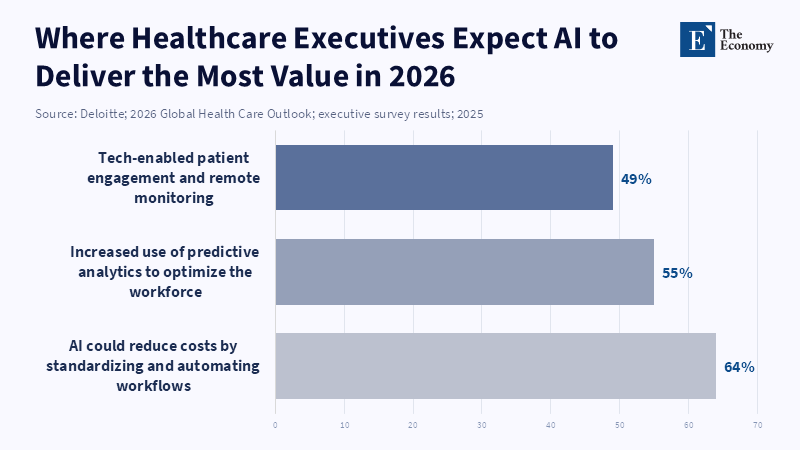
This is already occurring, but it is in keeping with an increasingly broader shift in the economics of the industry. McKinsey's analysis finds that growth and profit pools are expected to continue migrating into non-acute settings, health care IT, data and analytics, and services related to specialty pharmacy. And hospital-led activity in 2024 evidenced the same forcea focus on adjacent non-acute segments, showing that hospital-led deals will lean heavily toward non-acute settings, with 40 percent of hospital-led deals in those fields, and of those non-acute entities accounting for about 15% hospital, led deal volume and the formation of outpatient clinics, ambulatory surgery centers, and urgent care centers. This is where markets are headed when customers demand convenience, insurers will pay less for more complex settings, and providers must operate more productively. That is exactly the place for specialists, who can help to shape the new way of delivering services, not just deliver them by packaging that service into a standalone category, with a clear value proposition: faster access, less expertise to deliver it, cleaner pathways, and a journey where the patient has to bring only one issue to the table instead of an entire institution.
Rankings are becoming a market-entry infrastructure
And yet this is where many healthcare organizations still fall short. Rankings are what are important to specialists, not about what helps their reputation, but whether they reduce the barrier to the market. rankings provide sorting infrastructure in a noisy world; a buyer can pare down the large population to a shortlist; they are a shortcut whereby a long (and possibly unaffordable) due diligence effort is not practical; they allow niche greatness to go farther than local word of mouth; they offer small providers a way to borrow trust from a comparator framework rather than needing to generate it all. For a specialized clinic/hospital boutique, that is a strong business proposition, and rankings enable specialist competence to get to market before an organization gets to any top-of-mind size.
This function will matter more in a more cluttered health information environment. Pew Research Center found in 2026 that only half of Americans said it was at least somewhat difficult to judge whether health information was accurate, while 54% said it was difficult to know what to trust when they encountered conflicting health information. The same study found that 22% of Americans use AI chatbots for health information at least sometimes. In that environment, specialist healthcare providers need more than a website and a mission statement. They need structured visibility. A serious ranking, benchmark, or category-based comparison turns specialist knowledge from a private claim into a public signal. That's why rankings should be understood as market-entry infrastructure: they help niche providers get into consideration sets they might otherwise miss.
It’s easy to underestimate the commercial impact. In Rater8’s 2025 survey, 40% of patients said they had avoided or canceled an appointment because of negative reviews, and 61% said no personal recommendation would outweigh the negative reviews they read online. It is no longer a market where reputation is propagated to patients for your physicians, employers, and older Americans, knowing your name or story. Reputation is built in public, through search, through summaries, through review layers, ratings, and cross-content. To a smaller provider, that is a gift with a burden. A single, hyperspecific clinical profilerated by satisfied patients and disentangled in the public, looking glossy, does well. The real question is no longer can you do well? Can you be found?
The winners will be making specialist excellence simple to purchase
The future winners in our health care marketplace structure will be the organizations that get that specialist differentiation to manifest into buyer fluency. In other words, expertise must become something that is quickly digestible for the marketplace. Service lines must read like categories, not internal departments. Outcomes must be described through the lens of decision relevance, not hidden behind generic quality calims. Access must be perceived as immediate. Digital front doors must open. Price and pathway clarity must be high enough for comparisons. And the brand must answer one simple, commercially memorable question: why this provider for this need right now? Providers who are operating at a high clinical concentration tend to be better equipped to answer that question. What they have previously lacked is the market architecture that brings that answer to life.
Digital care also changes the game. Deloitte's 2024 consumer survey shows that 94% of those who had a virtual health care encounter would readily do so again. McKinsey's consumer insights are trending the same way: struggling to get access, a substantial portion of people are willing to go to a different institution or a different supplier, take virtual instead of in-person care, or try a walk-in rather than stay loyal to a known institution. In the real market, convenience is the new share, shifting mechanics. When the small player links hyper-specialized experience, swift scheduling, digital intake, virtual touch, and comparative evidence, it becomes vastly simpler for a patient to justify turning to that provider rather than to a bigger, slower provider. That is how specialty precision translates into volume.
The temptation remains to think of rankings as a media afterthought and digital presence as a layer of marketing. That assumption is worth challenging. For specialist services, rankings, reviews, category content, and AI-transparent signals are very much closer to the route to market infrastructure. They determine whether the practitioner is among the evaluators' first go-to list. They determine whether expertise is discernible without a referral chain doing the educational work. They determine whether niche excellence can reliably generate a conscious-choice market. The big organizations will persist. They will continue to generate the referrals, the capital, the universal respect. But the marketplace is becoming more porous. As legacy prestige weakens at the margin, its suppliers do not need to become larger copies of current kings; they need to be more discoverable, comparable, and believable.
That is the new front in the healthcare market structure. Not the death of scale, but the unbundling of its informational monopoly. Once AI tools, digital comparison, and ranking systems take the edge off of being the most familiar name, smaller players will be able to compete on the dimensions they are often best equipped to excel in: precision, clarity, speed, and focused brilliance. The specialist winners in this next iteration will be those who realize that visibility is part of the delivery of care. In a world in which consumers increasingly research, compare, shop, and verify before clicking book, the invisible excellence is a liability. If patients cannot see it, providers cannot scale it. Rankings, in this world, are not set dressing but an increasingly vital way for the market to recognize that a specialist is the choice worth demanding.
References
American Medical Association (2025) ‘2 in 3 physicians are using health AI—up 78% from 2023’. American Medical Association, 26 February.
Cordina, J., Odell, E., Bochtler, E. and Buchter, J. (2025) ‘Engaging the evolving US healthcare consumer and improving business performance’. McKinsey & Company, 7 March.
Dutta, A. and Nelson, H. (2024) ‘Is there a virtual health gap?’. Deloitte Insights, 16 October.
KFF (2025) ‘Key Facts About Hospitals’. KFF, 19 February.
Pasquini, G., Stocking, G., Kikuchi, E., Pula, I. and Yam, E. (2026) Where Do Americans Get Health Information, and What Do They Trust? Pew Research Center, 7 April.
rater8 (2025) The Next Evolution of Patient Choice. rater8.
Singhal, S., Patel, N. and Jain, A. (2025) ‘What to expect in US healthcare in 2025 and beyond’. McKinsey & Company, 10 January.
Similar Post