Saudi Arabia Expands EWC, Launches ENC as It Pushes Gaming and Esports Into National Strategic Industry

Authored On
Modified
From Oil to Esports: A Strategic Industrial Shift
Absorbing Global Sports and Entertainment IP
South Korea’s Relative Presence Diminishes
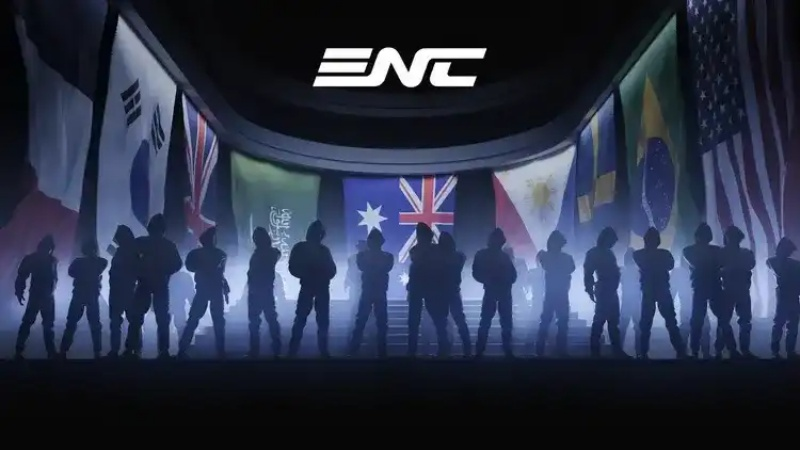
Saudi Arabia, positioning itself as an “esports powerhouse,” has moved to introduce a national-team competition in addition to its existing club-based tournaments. By institutionalizing an annual fall international event alongside the summer club competition already held each year, the kingdom is signaling ambitions to reshape the global esports operating structure itself. The expansion and institutional overhaul are unfolding rapidly, aligned with large-scale sovereign wealth fund investment, successive acquisitions of major game companies, and a broader push into the global sports industry.
Determination to Lead the Esports Industry
According to U.S.-based esports outlet TEC, the Saudi government discussed and approved amendments to the charter of the Esports World Cup Foundation during a cabinet meeting on the 17th. The foundation—whose board is chaired by Crown Prince and Prime Minister Mohammed bin Salman—has hosted the Esports World Cup (EWC) annually since 2024. Under the revised charter, the organization will be renamed the Esports Foundation, and in addition to the club-based EWC, a national-team competition titled the Esports Nations Cup (ENC) will be held every November.
With ENC added to the calendar, Saudi Arabia would rapidly assume a leading position in the year-round international esports schedule. The total prize pool for EWC 2025 reached $70 million, and the prize for EWC 2026, scheduled for July, has expanded to $75 million. An additional $20 million prize pool has been allocated for the newly established ENC. In terms of total prize funding alone, analysts note it is difficult to find precedent for a single country committing such resources across multiple international tournaments.
Since the late 2010s, Saudi Arabia has pursued economic diversification beyond oil, identifying the gaming industry as a future growth engine while deploying aggressive acquisitions and investments through its sovereign wealth fund, the Public Investment Fund (PIF). As recently as September last year, PIF, together with private equity firms Silver Lake and Affinity Partners, signed an agreement to acquire U.S.-based Electronic Arts (EA) for $55 billion. EA—widely regarded as one of the three major U.S. game companies alongside Activision Blizzard and Take-Two Interactive—owns globally influential esports titles including EA Sports FC, Battlefield, and Apex Legends.
PIF financed part of the EA acquisition by borrowing $20 billion from JPMorgan, marking the largest leveraged buyout financing in Wall Street history. The deal structure, involving massive leverage, has been interpreted as evidence that Saudi Arabia aims to elevate gaming and esports into a national strategic industry and secure long-term leadership. Earlier, in 2022, PIF acquired a 5% stake in Nintendo and invested roughly $690 million each in NCSoft and Nexon. Savvy Games Group, a PIF subsidiary, also acquired SNK, developer of The King of Fighters, Scopely, developer of Monopoly Go, and the gaming division of Niantic, creator of Pokémon Go.
With institutional reforms and financial support progressing simultaneously at the government level, physical infrastructure development has also accelerated. About 25 miles southwest of Riyadh, in the desert zone of Qiddiya, an esports and gaming district is under construction, and the inaugural Olympic Esports Games organized by the International Olympic Committee (IOC) is scheduled to take place in Riyadh in 2027. The parallel pursuit of hosting rights, global intellectual property acquisition, and infrastructure construction closely aligns with Saudi Arabia’s Vision 2030 industrial diversification strategy. The slogan “We are esports” has likewise been interpreted as reflecting a long-term national blueprint combining capital, IP, and platform dominance.

Strategy to Expand the Sports Ecosystem
Saudi Arabia has openly signaled that it intends to leverage esports leadership as a platform to dominate the broader sports industry. While increased prize funding and new international tournaments represent visible expansion, behind the scenes lies a restructuring of ownership centered on sovereign capital and the absorption of global sports and entertainment assets. Critics have described the investment scale as excessive, but given that the ultimate objective appears to be building a platform encompassing the entire sports ecosystem, the pace of expansion continues to accelerate. The strategy seeks to consolidate capital, leagues, intellectual property, star athletes, and fan communities into a unified axis to secure long-term influence.
To that end, PIF also announced plans to transfer approximately $12 billion worth of gaming-related equity holdings to Savvy Games. The assets include stakes in Nintendo and Bandai Namco Holdings. If completed, Savvy Games would hold stakes of roughly 10% in companies including Koei Tecmo Holdings, NCSoft, Nexon, and Square Enix Holdings. Savvy spokesperson Amar Batku stated that “this transfer will move PIF’s gaming investment operations under Savvy,” emphasizing that “gaming and esports are core elements of national strategy, and the investment trajectory will remain unchanged.”
Established in 2021 as part of diversification away from oil, Savvy Games has invested $38 billion in gaming to date and claims to control about 40% of the global esports market. CEO Brian Ward said, “We are just getting started,” adding that the company plans to review hundreds of potential acquisition targets annually. Most recently, Savvy acquired a 30% stake in Hero Esports, Asia’s largest esports company headquartered in Shanghai. Joost van Dreunen, a professor at NYU Stern, commented that “Saudi Arabia’s strategy is to buy market dominance with money.”
Connections with traditional sports are also notable. Global soccer star Cristiano Ronaldo captains Riyadh-based club Al Nassr FC, whose majority owner is PIF. Ronaldo’s appearance as a new character in the latest installment of the fighting game Fatal Fury symbolically illustrates these linkages. Japanese developer SNK’s largest shareholder is the Saudi nonprofit MiSK Foundation, founded and chaired by Crown Prince Mohammed bin Salman. Analysts interpret these moves as an effort to integrate sports celebrities, game IP, and capital ownership structures into a single ecosystem to expand influence across the broader entertainment industry.
Accelerating Regional Absorption and Emerging Concerns
Saudi Arabia’s sweeping expansion stands in stark contrast to South Korea, historically considered a traditional esports powerhouse. While South Korea has long maintained leadership in online gaming, league operations, and professional player development, recent global capital flows and large-scale mergers and acquisitions have increasingly highlighted the growing influence of Middle Eastern capital. In particular, Saudi Arabia’s integrated strategy—linking leagues, developers, and infrastructure—has begun to reshape market dynamics. The approach differs fundamentally from South Korea’s private-sector-driven industry structure, combining strong capital backing with coordinated government policy into a long-term national strategy.
According to the Saudi government, the country’s esports market is projected to reach $13.3 billion by 2030. As of 2024, approximately 23.5 million people—about 67% of the population—play games, including roughly 1,000 professional esports players. The government has set a goal of creating up to 39,000 jobs through the esports industry, spanning not only professional gaming but also event operations, marketing, game development, and technical support, with a focus on youth employment. Demographically, about 70% of the population is under the age of 35, a factor often cited as a structural advantage for the strategy.
The expansion strategy is also evident in efforts to attract regional companies. UAE-based game developer Kossup Studio secured a $600,000 investment earlier this year, with the funding intended to support relocation to Saudi Arabia as part of efforts to establish a game development hub aligned with Vision 2030 goals. The investment was made through a gaming fund operated by Merak Capital, backed by the Saudi National Development Fund. Merak Capital CEO Abdulrahman Al-Sharif described the investment as reflecting “confidence in supporting game developers with a global mindset.”
As Saudi Arabia’s presence in the global gaming market grows, concerns have also emerged regarding potential shifts in content direction for major titles. The acquisition of EA, in particular, has sparked worries that it could mark “the end of well-made games shaped by American perspectives.” Observers point to EA’s past releases, including Desert Strike in 1992—featuring a fictional Arab dictator shortly after the Gulf War—and Battlefield 2 in 2005, which depicted U.S. forces confronting Middle Eastern coalitions, as context for such concerns. EA CEO Andrew Wilson stated that “EA’s direction, prioritizing bold and expressive content, remains unchanged,” but industry consensus suggests that changes in controlling ownership inevitably influence creative environments.
Similar Post