"Rationing Looms" Middle East–Driven Energy Shock Batters Europe and South Asia, Global Supply Chains on Alert

Aoife Brennan is a contributing writer for The Economy, with a focus on education, youth, and societal change. Based in Limerick, she holds a degree in political communication from Queen’s University Belfast. Aoife’s work draws connections between cultural narratives and public discourse in Europe and Asia.
Authored On
Modified
"Beyond the 1970s Oil Shock," Energy Markets Thrown Into Turmoil by Iran War
Europe Braces for Worst-Case Scenarios as South Asia Already in Disarray
Disruptions Spread Across Global Supply Chains Including Food and Petrochemicals
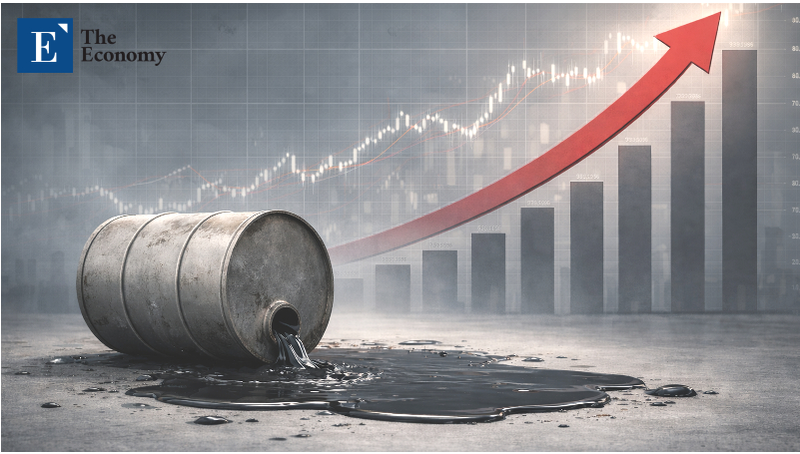
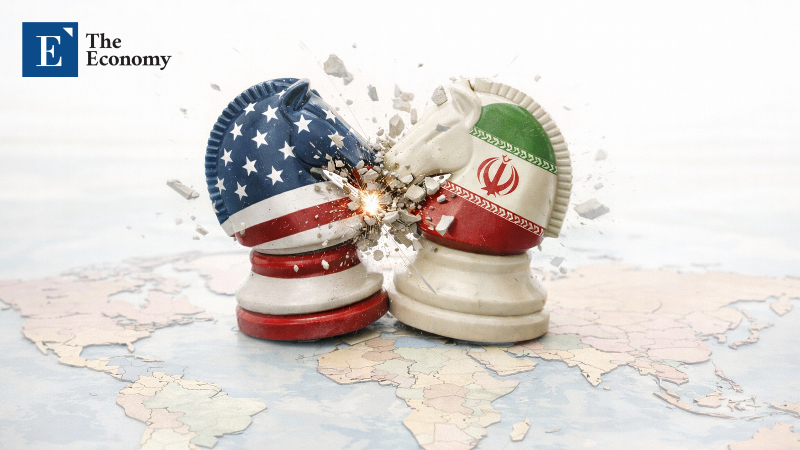
The Iran war is intensifying energy supply disruptions across the globe. The European Union (EU) has signaled the potential implementation of fuel rationing—measures that have effectively not been used since the 1970s—while South Asian nations heavily reliant on Middle Eastern energy are mobilizing a range of policies to curb fuel consumption. Market participants warn that Middle East–originated risks sweeping the energy sector are now cascading into broader global supply chains, including food and petrochemicals.
Escalating Energy Crisis in Europe Amid Iran War
On the 7th (local time), energy-focused outlet OilPrice.com warned that the energy crisis triggered by the Iran war could lead to global demand destruction and a prolonged economic downturn. In many regions, consumers are unable to purchase fuel or face strict limits on purchases. Slovenia recently became the first European country to introduce a 50-liter fueling cap, while the EU continues to monitor supply chain conditions closely.
Dan Jørgensen, EU Commissioner for Energy, stated in an interview with the Financial Times (FT) on the 3rd, “This situation will become a long-term crisis, and energy prices are likely to remain elevated for an extended period,” adding, “We are not yet at the stage of implementing rationing for fuels such as jet fuel and diesel, but we are preparing for the worst-case scenario.”
Fuel rationing is a policy rarely implemented since the oil shocks of the 1970s. In 1973, Arab oil-producing nations cut supply and reduced production to countries such as the United States that supported Israel during the Yom Kippur War (Fourth Arab–Israeli War). As a result, global oil prices surged dramatically within a short period, prompting major importing nations to adopt fuel rationing measures. The shock inflicted severe damage on the global economy and financial markets, with long-lasting repercussions.
Experts view the current crisis as comparable to—or exceeding—the oil shocks. Fatih Birol, Executive Director of the International Energy Agency (IEA), stated in a recent interview with French media, “The current oil and natural gas crisis triggered by the closure of the Strait of Hormuz is more severe than the combined crises of 1973 (first oil shock), 1979 (second oil shock), and 2022 (Ukraine war). The world has never experienced an energy supply disruption of this magnitude.” Alicia García-Herrero, Chief Economist for Asia-Pacific at Natixis CIB, also noted, “During the oil shocks of the 1970s, global supply declined by only 5–7% despite sharp price increases. The current crisis is affecting as much as 20% of global supply.”
South Asia Scrambles for Countermeasures
The severity of the situation becomes even clearer when examining South Asia, a region highly dependent on Middle Eastern energy. Pakistan has announced a two-week nationwide school closure due to energy shortages, while the Maldives and Nepal have introduced rationing systems for household liquefied petroleum gas (LPG). Bangladesh has ordered universities to shut down and banned setting air conditioning temperatures below 25 degrees Celsius in buildings. Thailand has instructed public officials to work remotely, encouraged stair usage and lighter clothing, and its state-owned energy giant PTT has decided to turn off office lighting during lunch hours and after 7 p.m.
In Laos, which imports most of its fuel from Thailand, more than 40% of gas stations in the capital Vientiane were forced to shut down last month—an unprecedented development.
India, the world’s second-largest LPG importer, is also experiencing significant disruptions to daily life. According to The Wall Street Journal (WSJ), households and catering businesses at weddings have recently been forced to cook using charcoal or firewood. Despite the Indian government invoking emergency powers to redirect industrial LPG for household use, the situation remains unresolved. In Cambodia, an energy company halted supplies of cooking and fuel gas starting on the 1st of this month, prompting the Ministry of Energy to urge citizens to increase the use of electric rice cookers and induction stoves.
Sri Lanka, meanwhile, is facing mounting pressure toward economic collapse as the impact of the Iran war compounds the aftermath of a cyclone that struck in November last year. Cyclone Ditchwa resulted in 641 deaths, with the World Bank estimating damages at approximately $4.1 billion. The Sri Lankan government announced an additional $1.7 billion in spending for recovery in December and secured $206 million in emergency funding through the International Monetary Fund (IMF).
These developments have delivered a severe blow to an already fragile economy. Sri Lanka previously defaulted in 2022 after failing to repay $46 billion in external debt, leaving the country with limited capacity to absorb further shocks from the Iran war. According to AFP on the 5th, Sri Lanka has implemented fuel rationing, raised fuel prices by one-third, and increased electricity tariffs by up to 40%. Since the 3rd, it has also imposed restrictions on water supply hours to reduce pumping costs.
Red Flags Across Global Supply Chains
The Iran war is also exerting significant pressure beyond energy, disrupting global supply chains at large. A prime example is the food supply chain. The Strait of Hormuz—effectively blockaded following the outbreak of the conflict—is a critical transit route through which approximately 25% of global fertilizer shipments pass. As planting seasons approach, farmers worldwide are facing fertilizer shortages.
Last month, export prices for urea (a nitrogen fertilizer feedstock) in the Middle East surged to $670 per ton, marking a 38.1% increase from the previous month and a 172.3% jump year-on-year. The global nitrogen fertilizer index also rose 35.2% month-on-month and 168.6% year-on-year. Natural gas futures, a key input for fertilizer production, climbed to $63 per MWh, up 62.4% from the previous month and 126.4% compared to a year earlier.
Grain prices are also trending upward. Soybean futures reached $430 per ton last month, up 4.2% month-on-month and 16.5% year-on-year. Rising biodiesel demand pushed soybean oil and palm oil futures up 34.2% and 11.7% year-on-year, respectively. The Food and Agriculture Organization (FAO) reported that its global food price index increased 2.4% month-on-month last month. The FAO warned that rising fuel and fertilizer costs could further elevate global food prices, with the full impact on agriculture expected to unfold over the coming months.
Petrochemical supply chains are also showing signs of instability. According to CNN on the 5th, panic buying of garbage bags has emerged in South Korea following the outbreak of the Iran war, while Japan faces growing concerns over shortages of medical plastic tubing used in treating chronic kidney failure. Malaysian glove manufacturers are struggling to secure petroleum-based feedstocks needed for rubber latex production, and a polyester manufacturer in Haining, Zhejiang Province, China has halted new orders amid surging raw material costs. In Indonesia, packaging material prices have roughly doubled, prompting companies to reduce packaging thickness or explore alternatives such as paper, glass, aluminum, and recycled plastics.
Aluminum benchmark prices have also surged to a four-year high. Iranian attacks have halted operations at key Middle Eastern production hubs, including Emirates Global Aluminium (EGA) in the United Arab Emirates and Aluminium Bahrain. With growing concerns over the closure of the Strait of Hormuz, more Middle Eastern producers are cutting output. The region accounts for approximately 20% of global aluminum supply. Goldman Sachs warned that even a one-month disruption in Middle Eastern aluminum production could drive prices up to $3,600 per ton.
Aoife Brennan is a contributing writer for The Economy, with a focus on education, youth, and societal change. Based in Limerick, she holds a degree in political communication from Queen’s University Belfast. Aoife’s work draws connections between cultural narratives and public discourse in Europe and Asia.
Similar Post