The Strait of Hormuz Commodity Shock Is an Education Policy Story

Working across research, policy, and data-driven analysis, the Editorial Board ensures that published pieces reflect a consistent institutional perspective grounded in quantitative reasoning and long-term structural assessment.
Authored On
Modified
Non-oil commodity shocks, not oil, are now driving inflation and disruption
These shocks spread into education through food, materials, and technology costs
Education policy must adapt to supply-chain risks, not just energy shocks

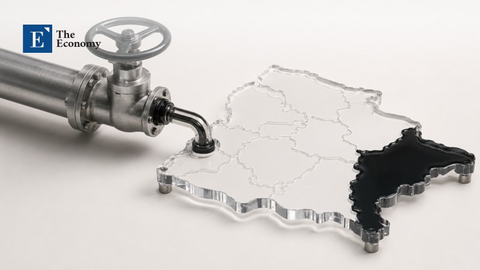
A near freeze in traffic through the Strait of Hormuz should have ended the simple story that this is yet another oil scare. UN Trade and Development reported that daily ship transits through the Strait fell from an average of 129 in late February to just 6 in March, a 95% decline. The Strait of Hormuz is vital not only because of rising petrol prices but also because it transports about a quarter of global seaborne oil, as well as large volumes of liquefied natural gas and fertilizers. The key message of this crisis is not merely about oil: contemporary inflation is transmitted through broader material systems. Schools operate within those systems, purchasing meals, transport, plastics, chemicals, paper, electronics, and construction materials. When non-oil commodities stall, education budgets are squeezed from many directions. The Strait of Hormuz commodity shock is therefore not an aside for education policy—it is an early warning about the inherent fragility of the material foundation of schooling.
The Strait of Hormuz commodity shock is not primarily an oil issue
The common media script for any Middle East crisis remains shaped by the 1970s. Oil prices increase, inflation follows, central banks respond, and everything else is characterized as a spillover. That script has now become too narrow. The more profound policy insight from recent research on commodity shocks is that supply disruptions in non-oil commodities can depress inflation and halt industrial output just as much as oil supply shocks. That insight is far more relevant to the current crisis than the 1970s narrative. The Strait propagates crude oil, but it also delivers the inputs that surround food systems, plastics, packaging, fertilizers, chemicals, and manufacturing. According to the World Economic Forum’s Global Value Chains Outlook 2026, recent disruptions in global supply chains have underscored the need for greater resilience and agility. While the report discusses broad impacts on key industries and national economies, it does not specifically address methanol, sulfur, helium, aluminum, carbon graphite, or direct links to education policy. Schools are not merely consumers of energy. They are dependents within a chain of goods whose prices are largely determined by chemicals, sources of mineral feedstocks, and shipping frictions that rarely feature in conventional policy discussions.
This is why the current inflation risk will be experienced differently from a petrol shock. Oil affects personal budgets quickly and explicitly, but non-oil commodity shocks work more quietly, filtering in through school meal contracts, sanitation supplies, laboratory ingredients, bus contracts, device prices, development projects, refurbishment accounts, and procurement schedules. They are slower to be identified at the government budget level and are often misread as general inflation. Still, these channels are valid. Between 27 February and 9 March 2026, oil prices rose 27% and gas prices 74%, while about a third of global seaborne fertilizer trade sat exposed through the Strait. Disruptions in the Strait of Hormuz impact not only fuel prices, but also the cost of fertilizers, freight, and school-related services, squeezing education budgets and deepening inequality. Education actors who focus only on energy risk missing the broader, contemporary challenge.

How the Strait of Hormuz commodity shock drives up food, fertilizer, chemicals, and school budgets
This issue matters most for education policy. Schools depend heavily on food provision, a fact more widely acknowledged. Over 418 million children get meals at school. The World Food Program reports that 41% of primary school students receive free or subsidized meals, primarily through public funding. In low-income countries, these meals consume about 11% of the primary education budget. A shock to fertilizer use and transport, or to food prices, is not a side issue for education officials—it’s a central risk. When the IMF highlights early fertilizer shocks during planting and the UN Trade and Development warns of higher food costs driven by energy and fertilizer, the budget message is clear. Payroll can be shielded, but school meals, attendance incentives, and subsidies for disadvantaged students are squeezed first when food budgets rise. The Strait of Hormuz shock can deepen inequality, even without a new policy.
The second risk is reliance on chemicals in daily school life. Plastics, cleaning products, paints, electronics, piping, gloves, lab supplies, and packaging all depend on petrochemical chains outside education policy’s usual scope. CNBC’s March coverage was not just financial news—it previewed inflation in plastics. Similarly, Reuters reported surges in aluminum and helium prices after Gulf disruptions. Aluminum fears rose with Gulf shipment delays, and helium prices doubled. These shifts impact construction, repairs, labs, training, and food storage in schools. Educational leaders typically wait for headline inflation to rise before seeking savings. Smart practice is more proactive: Check which school operations rely on at-risk commodities, which contracts are set to renew soon, and which districts lack budget flexibility. Education finance doesn’t start with salaries or end with test scores—it relies on physical inputs.

Why the Strait of Hormuz commodity shock puts chips, devices, and advanced training within reach
The third concern is digital education. The shift online post-pandemic might seem to reduce exposure to supply shocks. In reality, it increases it. Digital learning depends on semiconductors, devices, cooling, stable power, and networking. Reuters noted that helium prices had doubled, a key factor for chips and medical equipment. The war in Europe quickly became a problem for South Korea’s chip trade. Reuters also reported that Korean tech stocks fell more than 18% in two days. South Korea, with semiconductors accounting for 8% of GDP and 20% of exports, faces war-related risks. When the main chip source falters, delayed device deliveries or tighter maintenance are real risks for teachers. Rather than wait for trade data showing market stability, strong leaders assess which schools need to rely on these technologies, which schools have contract renewal times, and which districts cannot absorb shortfalls. Education finance isn’t just about efficiency slogans—it depends on tangible goods.
The right policy stance is neither panic nor a generic call for resilience. It is to integrate education planning into the development agency supply chain schedules. Education administrations should assess absolute and relative risk levels across food, fertilizer, energy, goods, and equipment, and no longer merely set budgets based on the number of pupils, but also develop sensitivity analyses to estimate how many children could be included within the available fiscal space. Finance ministries should ensure the availability of popular school foods and boarding facilities before broader inflationary pressures necessitate austerity. Procurement regulations should permit suppliers to build up stockpiles of periodic inputs, while technical schools should adjust risk models for equipment and supplies imported via centralized industrial pathways. School leaders should cease imagining commodity literacy as the concern only of economists. If fertilizer prices and paper costs now influence states' ability to afford certain educational inputs, then the care and stewardship of those inputs is rightly a management matter before it is a pedagogical one. This is critically important, as many countries are experiencing stagnant or declining education spending per child, leaving no fiscal room for a new wave of imported cost increases.
It is the 95% decline in ship movements through an adjacent waterway that should be our call to policymakers working in education. This is not only an energy situation. It illuminates how education is integrated with the movement of material matter. The guiding principle for success is therefore not to wait until the usual time when inflation statistics are published, notice higher prices in food and chips, and then assume the crisis is merely a spillover from a war. It might already be much more than that. According to an IMF report, while some trade crossings in the Strait of Hormuz have reopened as of early April, traffic remains significantly below normal levels. The report also points out that when the effects of these disruptions are felt, the resulting challenges for education will likely be closely linked to broader political and macroeconomic factors. It will not arrive as a smaller grocery bill, a costlier device, a constrained repair budget, or a lengthened vocational program. The Strait of Hormuz commodity shock should inspire education managers to think beyond narrow tactical frames and manage their systems with the integrality that the moment demands. Schools are not removed from the real economy. The real economy is simply where they are.
The views expressed in this article are those of the author(s) and do not necessarily reflect the official position of The Economy or its affiliates.
References
Adrian, T., Azour, J., Chalk, N., Gourinchas, P.-O., Kammer, A., Selassie, A.A., Srinivasan, K. and Valdés, R. (2026) ‘How the war in the Middle East is affecting energy, trade, and finance’, IMF Blog, 30 March.
Arezki, R., Imam, P.A., Kpodar, K.R. and Le Van, D. (2025) Shocks and Shields: Macroeconomic Institutions During Commodity Price Swings. IMF Working Paper 2025/130. doi:10.5089/9798400296710.001.
Ascari, G., Bonam, D. and Smadu, A. (2024) ‘Global supply chain pressures, inflation, and implications for monetary policy’, Journal of International Money and Finance, 142, 103029. doi:10.1016/j.jimonfin.2024.103029.
Chang, F.-H. (2024) ‘The impact of education costs on income inequality’, International Review of Economics, 71(3), pp. 553–574. doi:10.1007/s12232-024-00452-z.
Draudt-Véjares, D. and Sahay, T. (2026) ‘The Iran war is also now a semiconductor problem’, Emissary, Carnegie Endowment for International Peace, 13 March.
European Parliament and Council of the European Union (2006) Regulation (EC) No 1907/2006 of the European Parliament and of the Council of 18 December 2006 concerning the Registration, Evaluation, Authorisation and Restriction of Chemicals (REACH), establishing a European Chemicals Agency. Official Journal of the European Union, L396, 30 December.
Geldard, R. (2026) ‘The Strait of Hormuz crisis affects more than just oil. Here are 9 other commodities’, World Economic Forum, 1 April.
Hashimov, K. (2026) ‘Aluminum’s supply shock’, Investing.com, 6 March.
Jiang, B., Zhang, J. and Xu, Y. (2024) ‘Impact of unreliable supplier on a supply chain with demand-generating marketing’, Production and Operations Management. doi:10.2139/ssrn.4454413.
Lee, J. (2026) ‘South Korea chip boom powers export growth to four-decade high’, Reuters, 1 April.
Lumbanraja, A., Mouabbi, S., Passari, E. and Rousset Planat, A. (2026) ‘Beyond oil: The macroeconomic impact of commodity supply disturbances’, VoxEU/CEPR, 2 April.
Mattei, L. (2025) ‘Fertilizer costs reenter inflation debate as energy volatility builds into 2026’, Investing.com, 12 December.
Miranda-Pinto, J. (2024) Beyond Energy: Inflationary Effects of Metals Price Shocks in Production Networks. IMF Working Paper 2024/215. doi:10.5089/9798400291630.001.
Reuters (2026) ‘French-owned CMA CGM container ship passes Strait of Hormuz, data shows’, Reuters, 3 April.
Reuters (2026) ‘Japanese-owned LNG tanker crosses the Strait of Hormuz’, Reuters, 3 April.
Reuters (2026) ‘Helium prices soar as Qatar LNG halt exposes fragile supply chain’, Reuters, 12 March.
Reuters (2026) ‘Iran’s strikes on major Gulf producers intensify aluminium supply fears’, Reuters, 30 March.
United Nations (2026) ‘From lunch tray to lifelong health: WHO sets global standards for school meals’, United Nations Sustainable Development, 27 January. I could verify the page and date, but I did not find a named individual author on the page, so the safest citation is to the institutional author.
United Nations Conference on Trade and Development (2026a) Strait of Hormuz Disruptions: Implications for Global Trade and Development. Geneva: UNCTAD.
United Nations Conference on Trade and Development (2026b) Strait of Hormuz Disruptions: Growth and Financial Implications. UNCTAD/OSG/INF/2026/2. Geneva: UNCTAD.
World Food Programme (2025) The State of School Feeding Worldwide. Rome: World Food Programme.
Zhang, J. (2026) ‘Supply chain digitalization and disruption risk: The roles of resilience and financing constraints’, Finance Research Letters, 93, 109623. doi:10.1016/j.frl.2026.109623.
Working across research, policy, and data-driven analysis, the Editorial Board ensures that published pieces reflect a consistent institutional perspective grounded in quantitative reasoning and long-term structural assessment.