U.S. Moves to Break China’s Rare Earth Stranglehold — Is the Resource War Nearing an End

Authored On
Modified
Rush of U.S. rare earth projects
Acceleration of efforts to rebuild an integrated North American supply chain
Construction of a vertically integrated infrastructure spanning mining to processing
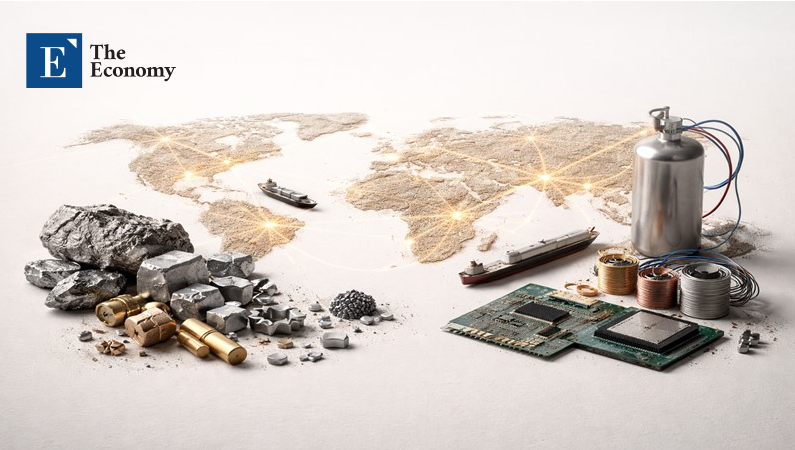
The United States is accelerating efforts to strengthen domestic production and refining capacity in order to reduce its dependence on China for rare earth supply chains. Washington is moving to reorganize the entire-cycle infrastructure — from mining and refining to alloy production — around the United States and its allies. Analysts say that if this supply-chain internalization materializes, China’s long-standing ability to control prices and volumes in the global rare earth market could enter a weakening phase, while the profitability underpinning its dominance may also come under sustained pressure.
Pentagon to Enforce Ban on Chinese Rare Earths From January Next Year
According to the U.S. Department of Defense on April 9 (local time), under new defense procurement rules (DFARS) taking effect on January 1 next year, any U.S. defense system using Chinese rare earths will be completely barred from acquisition. Rare earths are indispensable raw materials used across modern weapons systems, from electronic equipment to missile precision-guidance systems and drone propulsion units. A single F-35 stealth fighter contains about 420 kilograms of rare earth metals, while ship propulsion motors, missile guidance devices, laser detectors and tank communications equipment all rely on metals such as neodymium (Nd), dysprosium (Dy) and samarium (Sm).
Since the outbreak of the Iran war on February 28, instability in rare earth supply chains has become a top U.S. national security priority. The prevailing assessment is that if supply disruptions deepen, the U.S. defense industry has only a few months’ worth of rare earth inventories to withstand the shock. China currently controls more than 90% of the world’s rare earth alloy production capacity and has already intensified the weaponization of resources by restricting exports of processing technologies and equipment. Oil has alternative suppliers, but rare earth alloys currently have neither backup suppliers nor strategic stockpiles. Without rare earths, production lines for Lockheed Martin fighter jets, missile guidance systems and electric vehicles would be halted immediately.
The U.S. government’s goal is to establish an independent system with zero dependence on China. Under the DFARS rules set to take effect next year, major defense contractors including Lockheed Martin, RTX (formerly Raytheon) and Northrop Grumman will be required to secure alloy supply chains entirely free of Chinese inputs. According to the U.S. Geological Survey (USGS), 71% of U.S. rare earth imports from 2021 to 2024 came from China. In particular, key heavy rare earths such as terbium are sourced entirely from China, making it difficult to identify substitute suppliers in the short term.
Against this backdrop, REalloys, headquartered in Euclid, Ohio, has emerged as a source of hope. REalloys is one of the very few companies in the Western Hemisphere capable of performing the “metallization” stage, which converts rare earth oxides into the metals and alloys actually used in weapons systems. The process of reducing rare earth oxides into pure metals and alloys requires high-temperature furnaces and highly precise chemical control, and replication alone typically takes three to seven years. REalloys, however, has already localized and commercialized this process domestically.
REalloys is also working with the Saskatchewan Research Council (SRC) in Canada to build a fully allied supply chain from mine to metal. The structure envisions rare earth oxides produced in Canada being transported to production facilities in Ohio and reborn there as final alloys. The project aims to build a complete supply chain with zero Chinese involvement, from mine extraction to final magnet manufacturing. The U.S. government is also backing the effort. The Defense Logistics Agency (DLA) has signed a contract using the REalloys platform for thermal-reduction production of samarium and gadolinium metals, while the Export-Import Bank of the United States (EXIM) has issued a letter of intent for up to $200 million in financing support for related facility expansion.
Alliance-Building to Reinforce Critical Mineral Supply Chains Against Chinese Control
The buildout of production infrastructure at the government level is also gathering pace. In February, the Pentagon finalized financial support worth $157.7 million for U.S. rare earth developer USA Rare Earth (USARE). The funding is slated to be deployed for development of the Round Top rare earth mine in Hudspeth County, Texas, and for the construction of processing infrastructure. The Round Top mine is regarded as a site with substantial deposits of heavy rare earths such as dysprosium and terbium, and is considered one of the largest investment projects in the U.S. government’s rare earth supply-chain restructuring drive.
The Donald Trump administration also invested $400 million in MP Materials through the Pentagon last year. MP Materials operates Mountain Pass in California, the only commercially operating rare earth mine in the United States. Mountain Pass had previously faced mining constraints due to environmental regulations, but production expansion is now being pursued as the U.S. government has defined supply-chain self-reliance as a core national security task. The broader plan is to achieve vertical integration from mining to refining and magnet manufacturing through MP Materials, USARE and others.
Beyond that, the U.S. government is expanding its rare earth supply-chain strategy beyond a single-country approach into a cooperative system with allies. The Trump administration recently launched FORGE, a Forum for Geostrategic Resource Cooperation involving 55 countries worldwide, with the explicit goal of countering China’s monopoly over critical minerals. FORGE includes not only South Korea, Japan, Australia and major European countries, but also nations across South Asia, Africa and Latin America. In addition, the United States is implementing policies to directly support rare earth supply chains through the Defense Production Act (DPA), while promoting what it calls a “binding supply-chain alliance.” Under this framework, Washington has established cooperative mechanisms with Japan, Australia and Canada and is operating mineral surveys, stockpiling and joint-purchasing systems as matters of national security.
Earlier, in April last year, the United States signed an agreement with Ukraine to establish a “joint reconstruction fund for critical minerals.” Ukraine is one of the world’s top 10 mineral-rich countries, possessing 22 critical minerals including rare earths and uranium. Under the agreement, the United States would receive 50% of the profits from future development of critical minerals in exchange for supporting Ukraine’s security.
In May of the same year, President Trump also struck agreements during a Middle East tour with Saudi Arabia on rare earth production and with the United Arab Emirates (UAE) on gallium production. On October 20, he signed the “U.S.-Australia Framework for Securing Stable Supply Chains of Critical Minerals and Rare Earths” with Australian Prime Minister Anthony Albanese during the latter’s visit to the White House. Australia is one of the world’s leading mineral powers and produced 13,000 tons of rare earths in 2024 alone. On October 28, President Trump, during a visit to Japan, signed a “U.S.-Japan Mining and Refining Framework for Securing Critical Minerals and Rare Earths” with Takaichi. Japan possesses advanced rare earth refining and processing technologies.
Inflection Point in the Restructuring of Rare Earth Supply Chains
The reason the United States has long depended on Chinese rare earths lies in the manufacturing process. The United States was once the world’s largest producer of rare earths, but over the past 70 years it ceded leadership amid tightening environmental regulations and China’s rapid rise. After rare earth minerals were discovered at the Mountain Pass mine in 1949, the United States accounted for about 70% of global production through the early 1980s and served as the core of the global supply chain. From the mid-1990s onward, however, competitiveness weakened due to environmental pollution concerns and rising production costs, while China began supplying rare earths at low prices through large-scale state-led investment, driving a rapid erosion of America’s industrial base.
After China took command of the global rare earth supply chain and began strategically controlling resources, the United States started pursuing higher self-sufficiency and supply-chain diversification from the late 2010s as a matter of national security. The U.S. rare earth industry, which saw only intermittent production in the early 2000s, began a serious recovery after 2018. Output rose from just 14,000 metric tons in 2018 to an estimated 45,000 metric tons in 2024, accounting for 14% of global production and making the United States the world’s second-largest producer after China.
The rare earth industry consists of the stages of mine extraction, ore concentration, separation and refining, and the manufacture of materials such as permanent magnets and alloys. Among these, separation and refining are regarded as sectors with particularly high barriers to entry because they require advanced chemical-process technology and large-scale capital investment. The fact that the United States is pursuing policies to foster the processing industry in parallel with expanding mining is interpreted as a strategy to compensate for this inherent vulnerability.
Even so, restructuring the supply chain remains a task that cannot be accomplished in the short term. Japan depended on China for 90% of its rare earths in 2010, yet after more than a decade it only managed to reduce that share to around 60%. The United States still depends on China for 71% and China’s dominance extends beyond rare earths to batteries, pharmaceutical ingredients, solar power and drones.
That said, if the United States secures its own production facilities within a relatively short time frame and completely blocks imports from China, the model China has long used to disrupt global supply systems on the back of market share will lose much of its force. China has expanded its global market share while absorbing environmental pollution and maintaining low-price supply. One industry specialist noted, “If the United States expands domestic production while absorbing higher costs, China will have little choice but to come under pressure to cut prices,” adding, “In a situation where U.S. supply-chain self-reliance and import restrictions proceed in tandem, a price-cutting strategy would struggle to retain its effectiveness, and the likely outcome would be damage to the profitability of Chinese producers themselves.”
Similar Post