"From Energy to Food" Iran War Fuels Global Inflationary Pressures, Leaving Major Economies in Turmoil While China Alone Finds Room to Breathe

Oliver Griffin is a policy and tech reporter at The Economy, focusing on the intersection of artificial intelligence, government regulation, and macroeconomic strategy. Based in Dublin, Oliver has reported extensively on European Union policy shifts and their ripple effects across global markets. Prior to joining The Economy, he covered technology policy for an international think tank, producing research cited by major institutions, including the OECD and IMF. Oliver studied political economy at Trinity College Dublin and later completed a master’s in data journalism at Columbia University. His reporting blends field interviews with rigorous statistical analysis, offering readers a nuanced understanding of how policy decisions shape industries and everyday lives. Beyond his newsroom work, Oliver contributes op-eds on ethics in AI and has been a guest commentator on BBC World and CNBC Europe.
Authored On
Modified
Fertilizer prices soar amid the Iran war, pushing food prices higher
U.S. inflation pressures intensify, with rate hikes back on the table
China, long trapped in deflation, gains breathing room after the outbreak of war
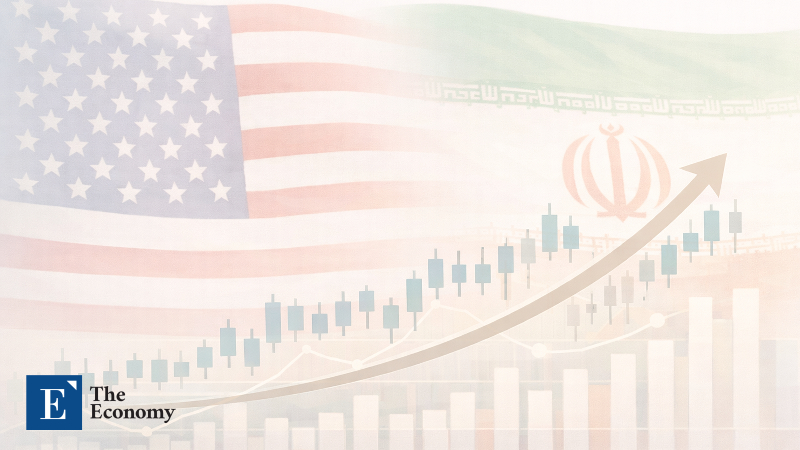
The fallout from the Iran war has jolted the global fertilizer market. As raw-material production hubs across the Middle East have gone offline due to war-related damage, the prolonged closure of the Strait of Hormuz, a critical artery for fertilizer shipments, has further deepened supply disruptions. Farmers around the world are facing mounting difficulties in crop production, sending global food prices onto an upward trajectory and adding fresh inflationary pressure to economies already strained by surging energy costs.
Global Fertilizer Supply Chain on Alert
According to World Bank data released on April 8, global urea prices stood at $726 per ton last month. That marked an 80% increase from a year earlier and a 54% jump from February, bringing prices back to levels seen in the immediate aftermath of Russia’s invasion of Ukraine in 2022. With liquefied natural gas prices, a key input for ammonia production, soaring to extreme levels, Qatar’s urea plants were forced to halt operations following Iranian attacks, while shipments through the Strait of Hormuz were also suspended, effectively paralyzing the supply chain. Gulf states account for roughly 35% of global urea exports and 30% of ammonia exports.
Supplies of phosphate-based fertilizers have also contracted sharply. Sulfuric acid, which is used to process phosphate rock into fertilizer, is made from sulfur, a byproduct of oil and gas refining. The problem is that roughly half of the world’s sulfur trade passes through the Strait of Hormuz. The Middle East-driven supply shock has thus compounded China’s phosphate export curbs, which have been in place since last year. As a result, international prices for phosphate-based fertilizers rose 5% last month from February.
Unlike crude oil, fertilizer does not have internationally coordinated strategic stockpiles, making rapid intervention difficult when supply chains are disrupted. That means large numbers of farmers worldwide, now entering the spring and autumn planting seasons, are struggling to secure adequate supplies. Grain prices are also moving higher under these conditions. Soybean futures rose 4.2% from the previous month and 16.5% from a year earlier to $430 per ton last month. Expanding biodiesel demand also drove soybean oil and palm oil futures up 34.2% and 11.7%, respectively, from a year earlier in the same month. The UN Food and Agriculture Organization’s global food price index for last month also climbed 2.4% from the previous month.
Mounting Price Pressures in the U.S. Cloud Policy Outlook
The disruption is imposing substantial inflationary pressure on economies around the world. The United States is a case in point. In a report released on April 3, Germany’s Commerzbank said that if the war continues through the end of May, U.S. inflation is likely to rise to nearly 4% in the coming months. The report noted that the sharp rise in energy prices seen at U.S. gas stations since early March would begin to show up more fully in March CPI data, adding that gasoline prices, which rose about 20% from February on a seasonally adjusted basis, were the single biggest driver of U.S. inflation. It further projected that while energy-price increases stemming from the Iran war had yet to feed through into a broader rise in prices for goods and services beyond air travel, it was likely only a matter of time.
The Federal Reserve is also closely monitoring inflation developments. On April 8, the Fed released the minutes of the Federal Open Market Committee’s March 17-18 meeting, stating that “some participants judged that there was a strong case for including a ‘two-sided scenario’ in the statement.” In other words, some FOMC participants argued that the Fed should explicitly signal the possibility of both rate cuts and rate hikes going forward. According to the minutes, those participants suggested that if inflation continues to run above the Fed’s 2% target, it may be appropriate to raise the target range for interest rates.
FOMC participants also identified rising energy prices as a key variable shaping the future inflation path. Since the outbreak of the Iran war, international oil prices have climbed above $100 a barrel, generating significant volatility. Most committee members said the process of bringing inflation back down to 2% could proceed more slowly than expected, while the risk of a renewed acceleration in inflation had also increased. The minutes further showed unanimous agreement that monetary policy is not on a preset course and that policy decisions must be made meeting by meeting in response to incoming data.
Although the United States and Iran reached an agreement on April 7 to reopen the Strait of Hormuz, it will likely take considerable time for that decision to be reflected in actual prices. The U.S. Energy Information Administration has also said that it could take months for the reopening of the strait to translate into lower energy prices. Moreover, with oil infrastructure across Gulf producers including the United Arab Emirates, Kuwait, Iraq, Oman and Saudi Arabia sustaining extensive war damage, absolute supply volumes are also likely to decline. Another variable is Iran’s decision to levy transit fees on vessels passing through the Strait of Hormuz, which could raise the cost of oil exports.
China Moves Out of Deflation Risk
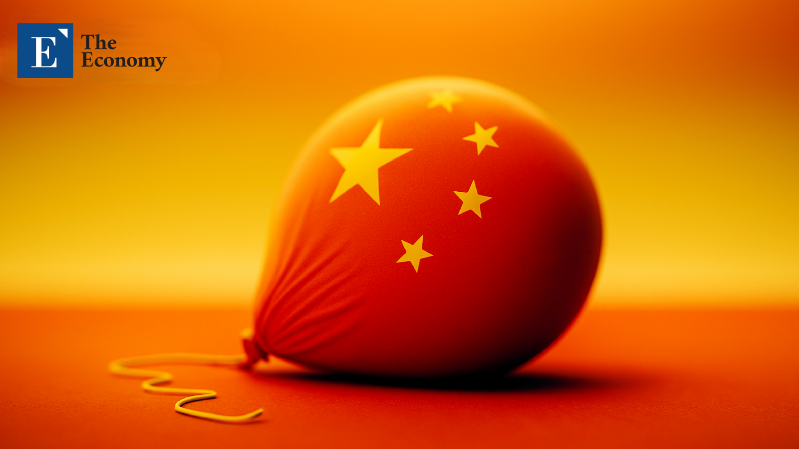
Still, the current situation is not proving uniformly negative for all countries. China, for example, remained stuck in a deflationary environment for an extended period, unlike many major economies that experienced inflation after the COVID-19 pandemic. Prolonged weakness in real estate and domestic demand had suppressed market consumption, while fierce price competition among companies further weighed on pricing power. Added to that was the uncertainty created by last year’s U.S.-driven tariff war, which accelerated the broader slowdown. Against that backdrop, the People’s Bank of China had kept its loan prime rate, the country’s de facto benchmark interest rate, at a low level in an effort to support growth.
That picture has begun to change, however, as international oil prices surged under the impact of the Iran war. Rising crude prices have started to lift consumer prices, easing the deflationary pressure that had weighed heavily on the Chinese economy. According to China’s National Bureau of Statistics, consumer prices in February posted their largest increase in more than three years, and March CPI data due on April 10 are expected to show an even steeper monthly rise, driven by oil-price movements. Signs of change have also emerged in financial markets. Since last month, the PBOC has begun withdrawing liquidity from the market, while long-term bond yields have moved higher, widening the gap between short- and long-term rates. As a result, expectations for additional cuts to the loan prime rate are gradually fading.
Even so, some observers argue that this shift cannot be attributed entirely to the Iran war. Beijing had already been moving to curb excessive price competition among companies as part of a broader effort to pull the economy out of deflation. In fact, China’s industrial profits rose 15% year on year in January and February, indicating a recovery trend, while the long-slumping property market has also shown signs of partial stabilization. Bloomberg reported that as the effects of those government measures gradually eased deflationary pressure, the outbreak of the Iran war further accelerated the rebound in prices.
Oliver Griffin is a policy and tech reporter at The Economy, focusing on the intersection of artificial intelligence, government regulation, and macroeconomic strategy. Based in Dublin, Oliver has reported extensively on European Union policy shifts and their ripple effects across global markets. Prior to joining The Economy, he covered technology policy for an international think tank, producing research cited by major institutions, including the OECD and IMF. Oliver studied political economy at Trinity College Dublin and later completed a master’s in data journalism at Columbia University. His reporting blends field interviews with rigorous statistical analysis, offering readers a nuanced understanding of how policy decisions shape industries and everyday lives. Beyond his newsroom work, Oliver contributes op-eds on ethics in AI and has been a guest commentator on BBC World and CNBC Europe.
Similar Post