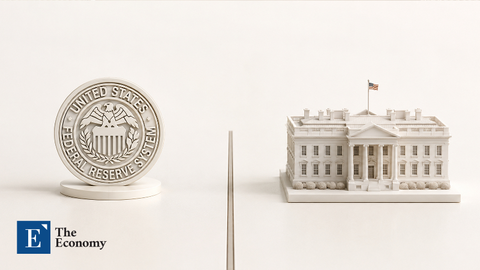
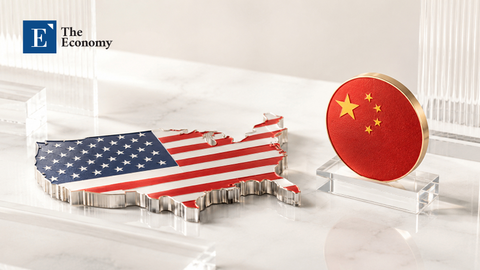
A Pivotal Moment in Trump’s Trade Strategy as Supreme Court Strikes Down Reciprocal Tariffs, Prompting Shift to “Worldwide Tariff”

Niamh O’Sullivan is an Irish editor at The Economy, covering global policy and institutional reform. She studied sociology and European studies at Trinity College Dublin, and brings experience in translating academic and policy content for wider audiences. Her editorial work supports multilingual accessibility and contextual reporting.
Authored On
Modified
Move to Invoke Section 122 and Pursue Section 301 in Parallel
China’s Exit from Punitive Rates Alters Negotiation Dynamics
Japan Says Investment Plan Will Stand; Corporate Refund Issue Lingers
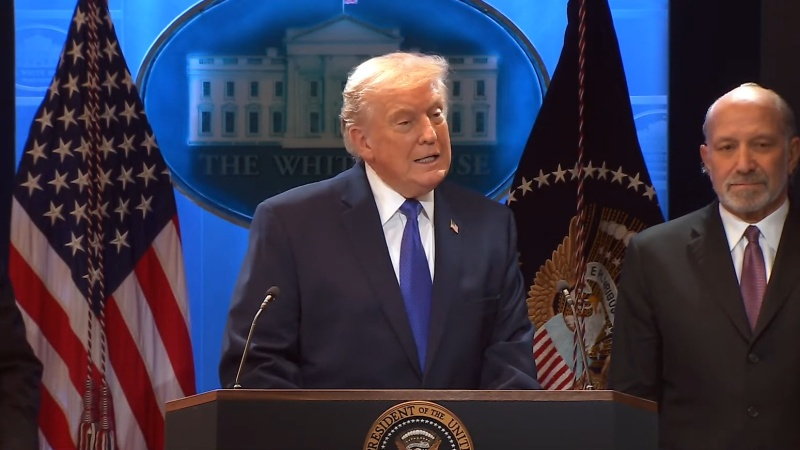
The U.S. Supreme Court’s ruling that President Donald Trump’s reciprocal tariffs were unlawful has forced a sharp turn in the administration’s trade policy. Within hours of the decision, Trump announced a blanket 10% tariff on all countries under a different statutory authority, only to declare the next day that he would raise the rate to 15%. The move quickly drew criticism that it contravened the constitutional principle of separation of powers, placing the new measure at the center of fresh controversy. With the original reciprocal tariffs invalidated and the replacement measure likewise under legal scrutiny, uncertainty in the trade environment has deepened further. The shift is already reverberating through China’s negotiating strategy and the response of U.S. industry.
“Bypassing Congress Violates Separation of Powers”
The Supreme Court ruled on the 20th that Trump’s imposition of reciprocal tariffs under the International Emergency Economic Powers Act (IEEPA) was unlawful. The decision upheld earlier lower-court rulings that had also found the tariffs illegal. In previous high-stakes political moments, the Court had often been perceived as issuing rulings that eased Trump’s legal risks. This time, however, three of the six conservative justices—half of the conservative bloc—cited the Constitution’s allocation of tariff authority to Congress and directly curtailed the president’s trade policy.
With the reciprocal tariff card voided, Trump swiftly unveiled an alternative measure under Section 122 of the Trade Act. The provision authorizes what he called a “Worldwide Tariff,” imposing a 10% duty on imports from all countries. Trump signed an executive order set to take effect at 12:01 a.m. Eastern Time on the 24th. Less than a day later, he criticized the Court’s opinion on his social media platform Truth Social as “absurdly and poorly written” and “extremely anti-American,” adding that he would raise the rate to 15%.
Section 122 permits the president to impose tariffs of up to 15% for 150 days to address balance-of-payments issues, but congressional approval is required for both activation and extension. Observers note that approval is far from assured, particularly given last year’s vote on Canadian tariffs, when some Republican lawmakers broke ranks. The provision, enacted in the 1970s amid dollar and exchange-rate turmoil to address balance-of-payments imbalances, was not designed as a broad instrument of trade pressure, prompting criticism that its use in this context amounts to a misuse of statutory purpose.
Reuters noted that while Section 122 allows the president to impose tariffs of up to 15%, the measure could itself face legal challenges. Neal Katyal, the lead attorney for the plaintiffs and a former acting U.S. solicitor general, said, “Only Congress can impose taxes in the United States,” emphasizing that no president in history has ever imposed tariffs under Section 122. Critics argue that imposing sweeping tariffs without congressional involvement may violate the separation of powers.
Trump has also directed the initiation of an investigation under Section 301 of the Trade Act. Section 301 authorizes retaliatory measures against unfair and discriminatory trade practices, but implementation typically takes several months and can extend beyond a year. As a result, completing the process within the 150-day window of the Section 122 tariffs presents significant timing constraints. Other options, such as expanding product-specific tariffs under Section 232 of the Trade Expansion Act, have been floated, though deteriorating public opinion on tariffs suggests further political costs. In a poll conducted by Ipsos for ABC News and The Washington Post, 64% of Americans said they opposed the tariff policy.
U.S. Trade Leverage Over China Weakens
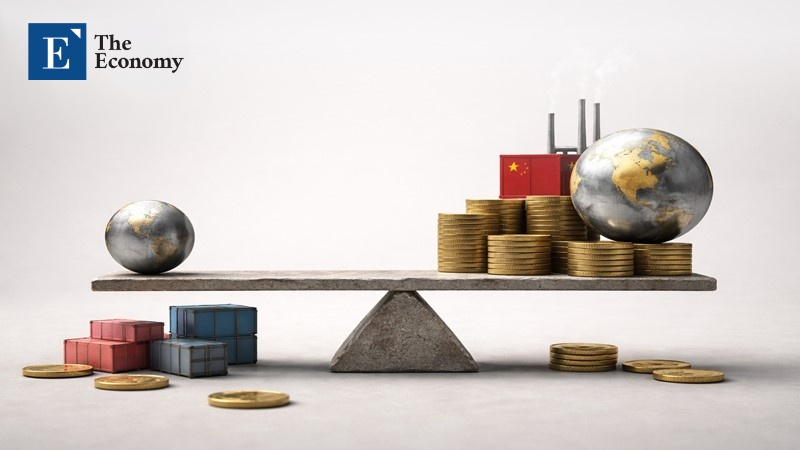
The Court’s decision and Trump’s shift to a 15% worldwide tariff have introduced a new calculus for China, which had borne the brunt of the prior punitive rates. By invalidating the earlier measures, the Court effectively nullified the additional 20% tariffs imposed by the second Trump administration—comprising 10% in reciprocal tariffs and 10% tied to fentanyl. China now faces the same uniform 15% tariff rate applied to U.S. allies. Compared with the previous structure, the nominal burden has declined, and because Section 122 tariffs are limited to 150 days, they are viewed as less viable for sustained long-term pressure.
Within China, the shift has been interpreted through the lens of relative positioning. Gao Lingyun, a researcher at the Chinese Academy of Social Sciences, told state media that “all countries are effectively standing at the same starting line,” adding that if tariffs are applied uniformly, the relative competitive landscape will not change significantly and the actual impact on China will be limited. While criticizing U.S. tariff decisions as highly arbitrary and accusing Trump of wielding tariffs as a political weapon, Gao also noted that the newly announced 15% blanket tariff represents a sudden policy adjustment whose effects are difficult to quantify at this stage.
The ruling may also alter the dynamics of upcoming negotiations. Trump is scheduled to visit Beijing on the 31st of next month, marking the first visit by a U.S. president to China since 2017. With little more than a month before a planned summit, the invalidation of the reciprocal tariffs could shift the balance of leverage. Shi Yinhong, a professor at Renmin University of China, said the Supreme Court’s decision had weakened Trump’s trade leverage over China. A source within the Chinese Communist Party likewise suggested that with U.S. pressure tools reduced, China could offer fewer concessions than it had prepared before the ruling.
After escalating into a tariff war last year, the two countries agreed at a late-October summit in South Korea to suspend high tariffs and trade retaliation for one year. Even so, the United States subsequently imposed an additional 20% in tariffs through reciprocal and fentanyl-related measures, while China responded with retaliatory tariffs, export controls on rare earths, and a halt to certain U.S. agricultural imports. Scott Kennedy of the Center for Strategic and International Studies said Trump was already on the defensive over rare earths and that the Court’s ruling likely reinforced that vulnerability from Beijing’s perspective.
Japan Watches, Keeps Investment Intact
Within the United States, industry groups have begun reassessing their response strategies. The Wall Street Journal reported on the 22nd that while some executives expressed relief immediately after the ruling, uncertainty has intensified over whether previously paid tariffs will be refunded and whether substitute tariffs could be raised further. Farooq Kathwari, chief executive of furniture maker Ethan Allen, told the Journal that although more clarity was needed in the coming days, he was concerned that companies might still be required to pay tariffs in the absence of refund guidance.
Debate has also intensified over the scale of potential refunds. Importers argue they should be able to swiftly recover tariffs already paid, but legal experts caution that automatic refunds are unlikely and that companies may need to pursue separate litigation. Some firms have sought liquidity by assigning future refund claims to third parties. Atlanta-based Kids2, a baby products company, estimated potential refunds at $15 million and transferred roughly half of that amount to a hedge fund to recoup part of its costs.
Externally, Japan’s response has drawn attention. Following the Supreme Court’s invalidation of the reciprocal tariffs, the Japanese government said it would maintain its $550 billion investment plan in the United States. Officials cited the fact that the uniform 15% tariff on Japanese exports would remain unchanged under the replacement regime, as would product-specific tariffs on automobiles and steel. NHK, citing government sources, reported that even if reciprocal tariffs included in the broader agreement package are not implemented, tariffs on Japanese automobiles will remain at current levels, and Japan intends to honor its agreement with the United States.
Some voices in Japanese politics, however, have raised concerns about the erosion of predictability in tariff policy. Itsunori Onodera, head of the Liberal Democratic Party’s Tax Commission, said companies formulate investment plans based on expected tariff levels, and warned that if policies become this disorderly, Japanese firms could reconsider their U.S. footprint. He added that it is only natural to demand refunds for tariffs that were unlawfully collected. As confusion over refunds in the United States intersects with Japan’s decision to hold its investment course, the post-ruling trade environment is entering a phase marked by heightened uncertainty in corporate decision-making.
Niamh O’Sullivan is an Irish editor at The Economy, covering global policy and institutional reform. She studied sociology and European studies at Trinity College Dublin, and brings experience in translating academic and policy content for wider audiences. Her editorial work supports multilingual accessibility and contextual reporting.
Similar Post