"Hybrid Bonding Deployment" Samsung Electronics Moves to Cement HBM4 Leadership as SK Hynix and Micron Intensify Pursuit

Authored On
Modified
Samsung Electronics Establishes Dedicated HBM4 Hybrid Bonding Line to Consolidate Lead
SK Hynix, Armed with Proven Yields, Projected to Command Majority Share in Vera Rubin HBM4 Supply Chain
Micron Categorically Denies “HBM4 Supply Failure” Claims, Emphasizes Mass Production and Shipment Expansion
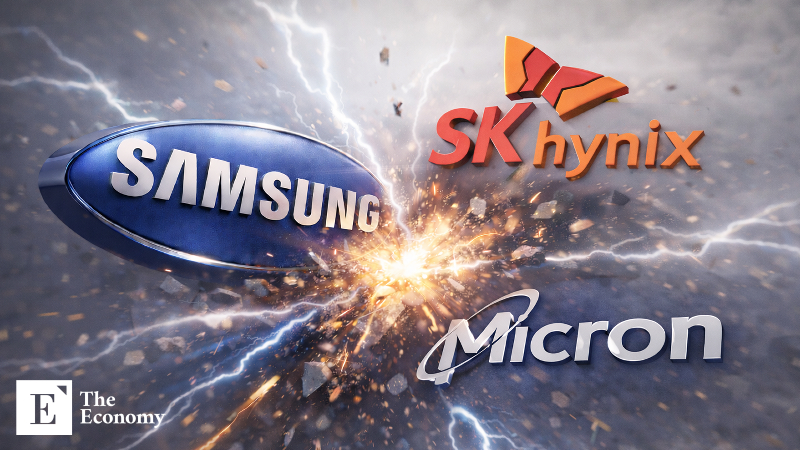
Samsung Electronics is sequentially introducing equipment for a dedicated hybrid bonding line for sixth-generation High Bandwidth Memory (HBM4) at its domestic production facilities. The additional investment is aimed at further enhancing the competitiveness of its HBM4 products, which were recently shipped in mass production for the first time globally. While Samsung has effectively secured an early lead in the HBM4 market, rivals SK Hynix and Micron are likewise accelerating efforts to supply HBM4 for NVIDIA, mobilizing full-scale resources to reinforce their competitive positioning.
Samsung’s Strategic Bet on HBM
On the 18th, Taiwan-based IT outlet DigiTimes reported that Samsung Electronics is constructing a dedicated HBM4 hybrid bonding production line at its Cheonan campus, with equipment move-in and performance validation scheduled to commence in March. The line is initially focused on mass production of HBM4, with plans to expand output to HBM4E thereafter. Hybrid bonding is a next-generation packaging technology that eliminates micro-bumps between chips and directly connects copper interconnects. The application of this technology reduces inter-chip spacing, mitigates heat generation, and enhances data transfer speeds.
The move is widely interpreted as an effort to reinforce the competitiveness of HBM4, for which mass production has recently begun in earnest. On the 12th, Samsung officially announced the world’s first mass production shipment of its 12-layer HBM4 product. Leveraging performance leadership, the company has moved to the forefront of the HBM4 market race. Samsung adopted its most advanced 1c DRAM process (10-nanometer-class, sixth generation) for HBM4 fabrication and applied a 4-nanometer process to the base die—the bottom-most die in the HBM stack—offering advantages in performance and power efficiency. As a result, Samsung’s HBM4 achieves operating speeds of 11.7 gigabits per second. This represents approximately a 46% improvement over the 8 gigabits per second benchmark set by the Joint Electron Device Engineering Council (JEDEC) and exceeds NVIDIA’s stipulated requirement of 10 to 11 gigabits per second.
Samsung has also indicated plans to initiate mass production procedures for its next-generation HBM4E within the year, signaling its intent to secure a decisive edge in future contract competition. Industry projections had initially set HBM4E’s target data processing speed at 3.3 terabytes per second. However, with HBM4 already achieving 3.3 terabytes per second, HBM4E’s actual performance is likely to improve further, potentially reaching around 4.0 terabytes per second.
Can SK Hynix Sustain Its Preferred Supplier Status?
As Samsung rapidly expands its influence in the HBM market, SK Hynix is preparing to commence full-scale mass production shipments at a slightly later pace. Although SK Hynix established the world’s first HBM4 mass production system in September of last year, meaningful supply volumes have yet to materialize due to revisions made to certain HBM4 specifications to meet NVIDIA’s requirements. The company has since focused on continuous product optimization and is expected to begin substantive mass production shipments in the near term.
SK Hynix’s HBM4 employs TSMC’s 12-nanometer base die and its 1b DRAM process (10-nanometer-class, fifth generation), identical to those used in HBM3E. The strategy reflects reliance on a prior-generation technology node relative to Samsung. At present, SK Hynix’s HBM4 is understood to meet NVIDIA’s required performance thresholds. During a conference call last month, the company stated, “Achieving customer-required performance based on the 1b process currently applied to HBM3E is a significant accomplishment,” adding that it aims to attain HBM3E-level yields through its proprietary Advanced MR-MUF packaging technology.
Market observers believe SK Hynix is well positioned to maintain its preferred supplier status for some time, underpinned by its dominant market share. The company secured its role as NVIDIA’s preferred supplier in 2023 on the strength of its HBM3 supply capacity and currently provides more than 70% of HBM3E volumes incorporated into NVIDIA’s current-generation Blackwell accelerators. This track record underscores validated yield stability and performance, in contrast to Samsung’s setback in the HBM3E competition. In NVIDIA’s next-generation artificial intelligence accelerator, Vera Rubin, SK Hynix is projected to command approximately 60% of the HBM4 supply chain.
NVIDIA continues to recognize SK Hynix as a core HBM4 supplier. On the 5th, SK Group Chairman Chey Tae-won and NVIDIA Chief Executive Officer Jensen Huang held an informal meeting at a Korean fried chicken restaurant, “99 Chicken,” in Santa Clara, California. During the gathering, Huang reportedly urged SK Hynix engineers to ensure uninterrupted supply of top-performance HBM4. In a toast, he remarked, “AI accelerators and HBM4 represent astonishing, exceptional, and the most challenging technologies in the world,” expressing confidence that their round-the-clock efforts would deliver outstanding results. He further acknowledged the demanding development schedule for HBM4 and Vera Rubin, affirming his trust in SK Hynix and emphasizing the opportunity for both companies to demonstrate technological excellence together.
Micron Signals Confidence in HBM4
Micron, another major memory manufacturer alongside Samsung and SK Hynix, has faced speculation that it may be unable to supply HBM4 for the initial production volumes of Vera Rubin. Semiconductor analysis firm SemiAnalysis recently reported that there were no clear indications of NVIDIA placing HBM4 orders with Micron and suggested that the company could encounter difficulties supplying HBM4 for up to 12 months following Vera Rubin’s launch. Projections for Micron’s HBM4 share in Vera Rubin were accordingly revised downward from around 5% to 0%.
Micron has categorically rejected such claims. On the 11th, at the Wolfe Research Auto Tech and Semiconductor Conference, Micron Chief Financial Officer Mark Murphy stated, “There have been some inaccurate reports regarding HBM4, but Micron has already entered mass production of HBM4.” He added, “Micron has begun shipping HBM4 to customers, and we expect shipment volumes to ramp up meaningfully in the first quarter of this year,” noting that this timeline is one quarter earlier than previously indicated during the December earnings announcement.
Murphy further stated, “As emphasized several months ago, our HBM supply for this year is already sold out,” adding that yields, including HBM4, are progressing according to plan. He asserted, “Micron’s HBM4 delivers speeds exceeding 11 gigabits per second, and we have strong confidence in product performance, quality, and reliability.” He also noted that customers have proactively requested multi-year agreements spanning three to five years or longer, containing specific contractual provisions, adding that customers recognize they can secure best-in-class products through collaboration with Micron.
Similar Post