The Adoption Imperative: Why LLM adoption Matters More Than Sovereign Models

David O’Neill is a Professor of AI/Policy at the Gordon School of Business, SIAI, based in Switzerland. His work explores the intersection of AI, quantitative finance, and policy-oriented educational design, with particular attention to executive-level and institutional learning frameworks.
In addition to his academic role, he oversees the operational and financial administration of SIAI’s education programs in Europe, contributing to governance, compliance, and the integration of AI methodologies into policy and investment-oriented curricula.
Authored On
Modified
The issue is LLM adoption, not ownership
Regulation matters more than sovereignty
Implementation beats symbolism

When large language models (LLMs) first became publicly available, talks frequently focused on a race to own the technology – the idea that a single national model would guarantee control, maintain standards, and ensure safety. This perspective, though, seems to be losing relevance. Getting LLMs into educators' hands, rather than simply owning the models, is key to driving positive change in education. According to a recent McKinsey report, 65% of surveyed organizations in early 2024 said they were regularly using generative AI, nearly double the figure from ten months earlier. This number illustrates the importance of investing in making these models practical for schools. Instead of focusing on creating a large, government-controlled model that may go unused or be poorly suited to specific needs, we ought to prioritize practical application.
LLM implementation: The Illusion of Complete Control
The initial idea of a nationally controlled model was based on the assumption that only a few entities could create these advanced models. The idea was that owning the model's code would give a country an advantage, both strategically and in education. This assumption of scarcity is no longer accurate. Open-source projects, adaptable designs, and competitive cloud services now provide numerous viable options. The crucial point in education is practical: having a model stored on a government server does nothing for teachers who need customized grading guides, secure prompts, or integration with existing grading systems. Schools require models that can be easily tested, adjusted, and supported within their particular environments. These properties are best achieved through rapid, local implementation, rather than simply owning the technology.
Pursuing a single, nationally controlled model carries a real cost. Developing a large model requires considerable investment, scarce expertise, and extended schedules. These resources could instead fund local trials, teacher training programs, and evaluation projects. These alternative investments could lead to faster, measurable enhancements in student learning. The issue isn't simply about technology, but about how to best use limited public funds to improve classroom learning. Evidence suggests that locally focused adaptation and support for implementation will yield better results than a one-time, government-controlled development.
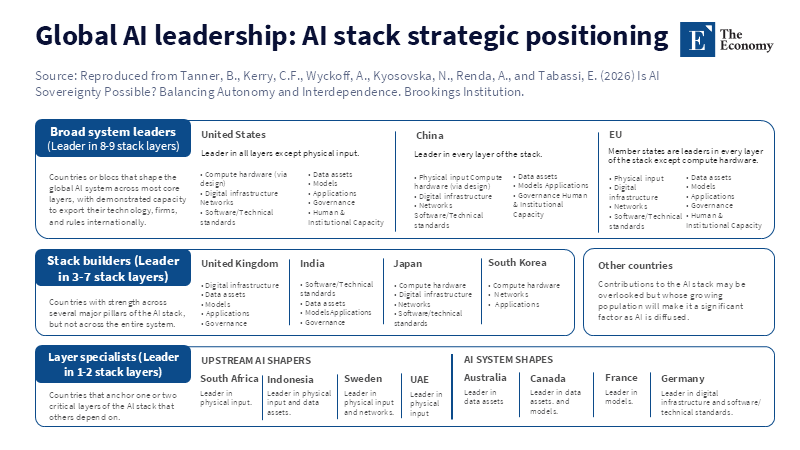
The supply side supports this idea. Community-driven model hubs and open-source systems became operational tools during 2023-24. These hubs offer pre-trained models, adapters, model information, and deployment tools that allow local teams to quickly conduct tests in a safe environment. This change has reduced the barriers to experimentation. For example, a school district can fine-tune a smaller model to aid reading or support a minority language much faster than waiting for a national training program to deliver a solution. In this environment, actual control comes from using, testing, and supporting teachers, not from owning the underlying technology.
LLM implementation: Regulation and Safety Measures
While the availability and access to these models are global, governance is the key to directing outcomes. In 2024, the EU finalized guidelines for AI. These guidelines aim at high-risk applications, require transparency, and set standards for systems that impact people. The core idea of these rules is important for schools: it assigns responsibility to producers and consumers, and it incorporates checks into the decision-making used when purchasing these systems. This method prioritizes safe use. It doesn’t try to control where the models originate; instead, it enables schools to choose, test, and document what they use.
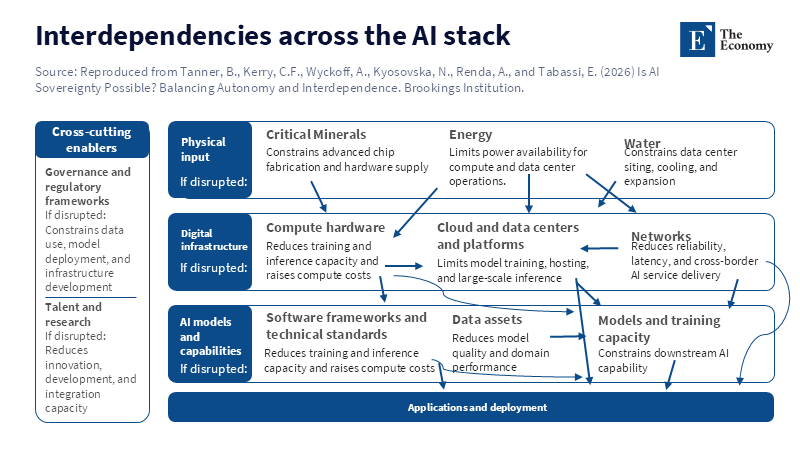
Legal guidelines alone are not enough to ensure success. For example, a law that requires assessments is only helpful if schools can access testing platforms, share evaluation data, and receive guidance on interpreting test results. Regulators should pair requirements with resources, for example, shared testing centers, model information standards, and example contracts. This would make compliance achievable for smaller districts. The U.S. and other places have taken similar steps by issuing guidelines and purchasing standards that stress careful buying and risk assessment. The main point is simple: combining laws with practical resources leads to safer, faster implementation.
Different governments use different approaches. China has focused on reviewing these models before release and tightening government control. Other democracies prefer focusing on what happens after the models are released and on using purchasing rules. Regardless of the approach, the result for education is the same: require transparency from vendors, fund local testing using data that represents the student body, and include audit rights in contracts. This builds safety on a large scale while keeping the market open to new ideas.
LLM implementation: Addressing the Implementation Gap
While tools and regulations are important, they are not enough on their own. Since 2023, there's been a theme of projects being tested but never fully adopted. Experts have cautioned that many tests of generative AI would be abandoned without careful planning for data and governance. This is an organizational and technical issue, rather than a problem with the models themselves. Schools' data systems, integration with assessment tools, and clear lines of responsibility. Without these foundations, the models will likely go unused.
The Nordic countries present a clearer strategy. Instead of competing to create a government-controlled model, these countries have invested in teacher training, shared testing tools, and standards that allow different systems to work together. This effective approach has resulted in quicker adoption of classroom practices, better support for minority languages, and clearer guidance for using these tools to help students learn and provide customized support. International studies focused on AI in education emphasize that fairness and inclusion depend on targeted capacity-building rather than government-controlled models.
Purchasing practices are where policies become real. School districts must follow privacy regulations, purchasing laws, and tight budgets. What they require are contracts that confirm data is stored locally, include model information, provide reproducible test results, and offer plans for responding to problems. These contractual tools create actual control over results, even if a model is hosted in another country. A well-equipped purchasing team becomes the instrument of practical control: changing learning goals into legal and technical tests that must be met.
LLM implementation: Steps forTeachers and Administratorss
If implementing LLMs is the main goal right now, then funding, timelines, and program designs should shift. Instead of pouring money into speculative national training projects, we should share infrastructure that helps every school adopt these tools safely and based on evidence. We should also create certified purchasing processes that set minimum safety standards and require transparency from vendors. Furthermore, we should also fund integration grants and local support centers that assist districts inembedding thesee models into teaching practices. Finally, paying for teacher training linked to actual classroom outcomes will yield faster learning improvements and lower risk.
Clear requirements can help. For example, requiring a model information sheet and testing on typical curriculum tasks before purchasing. Also, logging what is being asked when using these tools and guaranteeing there is traceability for high-stakes tasks. Insisting that vendors provide accessible audit logs and explain how their assessments might fail. According to an article by Sakshi Ahuja and Subhankar Mishra, developing public platforms that verify vendor claims using transparent evaluation methods can promote greater accountability and trustworthiness among companies designing educational technology products.
Those who support government-controlled projects may warn about dependency and international risks. These concerns are valid. However, concentrating risk in a single government program is also risky. A report by Yan et al. highlights that adopting a defensive approach to incorporate large language models in schools—such as using multiple suppliers, securing contractual exit options, and maintaining backup solutions for core services—can help preserve flexibility and reduce risks, while avoiding the significant costs and delays associated with government-led training initiatives.
To summarize, implementing LLMs is where theory meets practice. Models are becoming more common. Markets are becoming more global. Laws and standards are focusing on safety based on use rather than on where models originate. Education systems that want measurable results should improve their implementation: revising purchasing practices to require evidence, funding teacher skill development, and creating public testing platforms that certify models for real classrooms. These actions will lead to practical control over outcomes, faster learning improvements for students, and safer classrooms.
The views expressed in this article are those of the author(s) and do not necessarily reflect the official position of The Economy or its affiliates.
References
Baidu Research (2023) ERNIE Bot announcement and technical overview. Beijing: Baidu Research.
Bubeck, S., Chandrasekaran, V., Eldan, R., Gehrke, J., Horvitz, E., Kamar, E., Lee, P., Lee, Y.T., Li, Y., Lundberg, S., Nori, H., Palangi, H., Ribeiro, M.T. and Zhang, Y. (2023) ‘Sparks of Artificial General Intelligence: Early experiments with GPT-4’, Microsoft Research.
European Parliament and Council of the European Union (2024) Regulation (EU) 2024/1689 laying down harmonised rules on artificial intelligence (Artificial Intelligence Act). Official Journal of the European Union.
Gartner (2024) Gartner predicts 30% of generative AI projects will be abandoned after proof of concept by end of 2025. Stamford, CT: Gartner Research.
Hugging Face (2024) The State of Open Source AI 2024. New York: Hugging Face Research.
McElheran, K., Bonner, S., Brynjolfsson, E., and Tambe, P. (2024) The State of AI in Early 2024: Gen AI adoption spikes and starts to generate value. McKinsey Global Institute.
McElheran, K., Brynjolfsson, E., and Tambe, P. (2023) Generative AI adoption and enterprise transformation survey results. McKinsey Global Institute.
Organisation for Economic Co-operation and Development (OECD) (2024) The Potential Impact of Artificial Intelligence on Equity and Inclusion in Education. Paris: OECD Publishing.
OpenAI (2023–2025) ChatGPT usage reports and product transparency updates. San Francisco: OpenAI.
Qwen Team (2024) Qwen technical report and model release documentation. Alibaba Cloud.
Renda, A. (2024) AI sovereignty and strategic autonomy in Europe. Brussels: Centre for European Policy Studies.
Toner, H., and Whittlestone, J. (2023) Governing frontier AI: Regulatory pathways and institutional design. Washington, DC: Brookings Institution.
Zenglein, M.J. and Holzmann, A. (2024) China’s generative AI regulation framework. Berlin: MERICS (Mercator Institute for China Studies).
David O’Neill is a Professor of AI/Policy at the Gordon School of Business, SIAI, based in Switzerland. His work explores the intersection of AI, quantitative finance, and policy-oriented educational design, with particular attention to executive-level and institutional learning frameworks.
In addition to his academic role, he oversees the operational and financial administration of SIAI’s education programs in Europe, contributing to governance, compliance, and the integration of AI methodologies into policy and investment-oriented curricula.