New York State Scraps Robotaxi Authorization Bill Amid Public Backlash, 21st-Century Luddite Movement Persists

Authored On
Modified
U.S. New York State Cancellation of Commercial Robotaxi Authorization Plan Amid Intense Public Opposition
Escalating Concerns Over Job Displacement and Safety Risks, Widespread Backlash
Resident Complaints Over Parking Space Encroachment and Daily Disruptions Caused by Robotaxis
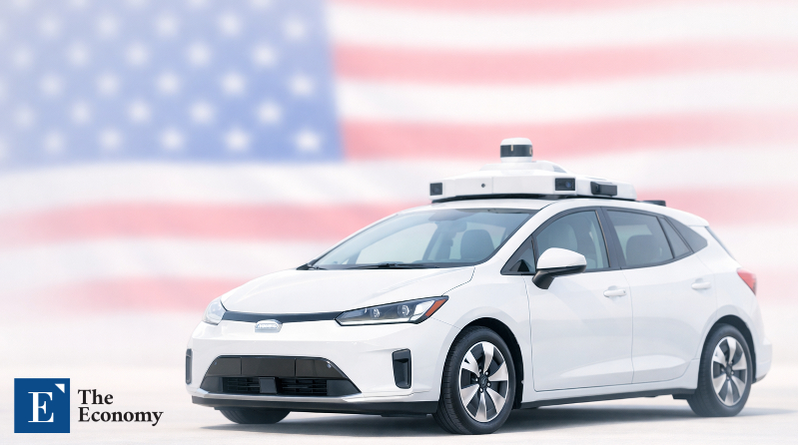
New York State has abruptly withdrawn its plan to authorize commercial robotaxi operations. Persistent public opposition to robotaxis, sustained over several years, has effectively stalled the expansion strategies of autonomous vehicle companies. Opponents of robotaxi deployment cite a range of potential adverse effects associated with commercialization, including job displacement, safety hazards, and a deterioration in residents’ quality of life.
Withdrawal of New York State Autonomous Robotaxi Pilot Proposal
On the 19th (local time), Reuters reported that New York Governor Kathy Hochul had withdrawn legislation that would have permitted commercial robotaxi services within the state. In a statement released the same day, Governor Hochul’s spokesperson, Sean Butler, explained the rationale behind the decision, stating that “after discussions with stakeholders, including the legislature, it became clear that sufficient support to advance the proposal had not materialized.” The bill had included provisions allowing autonomous vehicle companies to pilot commercial services without a human driver inside the vehicle in certain areas of the state, excluding New York City.
The move has also impeded the expansion strategy of Waymo, Google’s self-driving subsidiary. Waymo had been laying the groundwork to enter the vast New York market, including securing approval last year to conduct test drives in New York City with trained specialists onboard. In response to the state’s decision, Waymo told Reuters, “While we are disappointed with the governor’s decision, our commitment to providing service in New York remains unchanged,” adding that it would continue working with the state legislature to advance the issue.
The unfavorable turn of events for autonomous vehicle companies such as Waymo reflects strong opposition from industry groups, including the New York Taxi Workers Alliance (NYTWA). These organizations have consistently argued that robotaxis threaten road safety and jeopardize the livelihoods of tens of thousands of drivers. Bhairavi Desai, who leads the NYTWA, welcomed the bill’s withdrawal, stating that “Waymo sought to divide us by targeting cities like Buffalo and Rochester, but they underestimated the workers and are now facing the consequences.”
Entrenched Anti-Robotaxi Sentiment Across the United States
Public resistance to robotaxis in the United States has persisted for years, with what some describe as a 21st-century iteration of the Luddite movement emerging in various locales. In 2023, a civic group in San Francisco placed a traffic cone on the hood of a driverless robotaxi operated by General Motors’ Cruise in the middle of a street. The act was intended as a protest against repeated robotaxi-related accidents in the city. When a cone is placed over the hood area housing the autonomous driving sensors, normal operation of the robotaxi becomes virtually impossible.
In February of last year, a crowd set a robotaxi on fire near San Francisco’s Chinatown. At the time, fireworks were being set off in celebration of the Lunar New Year. A Waymo robotaxi passing through the area was temporarily halted by traffic ahead, at which point people surrounded the vehicle. One individual climbed onto the hood and began smashing the windshield, while another, riding a skateboard, mounted the vehicle and shattered its windows. The crowd applauded as they watched, and within minutes, the Waymo vehicle was engulfed in flames amid thick black smoke.
In June of last year, protests erupted in Austin, Texas, ahead of the launch of Tesla’s robotaxi service. At the demonstration, a Tesla Model Y was shown colliding with a child-sized mannequin after ignoring a school bus’s flashing warning lights and stop signal. During the demonstration, Tesla’s Full Self-Driving (FSD) software repeated the same error eight times, amplifying public anxiety. Stephanie Gomez, a protest participant, told CNBC that she lacked confidence in Tesla’s safety standards and criticized the lack of transparency regarding how the robotaxi system operates. Another participant, Silvia Revelis, stated, “I oppose Elon Musk’s political activities, but safety is my greatest concern,” adding that “citizens have not received the results of safety inspections related to robotaxis.”
Accumulating Accident Cases and Mounting Daily Inconveniences
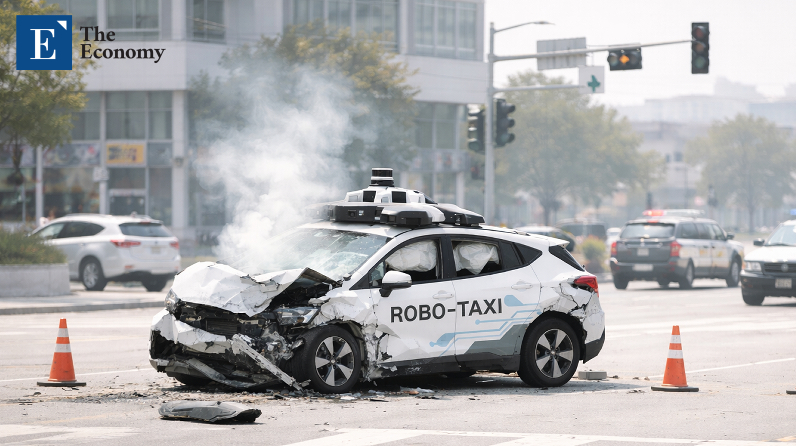
The persistence of public backlash reflects a significant erosion of trust in the safety of autonomous vehicles within American society. According to the National Highway Traffic Safety Administration (NHTSA), there were 1,793 reported crashes involving vehicles equipped with automated driving systems and advanced driver assistance systems (ADS and ADAS) in the United States between January and mid-November of last year. On a cumulative basis, more than 5,000 crashes have been reported since 2019, with approximately 7.4 percent resulting in injuries and 1.2 percent leading to fatalities, according to analyses.
Beyond safety concerns, instances of robotaxis causing daily inconveniences for residents are also on the rise. According to the San Francisco Chronicle, a noticeable increase in Waymo robotaxis parked along streets has recently been observed in the Mission District, one of San Francisco’s busiest neighborhoods. In an effort to reduce so-called “zombie miles” driven without passengers, Waymo has adopted a strategy of short-term curbside parking for its vehicles. Waymo’s weekly paid rides have expanded by more than 80 percent, rising from approximately 250,000 in April of last year to 450,000 recently. The increase has correspondingly led to a greater number of robotaxis occupying curbside parking spaces.
The issue is that this strategy has significantly intensified parking difficulties for local residents. Contrary to expectations that autonomous technology would alleviate complex urban traffic and parking challenges, residents report that even those holding valid permits now struggle to secure parking spaces. Local resident Kyle Grockman told the San Francisco Chronicle, “It is questionable whether San Francisco’s urban infrastructure is truly prepared for a situation in which it is occupied by autonomous vehicles.”
Similar Post