[Trump-Style Negotiation] “Start Extreme First” — Trump’s Disruptive Bargaining Playbook Faces Erosion in Iran War

Aoife Brennan is a contributing writer for The Economy, with a focus on education, youth, and societal change. Based in Limerick, she holds a degree in political communication from Queen’s University Belfast. Aoife’s work draws connections between cultural narratives and public discourse in Europe and Asia.
Authored On
Modified
Trump leverages anchoring effect, secures negotiating leverage through extreme opening demands
Similar tactics deployed in Panama Canal dispute and tariff wars
Iran remains unmoved by Trump-style “threat diplomacy,” testing sustainability of pressure strategy
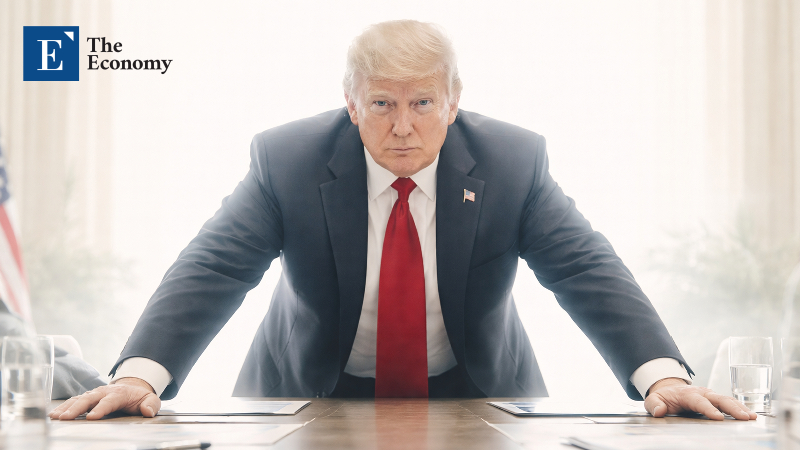
U.S. President Donald Trump has been leveraging his signature negotiation strategy to secure diplomatic leverage. The approach hinges on deploying proposals bordering on coercion to bring counterparties to the negotiating table, ultimately extracting desired concessions. However, Iran, currently engaged in conflict with the United States and Israel, has maintained a hardline stance despite a series of ultimatums from Trump. This has prompted growing assessments that Trump’s pressure-based tactics may be losing effectiveness.
Trump’s Persistence with Extreme Diplomatic Tactics
According to political and diplomatic circles on the 7th, Trump has consistently adhered to an aggressive negotiation strategy since the launch of his second administration. The method involves presenting extreme initial demands and steering the situation to dominate negotiations. This reflects a calculated use of the so-called “anchoring effect.” The anchoring effect refers to a cognitive bias in which the first offer or reference point in a negotiation significantly influences the final outcome, shaping subsequent judgments.
In his autobiography The Art of the Deal, Trump wrote, “My style of deal-making is quite simple and straightforward,” adding, “I aim very high, and then I just keep pushing and pushing and pushing to get what I’m after.” Conventional negotiation theory suggests that such an approach may undermine effectiveness, as initiating talks with extreme positions can erode trust and halt further discussions. However, Trump operates from the position of the U.S. presidency, which carries unparalleled negotiating leverage. Counterparties cannot easily dismiss his demands without risking substantial losses.
This negotiation strategy proved effective during the global tariff conflicts he initiated. Last year, Trump announced plans to impose a 25% tariff on Canada and Mexico, citing issues such as illegal immigration from Mexico and fentanyl trafficking from Canada. Both countries initially responded with strong opposition and threatened retaliatory tariffs, yet ultimately agreed to enter negotiations with the United States. The outcome saw Mexico and Canada commit to strengthening border controls, while the U.S. agreed to suspend tariff increases.
Precedents of Trump-Style Negotiation Success
A similar strategy was deployed in the dispute over the Panama Canal’s operational control. The canal, which handles approximately 5% of global maritime trade, had been operated through CK Hutchison, a conglomerate under Hong Kong tycoon Li Ka-shing. Upon returning to the White House in January last year, Trump asserted that the canal had effectively fallen under Chinese control and pledged to reclaim the authority the United States had transferred in 1999.
Subsequently, in March last year, CK Hutchison agreed to sell a 90% stake in the entities operating the Balboa and Cristobal ports within the canal to a consortium that included U.S.-based BlackRock. However, the Chinese government opposed the move, insisting that China COSCO Shipping Corporation (COSCO), a state-owned enterprise, should secure a controlling stake and veto power in the new port operating company. The tripartite standoff was partially resolved in January when Panama’s Supreme Court ruled against CK Hutchison, determining that its 2021 extension of port operation rights for 25 years without a competitive bidding process violated the constitution. As a result, CK Hutchison lost its operating rights and withdrew from the port facilities.
Trump also employed similar pressure tactics in negotiations with Ukrainian President Volodymyr Zelensky. He displayed a dismissive stance toward Zelensky in public settings while leveraging U.S. military aid and diplomatic support as conditional bargaining tools. This approach is interpreted as a dual-pronged strategy aimed at pressuring Ukraine while shifting postwar security guarantees and defense burdens onto Europe. Trump has repeatedly asserted that Europe should bear primary responsibility for Ukraine’s security and has demanded that NATO allies significantly increase their defense spending contributions.
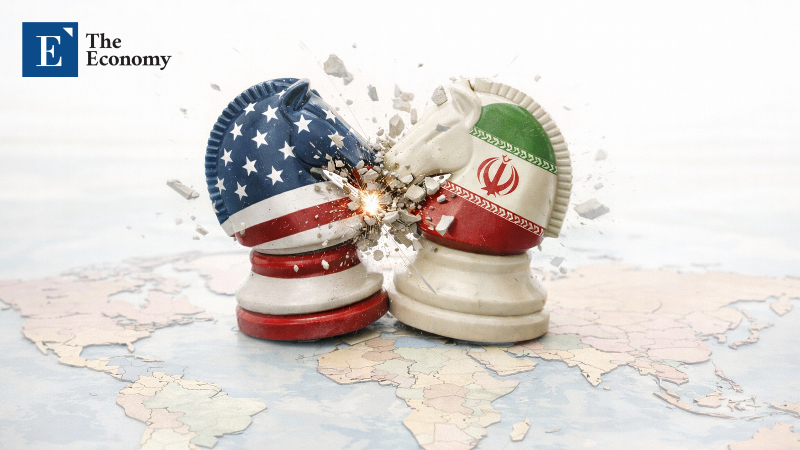
Iran Maintains Hardline Stance Amid Trump Pressure
The emerging challenge lies in the apparent diminishing effectiveness of Trump’s negotiation strategy. On the 4th, Trump posted on his social media platform Truth Social, stating, “Remember, I gave Iran 10 days to negotiate or open the Strait of Hormuz,” adding, “Time is running out.” He further warned, “They have 48 hours before hell comes down on them.” Previously, on the 26th of last month, he had set a deadline for a potential strike on Iranian power plants at 8 p.m. Eastern Time on the 6th.
Iran, however, dismissed these threats outright. According to AFP, on the same day, General Ali Abdollahi Alivadi of the Khatam al-Anbiya Central Headquarters, which commands Iran’s armed forces, described Trump’s ultimatum as “powerless, anxious, irrational, and foolish.” He added, “The simple meaning of this message is that the gates of hell will open toward you.” Subsequently, on the 5th, Trump posted “Tuesday (7th), 8 p.m. Eastern Time!” on Truth Social, effectively extending the deadline by one day. The move is interpreted as an attempt to secure additional time for negotiation progress.
Iran has already rejected a proposed temporary ceasefire, instead demanding a permanent end to the war. On the 6th, Iranian Foreign Ministry spokesperson Esmail Baghaei stated via the state-run IRNA news agency, “The goal is to end the war and prevent its recurrence,” adding that “a temporary ceasefire would only allow the other side time to regroup and continue the war.” Iran has reportedly conveyed its position through mediating countries, demanding not only a complete cessation of hostilities but also sanctions relief, postwar reconstruction, and the establishment of a framework to ensure safe navigation through the Strait of Hormuz. On the same day, Trump, speaking to reporters during the White House Easter Egg Roll event, described the fact that Iran had presented proposals as “a significant development,” while continuing to pressure Tehran to adopt a more forward-leaning stance.
Aoife Brennan is a contributing writer for The Economy, with a focus on education, youth, and societal change. Based in Limerick, she holds a degree in political communication from Queen’s University Belfast. Aoife’s work draws connections between cultural narratives and public discourse in Europe and Asia.
Similar Post