"Supply Chain and Energy Shockwaves" Prolonged Iran War Delivers a Heavier Blow to Africa and Europe Than to Asia

As one of the youngest members of the team, Tyler Hansbrough is a rising star in financial journalism. His fresh perspective and analytical approach bring a modern edge to business reporting. Whether he’s covering stock market trends or dissecting corporate earnings, his sharp insights resonate with the new generation of investors.
Authored On
Modified
Asia on ‘High Alert’ Amid Iran War, East Asia’s Three Economies Retain Policy Buffers
Africa Still Reeling From COVID-19 Faces Escalating Middle East Risks
Europe Grapples With Energy Disruptions, Fiscal Constraints Limit Policy Response
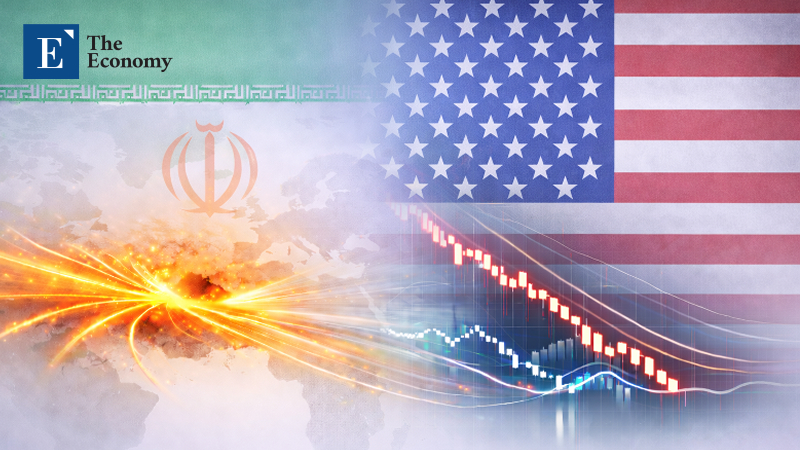
As the Iran war enters a protracted phase, concerns are mounting that economic growth across the ASEAN+3 region could face a significant slowdown. The closure of the Strait of Hormuz has heightened risks for Asian economies heavily reliant on Middle Eastern energy imports. However, some analysts argue that South Korea, China, and Japan possess sufficient capacity to absorb the shock, while greater attention should be directed toward the deepening economic vulnerabilities in Africa and Europe.
Shock to Asian Economies From Middle East Conflict
On April 6 (local time), the ASEAN+3 Macroeconomic Research Office (AMRO) revised its regional growth forecast downward from 4.3% to 4.0% in its latest outlook report. The adjustment reflects escalating military tensions in the Middle East and the impact of U.S. tariffs. AMRO warned that if the Iran war intensifies and oil prices remain above $100 per barrel, regional growth could fall further to 3.7%, while inflation would exceed 2%. Should this scenario materialize, ASEAN+3 would record its lowest growth rate since 2022 (3.2%) alongside its highest inflation level in the same period.
These concerns stem from the heavy dependence of many Asian economies on the Strait of Hormuz, which has effectively been disrupted by the conflict. Positioned between Iran and Oman, the strait serves as a critical energy corridor through which roughly 20% of global crude oil and over 20% of natural gas flows. South Korea and Japan rely extensively on Middle Eastern energy transported through the strait, while China sources approximately half of its crude oil imports via the same route. Net energy importers such as Thailand, the Philippines, and Singapore are similarly exposed to the fallout.
Supply instability in petrochemical products is also becoming increasingly evident. According to a CNN report on April 5, panic buying of garbage bags has emerged in South Korea, while Japan faces growing concerns over shortages of medical plastic tubing used in treating chronic kidney disease. Malaysian glove manufacturers are struggling to secure petroleum-based inputs required for rubber latex production, and a polyester producer in Haining, Zhejiang Province, China has halted new orders due to surging raw material costs. In Indonesia, packaging prices have nearly doubled, prompting companies to reduce packaging thickness or shift toward alternative materials such as paper, glass, aluminum, and recycled plastics.
Africa Bearing the Brunt of Supply Chain and Trade Risks
Despite these risks, some analysts maintain a more optimistic outlook for East Asia’s resilience. Andrew Tilton, chief Asia-Pacific economist at Goldman Sachs, stated in an April 6 interview with the South China Morning Post (SCMP) that South Korea, China, and Japan possess substantial strategic petroleum reserves and the fiscal capacity to subsidize retail fuel prices. He added that China’s annual growth target is unlikely to be materially affected by the conflict. “While China is an oil importer, it derives the majority of its energy from domestic coal and supplements supply through Russian pipelines,” Tilton noted. “State-owned enterprises and fiscal resources could be deployed to cushion consumers from rising energy costs.”
In contrast, Africa is widely viewed as facing far more severe risks. The African Union (AU), the United Nations Economic Commission for Africa (ECA), the African Development Bank (AfDB), and the United Nations Development Programme (UNDP) recently issued a joint policy statement urging immediate de-escalation in the Middle East. These institutions warned that a prolonged conflict would severely disrupt maritime routes as well as supply chains for energy, fertilizers, and food across the continent. Such disruptions could inflict broad economic damage and slow growth significantly. Several African nations are already experiencing an “oil shock” driven by surging crude prices, while fertilizer import disruptions have dealt a heavy blow to agricultural output.
Projections indicate that if the war persists for more than six months, Africa’s GDP growth this year could fall below 0.2%. The Middle East accounts for 15.8% of Africa’s imports and 10.9% of its exports, making it a critical trading partner. With many African economies still struggling to fully recover from the COVID-19 pandemic, prolonged geopolitical instability is likely to trigger widespread disruption across the region. Rising shipping costs, currency pressures, and fiscal tightening are expected to compound the burden on vulnerable populations by driving up the cost of living.
Europe Constrained by Energy Pressures and Fiscal Limitations
Europe faces a similarly precarious situation. On April 3, EU Energy Commissioner Dan Jørgensen told the Financial Times (FT) that “the language and rhetoric surrounding the current situation are far more severe than before,” emphasizing the need for countries to assess whether they have secured sufficient resources amid the high likelihood of a prolonged crisis. He added that while the EU is not yet facing an immediate supply shortage, contingency planning is underway to address the long-term implications of the conflict.
The EU has also delayed its legislative push to impose a permanent ban on Russian energy imports. According to the bloc’s legislative schedule released on March 24, the European Commission will not submit the proposed ban on Russian crude imports on April 15 as initially planned. The measure aims to phase out all Russian oil imports by the end of 2027. However, given that the EU has already significantly reduced its dependence on Russian energy, the delay is expected to have limited impact. The bloc previously banned imports of Russian crude and petroleum products in June 2022, halted seaborne crude imports in December of that year, and extended the ban to refined products in February 2023.
The core challenge lies in Europe’s diminished capacity to absorb such shocks independently. During the outbreak of the Russia-Ukraine war four years ago, European governments were able to cushion the impact using fiscal buffers accumulated through pandemic stimulus and historically low borrowing costs. France alone deployed energy support measures totaling approximately $113 billion between 2022 and 2023. At present, however, major European economies are burdened by elevated debt levels, leaving little fiscal room for maneuver. According to global financial data, Italy’s debt-to-GDP ratio stands at 134.9%, while France’s has reached an unprecedented 113.2%. Under these conditions, replicating large-scale government support packages comparable to those of previous crises appears highly unlikely.
Against this backdrop, the EU has recently issued direct guidance urging member states to minimize energy subsidies. On April 6, the FT reported that the European Commission has characterized politically motivated fiscal spending aimed at cushioning public discontent over surging energy prices as a potential trigger for fiscal instability. The Commission is strongly advocating strict austerity measures alongside targeted support. Christine Lagarde, President of the European Central Bank (ECB), has also warned that “broad and open-ended support measures risk overstimulating demand and undermining efforts to contain inflation,” urging governments to focus assistance on vulnerable groups.
As one of the youngest members of the team, Tyler Hansbrough is a rising star in financial journalism. His fresh perspective and analytical approach bring a modern edge to business reporting. Whether he’s covering stock market trends or dissecting corporate earnings, his sharp insights resonate with the new generation of investors.
- Previous [Trump-Style Negotiation] “Start Extreme First” — Trump’s Disruptive Bargaining Playbook Faces Erosion in Iran War
- Next “Lacking Both Cost Competitiveness and Premium Edge” Samsung Electronics Restructures China Home Appliance Business—Will It Follow the Path of Smartphones and Shipbuilding?
Similar Post