“Lacking Both Cost Competitiveness and Premium Edge” Samsung Electronics Restructures China Home Appliance Business—Will It Follow the Path of Smartphones and Shipbuilding?

Oliver Griffin is a policy and tech reporter at The Economy, focusing on the intersection of artificial intelligence, government regulation, and macroeconomic strategy. Based in Dublin, Oliver has reported extensively on European Union policy shifts and their ripple effects across global markets. Prior to joining The Economy, he covered technology policy for an international think tank, producing research cited by major institutions, including the OECD and IMF. Oliver studied political economy at Trinity College Dublin and later completed a master’s in data journalism at Columbia University. His reporting blends field interviews with rigorous statistical analysis, offering readers a nuanced understanding of how policy decisions shape industries and everyday lives. Beyond his newsroom work, Oliver contributes op-eds on ethics in AI and has been a guest commentator on BBC World and CNBC Europe.
Authored On
Modified
Signs Emerge of Samsung Electronics Restructuring Its Local Home Appliance Operations in China
“Premium in Europe, Budget in China” Korean Appliance Competitiveness Rapidly Weakens
Samsung’s Smartphone Plants and Shipyards Have Already Withdrawn from China
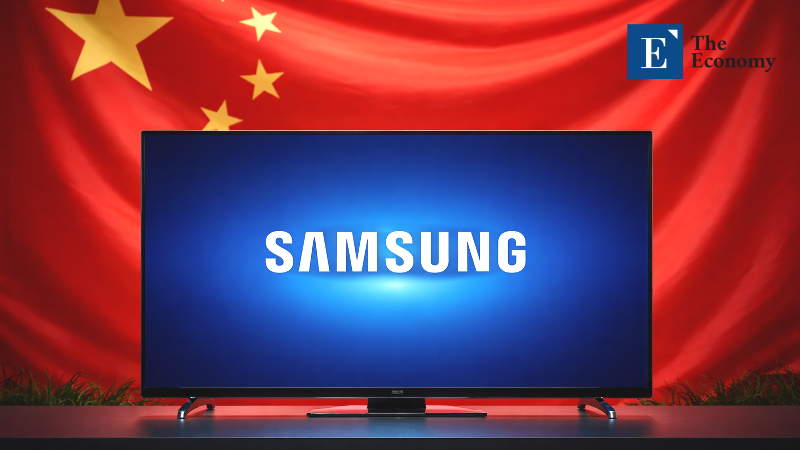
Samsung Electronics is reportedly initiating a restructuring of its home appliance business in China. As local Chinese manufacturers rapidly expand their market presence with aggressive pricing strategies, the company is seen accelerating business realignment to secure profitability. Market attention is now focused on whether Samsung Group (hereafter Samsung) will ultimately withdraw from the local appliance market, following its exits from smartphone manufacturing and shipbuilding in China.
Samsung Scaling Back in China’s Appliance Market
On the 3rd, Chinese IT outlet IT Home, citing local sources, reported that Samsung Electronics is reorganizing its home appliance division in China. Recent changes in organizational operations tied to certain appliance product lines have emerged as a key variable. According to IT Home, Samsung’s China appliance division has temporarily halted shipments of certain display products, including monitors, amid an ongoing strategic revision. There are also reports indicating that local management has suspended operations while awaiting formal confirmation from headquarters.
Industry observers suggest that Samsung may reduce its focus on legacy home appliances in China and pivot toward advanced technology segments such as memory semiconductors. This outlook reflects the company’s gradual withdrawal from local appliance operations over recent years, including the consolidation of display production bases. A representative case is the divestment of its Suzhou LCD production line, completed in 2021. The transaction involved Samsung Display transferring a 60% stake in its Suzhou LCD plant (SSL) and a 100% stake in its Suzhou module plant (SSM) to TCL subsidiary CSOT. Following the deal, Samsung Display retained only two production entities in China, located in Tianjin and Dongguan.
Since that transaction, speculation has persisted that Samsung Display may eventually exit the Chinese market. In 2023, Chinese media including IT Zhijia reported that Samsung Display would shut down its OEM factory in China in the fourth quarter and relocate production lines to Bac Ninh, Vietnam. However, Samsung Display denied the report at the time and continues to supply OLED panels to major Chinese smartphone manufacturers.
Ambiguous Market Position of Korean Appliances
Persistent forecasts of Samsung’s potential withdrawal from China’s appliance sector are largely attributed to unstable local market conditions. The market position of Korean appliance brands in China has significantly weakened in recent years. According to data compiled by Chinese outlet ZNDS, foreign brands including Samsung Electronics and LG Electronics accounted for less than 5% of China’s TV market share in 2024, with shipments totaling approximately 1 million units. Market leadership was dominated by local Chinese players such as Hisense, TCL, and Xiaomi.
This trend is also evident in the global market. According to market research firm Omdia, global TV market share by shipment volume in the third quarter of last year stood at 28.5% for Korean companies (Samsung Electronics and LG Electronics) and 31.8% for Chinese firms (Hisense, TCL, Xiaomi). As Chinese manufacturers accelerate low-cost volume strategies and global economic slowdown persists, the competitive landscape is undergoing rapid transformation. Omdia data shows that the share of low-priced TVs under $500 expanded significantly from 31.5% in 2021 to 39.7% in 2025, underscoring the growing influence of Chinese manufacturers dominating the mid- to low-end segment.
By contrast, the share of high-end TVs priced above $1,500 declined sharply from 22.4% in 2021 to 13.8% in 2025. This trend places mounting pressure on Korean appliance makers that have shifted toward the premium segment to differentiate themselves from Chinese competitors. Compounding the challenge is the increasingly अस्पष्ट positioning of Korean brands. One market expert noted, “Consumers seeking premium appliances typically turn to European brands such as Germany’s Gaggenau or Italy’s Smeg. In effect, Korean appliances are losing competitiveness, squeezed between Europe in the high-end segment and China in the mid- to low-end market.”
Samsung’s Manufacturing Footprint Retreating from China
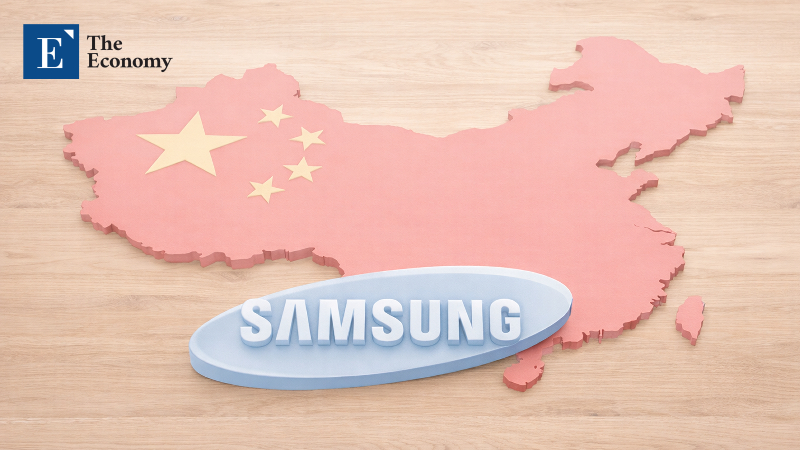
Samsung Electronics and its affiliates have already divested multiple production bases in China across various business segments. In 2018, Samsung Electronics shut down its smartphone manufacturing entity (TSTC) in Tianjin. The facility had recorded peak annual revenue of approximately $11 billion in 2013, but Samsung’s smartphone market share in China subsequently fell below 1%, leading to sustained underperformance. The rapid rise of local brands such as Huawei, Xiaomi, and Oppo eroded the presence of Korean smartphones in the market. In 2019, Samsung also halted operations at its final Chinese smartphone plant in Huizhou, Guangdong Province.
Samsung Heavy Industries has likewise significantly scaled down its China operations. In September 2021, the company announced the closure of its Ningbo subsidiary in Zhejiang Province, citing declining productivity due to aging facilities. Established in 1995, the Ningbo entity was Samsung Heavy Industries’ first investment in China and the country’s first foreign-invested shipbuilder following economic reforms. The shipyard, spanning 787,000 square meters, had an annual production capacity of 300,000 tons and was the only facility in China capable of producing ultra-large vessels exceeding 3,000 tons, generating export revenues exceeding $200 million annually.
At the time of the closure decision, most local employees were mid-career workers around their 40s, many with over 10 to 20 years of service, making reemployment particularly challenging. Following the announcement, workers staged strong protests demanding adequate financial compensation. They demonstrated during the day, calling for job security and opposing the shutdown, and continued protests and strikes overnight on the premises. Despite the resistance, Samsung Heavy Industries proceeded with the closure, completing liquidation procedures in the first half of 2023. The labor dispute has since been viewed as a representative case illustrating the social costs associated with overseas withdrawal decisions.
Oliver Griffin is a policy and tech reporter at The Economy, focusing on the intersection of artificial intelligence, government regulation, and macroeconomic strategy. Based in Dublin, Oliver has reported extensively on European Union policy shifts and their ripple effects across global markets. Prior to joining The Economy, he covered technology policy for an international think tank, producing research cited by major institutions, including the OECD and IMF. Oliver studied political economy at Trinity College Dublin and later completed a master’s in data journalism at Columbia University. His reporting blends field interviews with rigorous statistical analysis, offering readers a nuanced understanding of how policy decisions shape industries and everyday lives. Beyond his newsroom work, Oliver contributes op-eds on ethics in AI and has been a guest commentator on BBC World and CNBC Europe.
Similar Post