“Amid Cutthroat Competition, Disinformation Warfare Takes Toll” – Chinese Government Cracks Down on Fake News in Auto Industry

Authored On
Modified
Chinese Social Media as Conduits for Fake News
BYD’s Legal Action over Bankruptcy Rumors
Beijing’s Harsh Penalties on Defamation
China’s government has launched a sweeping crackdown on malicious online disinformation and defamation to protect automakers battered by intensifying competition. Social media platforms in the country have increasingly become conduits for the spread of false reports, inflicting serious damage on corporate reputations and sales.
Beijing’s crackdown on online disinformation and malicious defamation
According to Nikkei Asia on the 18th, six agencies—including the Ministry of Industry and Information Technology (MIIT), the Central Publicity Department, the Cyberspace Administration of China, the National Development and Reform Commission, the Ministry of Public Security, and the State Administration for Market Regulation—jointly issued a “Notice on Special Rectification of Disorder in the Online Auto Industry” on the 11th. The initiative calls for a three-month nationwide campaign targeting illicit profiteering, exaggerated or false advertising, and malicious slander and attacks.
The six agencies pledged to strengthen coordination to continuously purge the online public opinion environment, restore fair competition in the automotive sector, and foster sound growth of the electric vehicle and auto industry. A day earlier, MIIT had also declared it would focus on online disinformation targeting automakers over the next three months, stressing measures against “illegal business practices, exaggerated or false advertising, and defamation.”
BYD files lawsuits against dozens of influencers
One of the most notorious cases of online fake news in the industry involved rumors of bankruptcy at BYD, China’s largest carmaker. Numerous influencers claimed the company was on the brink of collapse, a narrative that gained international traction. BYD responded by filing defamation suits against 37 influencers.
In one case, a blogger alleged BYD had manipulated negative publicity against a competitor and was ordered by the court to issue a public apology and pay a fine of $14,000. Another influencer who asserted BYD was financially unstable and near bankruptcy was also penalized. In addition, BYD placed 126 individuals who disseminated negative content about the company under surveillance.
Beyond legal action, BYD has established an in-house “Anti-Fraud Department” that rewards whistleblowers who report potentially defamatory content. Verified informants can receive up to $690,000 in compensation. State-owned SAIC’s MG brand has introduced a similar program, offering bounties of up to $690,000 against accounts spreading malicious rumors.
Corporate mudslinging amid intensifying rivalry
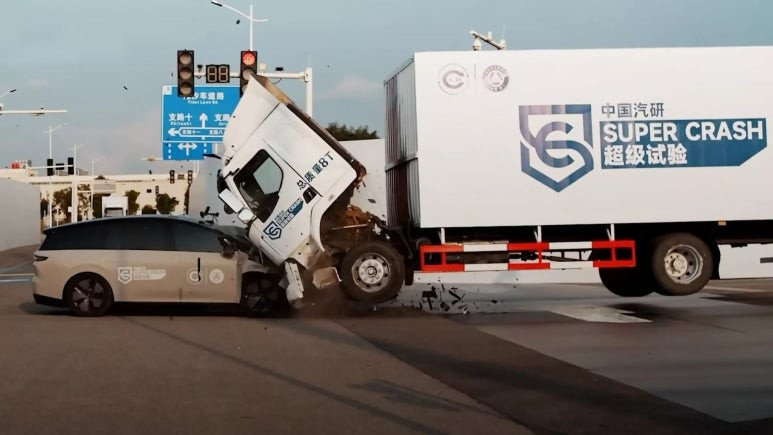
The surge in rivalry has fueled contentious mudslinging between companies. In July, EV startup Li Auto sparked uproar when it showcased a video at its unveiling of the “L8” electric SUV, depicting a collision between the L8 and a heavy-duty truck produced by state-owned Dongfeng Liuzhou Motor. Despite the stark weight difference—2.6 tons versus more than 8 tons—the L8 appeared nearly unscathed, while the truck’s cab was shown almost severed from the chassis.
Dongfeng issued a statement accusing Li Auto of tarnishing its brand image, denouncing the test as unrealistic and a case of severe defamation. Li Auto countered on Weibo that the crash test had been conducted by the China Automotive Engineering Research Institute (CAERI) as a third-party trial and was not aimed at any particular brand. It added that Dongfeng remained a long-trusted truck manufacturer with no competitive overlap, expressing regret for any misunderstanding. Analysts noted that while the test was intended to underscore EV safety, the exposure of a specific truck brand invited unnecessary controversy.
In China, defamation linked to fake news constitutes a criminal offense, particularly when involving state-owned firms or companies tied to the Communist Party. The Civil Code prohibits acts that damage another’s reputation through defamation, requiring perpetrators to cease infringement, eliminate impact, and compensate losses. Under the Public Security Administration Punishments Law, individuals spreading false information that disrupts public order face detention of five to ten days and fines, with minor cases carrying up to five days’ detention or fines under $70.
China’s Criminal Law imposes the harshest penalties for fabricating and disseminating falsehoods. Producing disinformation about dangers, epidemics, or police operations that seriously disrupt social order carries prison terms of up to three years, or three to seven years if serious consequences result. Fabricating or spreading falsehoods that damage another’s commercial reputation or product standing, causing significant losses or other grave consequences, can lead to up to two years’ imprisonment or detention, alongside fines.
Similar Post