CME Moves to Launch Rare Earth Futures as Hedging Instrument Emerges Amid China’s Resource Weaponization and Price Volatility Risks

Matthew Reuter is a senior economic correspondent at The Economy, where he covers global financial markets, emerging technologies, and cross-border trade dynamics. With over a decade of experience reporting from major financial hubs—including London, New York, and Hong Kong—Matthew has developed a reputation for breaking complex economic stories into sharp, accessible narratives. Before joining The Economy, he worked at a leading European financial daily, where his investigative reporting on post-crisis banking reforms earned him recognition from the European Press Association. A graduate of the London School of Economics, Matthew holds dual degrees in economics and international relations. He is particularly interested in how data science and AI are reshaping market analysis and policymaking, often blending quantitative insights into his articles. Outside journalism, Matthew frequently moderates panels at global finance summits and guest lectures on financial journalism at top universities.
Authored On
Modified
CME Reviews Neodymium-Praseodymium Futures Contracts
China’s Supply Chain Weaponization Drives Price Swings, Expanding Industry Hedging Demand
Japan Pushes Rare Earth Supply Chain Realignment; Beijing Dismisses “Rare Earth Independence” as Illusion
The Chicago Mercantile Exchange (CME), the world’s largest derivatives marketplace, is reviewing plans to launch the world’s first rare earth futures products. As rare earth prices continue to experience sharp volatility amid China’s supply chain dominance and resource weaponization, CME is seeking to introduce hedging instruments aimed at industries burdened by escalating risk exposure. Market participants assess that, given the persistent uncertainty surrounding the global rare earth supply chain, potential demand for such contracts could prove substantial.
Impending Launch of World’s First Rare Earth Futures
On the 12th (local time), Reuters, citing sources familiar with the matter, reported that CME is advancing plans to introduce the world’s first rare earth futures contracts. The exchange is preparing futures contracts tied to neodymium-praseodymium (NdPr), two rare earth elements essential for manufacturing permanent magnets used in electric vehicle motors, wind turbines, fighter jets, and drones. These elements are typically traded in combined form. Intercontinental Exchange (ICE), a competitor to CME, is also reviewing the launch of rare earth futures products, though its initiative remains at a comparatively early stage.
The exchanges’ focus on rare earth futures reflects mounting demand for mechanisms to manage price volatility risk. China currently accounts for 90% of global rare earth refining and separation capacity, including oxide production, and 93% of permanent magnet manufacturing, the final stage of the rare earth value chain. Even rare earths mined outside China are frequently transported to China for processing before being re-exported worldwide. As a result, pricing benchmarks are largely determined by China-centric platforms such as Fastmarkets, Benchmark Mineral Intelligence, and the Shanghai Metals Market index.
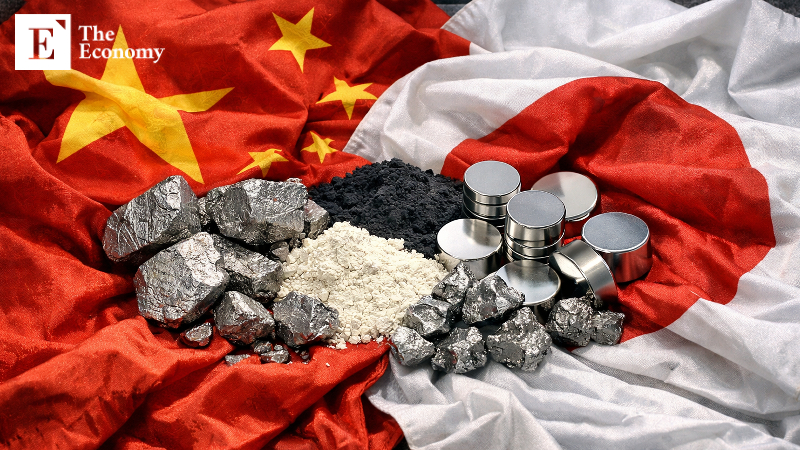
The core concern lies in Beijing’s use of its dominant position in the rare earth market as strategic leverage. Last April, China imposed restrictions on rare earth exports in retaliation for tariffs introduced by the United States. In November of the same year, following remarks by Japanese Prime Minister Sanae Takaichi signaling potential intervention in a Taiwan contingency, China tightened pressure by restricting exports to Japan of dual-use goods applicable to both civilian and military purposes. Last month, Beijing announced a ban on exports of certain dual-use materials to Japan and has effectively suspended approval procedures for rare earth export licenses destined for the country.
Market Strain Under China-Origin Supply Risks
Such China-origin supply uncertainty has intensified volatility across rare earth markets. Following Beijing’s export curbs on Japan, prices of key rare earth materials have registered notable increases. According to data from Nikkei Asia and UK-based research firm Argus Media, as of the 7th, dysprosium, a heavy rare earth element, traded at $960 per kilogram in the European market, marking a 26% increase since the start of the year. Terbium surged 19% to $4,000 per kilogram. Yttrium, a superconductive material used in MRI equipment and LED production, climbed 60% over the past month to $425 per kilogram as of the 5th.
Industry participants are absorbing these risks directly. The rare earth market currently lacks standardized derivatives capable of mitigating price shocks. Consequently, many rare earth mining and processing facilities outside China are compelled to forecast prices quarterly, relying on inventory accumulation, advance purchases, and repeated short-term contracts to navigate volatility. Financial institutions and investors have likewise maintained a cautious stance toward rare earth-related investments amid the absence of viable hedging instruments.
Should a futures market materialize, rare earth processors would gain the ability to lock in future prices, reduce risk exposure, and curb extreme decisions such as excessive inventory accumulation. Stabilized margins between raw material costs and delivery prices would enhance earnings visibility, potentially improving creditworthiness and financing conditions. Mining operators could also secure greater predictability in cash flow projections, facilitating more stable capital procurement.
Supply Chain Realignment and Escalating Market Uncertainty
Market observers anticipate meaningful industry demand if the products are launched. As governments worldwide seek to dismantle China’s dominance in rare earth supply chains, structural shifts are accelerating, heightening the likelihood of sustained price volatility. Japan has emerged as a particularly active proponent of rare earth diversification. On the 1st, the Chikyu research vessel operated by the Japan Agency for Marine-Earth Science and Technology (JAMSTEC), under the Ministry of Education, Culture, Sports, Science and Technology, successfully retrieved rare earth-rich mud from a depth of 5,700 meters within Japan’s exclusive economic zone near Minamitorishima, southeast of the Japanese archipelago.
Japan previously identified high concentrations of rare earth-bearing mud on the seabed in the same region. Analyses by the University of Tokyo and other institutions estimate that rare earth reserves near Minamitorishima could total approximately 6.8 million metric tons. Building on the recent test extraction, the Japanese government plans to commence operations in February next year to lift up to 350 metric tons of mud per day. By the spring of 2028, authorities aim to complete a report assessing the commercial viability of Minamitorishima rare earth resources, factoring in the substantive costs associated with deep-sea extraction.
Beijing, however, has characterized Japan’s deep-sea rare earth initiative as largely illusory. Chen Hongbin, former president of the Shanghai Institutes for International Studies, an international affairs think tank affiliated with the Shanghai municipal government, argued in an op-ed for Chinese outlet Guancha that the likelihood of success for Japan’s deep-sea rare earth project remains limited. Chen stated that confirmation of rare earth content in the extracted mud would only be possible once the vessel returns to Japan on the 15th, and emphasized that even if rare earth elements are present, the feasibility of extracting them from seabed mud constitutes an entirely separate challenge. He further questioned whether Japan possesses adequate refining capabilities and highlighted concerns over high deep-sea exploration and logistics costs, casting doubt on the economic viability of any extracted materials.
Chen added that Ryo Yasunaga, chairman of Mitsui & Co. and a veteran of the rare earth industry, remarked last September that securing rare earth production capacity requires decades, with no country outside China having achieved lasting success. He asserted that Prime Minister Takaichi’s reference to “rare earth independence” represents a fundamental mischaracterization. Chen further contended that Japan’s deep-sea rare earth project lacks a clear commercial outlook and would likely depend on state subsidies even if commercialization efforts proceed in the future.
Matthew Reuter is a senior economic correspondent at The Economy, where he covers global financial markets, emerging technologies, and cross-border trade dynamics. With over a decade of experience reporting from major financial hubs—including London, New York, and Hong Kong—Matthew has developed a reputation for breaking complex economic stories into sharp, accessible narratives. Before joining The Economy, he worked at a leading European financial daily, where his investigative reporting on post-crisis banking reforms earned him recognition from the European Press Association. A graduate of the London School of Economics, Matthew holds dual degrees in economics and international relations. He is particularly interested in how data science and AI are reshaping market analysis and policymaking, often blending quantitative insights into his articles. Outside journalism, Matthew frequently moderates panels at global finance summits and guest lectures on financial journalism at top universities.
Similar Post