After Eight Years of Renovation, Waldorf Astoria New York Heads to Market as China’s Exit Strategy Gains Momentum

Authored On
Modified
Moves to divest flagship U.S. assets
Renovation seen as pre-sale value enhancement
Aftereffects of Anbang’s expansion phase come into focus
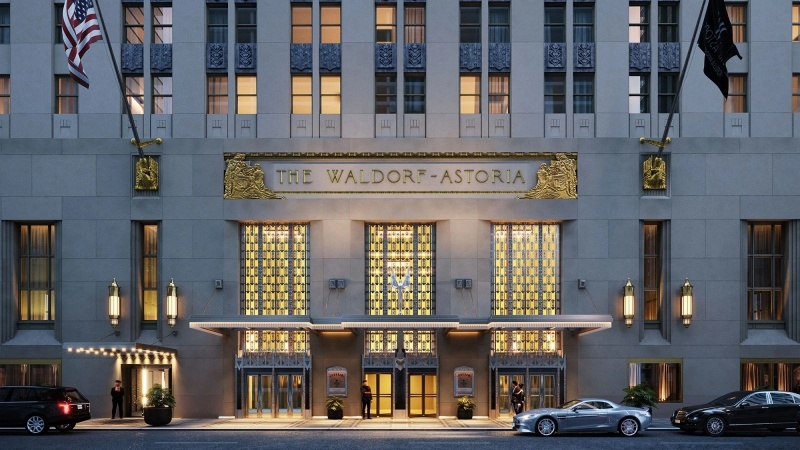
China’s state-owned Dajia Insurance has initiated the sale process for the Waldorf Astoria hotel in Manhattan, New York. As the move extends beyond a single property to encompass a broader portfolio of luxury hotels in the United States, analysts view it as a turning point from the aggressive overseas asset expansion pursued during the Anbang Insurance era. The timing—bringing the asset to market immediately after reopening following eight years of renovation—alongside recent divestments of domestic insurance holdings, has placed Dajia’s asset reallocation strategy under close scrutiny from global investors.
A Trophy Asset With Symbolism and Location
According to The Wall Street Journal (WSJ), Dajia Insurance has engaged real estate investment bank Eastdil Secured to manage the sale of the Waldorf Astoria. The sale process is expected to begin as early as next month and will cover the hotel’s restaurants, retail outlets, and other ancillary facilities. The condominium units within the building are to be sold separately. In addition to the Waldorf, Dajia is reportedly pursuing the sale of more than ten high-end U.S. hotels included in the Strategic Hotels & Resorts portfolio.
The initiative is widely interpreted as a portfolio-level restructuring rather than an isolated asset disposal. The WSJ noted that Chinese property owners have been steadily retreating from the U.S. real estate market, and Dajia appears to be following a similar trajectory. Other assets reportedly under consideration include the JW Marriott Essex House near Central Park in Manhattan and the Four Seasons Hotel in Washington, D.C. The inclusion of such highly symbolic and strategically located properties has reinforced perceptions that Dajia’s divestment carries a deliberate strategic dimension.
The Waldorf Astoria was sold by Hilton to China’s Anbang Insurance Group in 2014 for $1.95 billion, marking what was then the highest price ever paid for a single hotel. Anbang aggressively acquired so-called “trophy buildings” as part of a strategy to enhance corporate prestige and branding, with the Waldorf serving as a flagship example. However, after then-Chairman Wu Xiaohui was arrested and convicted on corruption charges in 2017, Anbang was placed under state control. Dajia Insurance was subsequently established and assumed control of its assets.
Located in Midtown Manhattan, the Waldorf Astoria New York was completed in 1931 as a 47-story structure and held the title of the world’s tallest hotel for more than two decades. Known for hosting heads of state and global celebrities, it remains one of the most recognizable hotel assets worldwide. Given its symbolic stature and multi-billion-dollar valuation, market observers believe the pool of potential buyers is likely to be limited. Qatar’s sovereign wealth fund has been cited as a leading candidate, given its existing ownership of the St. Regis and Plaza hotels and potential interest in further strengthening its luxury hospitality portfolio.
Sale Following Asset Value Recovery
Market participants have focused on the timing of the sale, noting that it comes only months after the hotel reopened amid improving market conditions. The Waldorf closed in the second half of 2017 for renovation and reopened for reservations last July after eight years of refurbishment. Originally scheduled as a two-year project, construction was extended through 2025 due to the Anbang crisis and the COVID-19 pandemic. Costs, initially estimated at $1 billion, reportedly doubled during the process. The renovation reconfigured approximately 1,400 guest rooms into 375 hotel rooms and 372 condominium units.
The reopening coincided with a rebound in luxury hotel pricing and profitability. According to data from CoStar, the average daily rate for high-end accommodations in New York City reached $580 in the second half of last year, with revenue per available room exceeding $450. At the Waldorf Astoria, nightly rates begin at $1,500 according to Hilton’s official website. The decision to initiate a sale amid such market recovery has fueled speculation that the prolonged renovation was partly aimed at maximizing exit valuation.
Hilton’s continued operation of the property after Anbang’s acquisition further supports this interpretation. By separating ownership from operations, Dajia appears to have preserved brand value and operational stability. The separate sale structure for the 372 condominium units also suggests a strategy of testing pricing across both hospitality and residential markets. Observers view this as an effort to strengthen negotiating leverage and valuation metrics by stabilizing operations before exposing the asset to market forces.
Overseas Financial Assets Also Under Review
Dajia’s asset disposals extend beyond U.S. real estate. In South Korea, the company completed the sale of Dongyang Life Insurance and ABL Life Insurance to Woori Financial Group. In August 2023, Dajia signed a share purchase agreement with Woori Financial for both companies, with the transaction finalized following conditional approval from the Financial Services Commission. Woori acquired a 75.34 percent stake in Dongyang Life for $886 million, in a package deal structure that underscores Dajia’s portfolio-level recalibration.
Dongyang Life was originally acquired by Anbang in February 2015, marking its entry into the Korean insurance market. At the time, Anbang invested $1 billion to acquire a 63 percent stake. In April 2016, it also acquired Allianz Life Korea (now ABL Life). Following Wu Xiaohui’s detention in 2017, the China Banking and Insurance Regulatory Commission assumed temporary control, and Dajia formally took over management in February 2018.
Including dividends of $200 million received after acquiring Dongyang Life, Dajia recorded total recoveries of $1.085 billion. However, Dongyang Life stated that Anbang’s total acquisition cost in 2015 amounted to $803 million, with an additional $364 million injected through capital increases, bringing total investment to approximately $1.167 billion—exceeding the $886 million sale price to Woori. While calculation methods differ, the transfer of overseas financial assets back to domestic financial institutions underscores the clarity of Dajia’s divestment trajectory.
Industry observers interpret the sales not merely as portfolio adjustments by an individual insurer but as part of a broader process by Chinese financial authorities to sequentially unwind overseas financial assets absorbed following nationalization. With the sale of core premium assets, privatization measures, and overseas subsidiaries all in motion, market participants are watching closely to see whether similar transactions will follow. Notably, Anbang acquired 15 luxury hotels in the United States in 2015 alone, spending $5.5 billion. Given the scale of overseas assets accumulated during that expansion phase, consensus suggests that Dajia’s asset downsizing will continue for some time.
Similar Post